Guatemala SHB coffee beans explained: how high altitude shapes flavor and quality
Introduction: Guatemala is known for its diverse microclimates and fine Arabica coffee, and its SHB grade beans are a favorite among specialty coffee lovers. This article breaks down Guatemala's coffee grading standards, explores how high-altitude growing shapes distinctive flavors, and walks you through the characteristics of eight producing regions to help you find the beans you love.
Although Guatemala is small in area, it contains nearly 300 distinct microclimate regions. With abundant rainfall year-round, fertile mineral-rich soil around volcanoes and lakes, and high altitudes with mild climate conditions, these factors together nurture high-quality Arabica coffee with layered flavors. Among them, Strictly Hard Bean (SHB) grade coffee grown above 1,350 meters stands out as the country's most representative specialty coffee benchmark, thanks to its dense, plump bean shape and vivid flavor characteristics.
From wet processing to a national certification system
Since the coffee industry emerged in the early 19th century, Guatemala has developed a mature wet-processing method based on its abundant rainfall—this process of removing mucilage by washing effectively preserves the clean flavors of the coffee beans. Anacafé (the Guatemalan National Coffee Association), founded in 1960, not only handles coordination with the International Coffee Organization but also established a strict grading system. The organization classifies the country's coffee into multiple grades based on core indicators such as growing altitude and bean hardness, with SHB (altitude ≥1,350 meters) as the highest grade; its beans have high density and full sugar accumulation, providing an excellent foundation for subsequent roasting.
Eight producing regions: geography gives rise to flavor differences
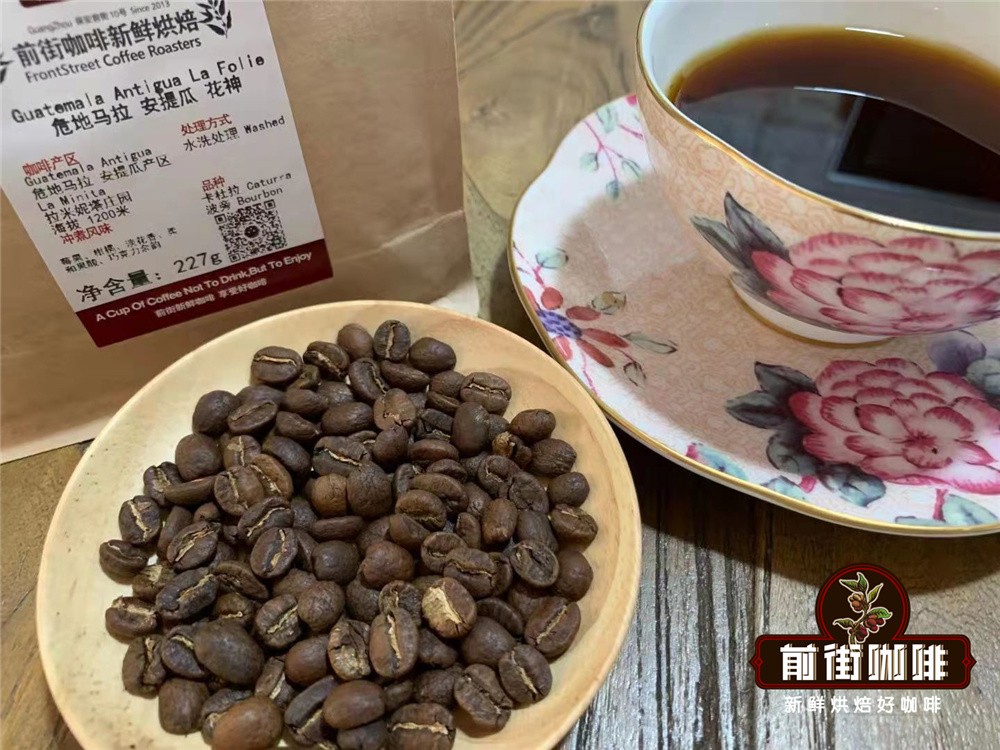
Anacafé has divided the country into eight premium SHB regions based on microclimate characteristics, including Antigua, San Marcos, and Acatenango Valley. Take the historic Antigua region as an example: coffee trees on its volcanic slopes enjoy just the right amount of sunlight and mineral-rich volcanic soil year-round, and together with a precise distribution of rainy seasons, this creates a classic flavor that is balanced, full-bodied, and has citrus notes. The neighboring Acatenango Valley is surrounded by two active volcanoes, Acatenango and Fuego; coffee gardens under dense shade use traditional hand-picking to ensure every cherry reaches optimal ripeness.It is worth noting that for roughly every 300 meters of increased altitude, the acidity of the coffee beans becomes brighter and the sweetness more pronounced—this is the scientific basis for why coffee from high-altitude regions (such as the Fraijanes Plateau) often shows blueberry-like fruit aromas and a silky mouthfeel.
In common understanding of grading standards, the core difference between HB (Hard Bean, altitude about 1,200–1,400 meters) and SHB lies in the severity of the growing environment: higher altitude means a greater temperature difference between day and night, a longer growth cycle for the coffee trees, and more complete transformation of flavor compounds in the cherries. When buying, consumers are advised to check the region's altitude labeling first rather than relying solely on the grade name; for example, coffee beans both labeled SHB from Huehuetenango (altitude 1,500+ meters) and San Marcos (altitude 1,350 meters) may taste completely different.
For pour-over enthusiasts, Guatemala SHB coffee beans are generally recommended with a medium-fine grind (about 70%–75% passing a Chinese standard No. 20 sieve), with water temperature controlled in the 90–93°C range. Take coffee from the Antigua region as an example: the golden ratio is 15 grams of grounds to 240 milliliters of water at 1:16, and a three-stage pouring method (bloom for 30 seconds, then pour to 120 milliliters, wait 30 seconds and continue to 180 milliliters, and finally slowly fill to the top) better showcases its signature nutty finish and balanced acidity.