Panama Geisha Coffee Grades Explained: Red, Green, Blue Label Guide
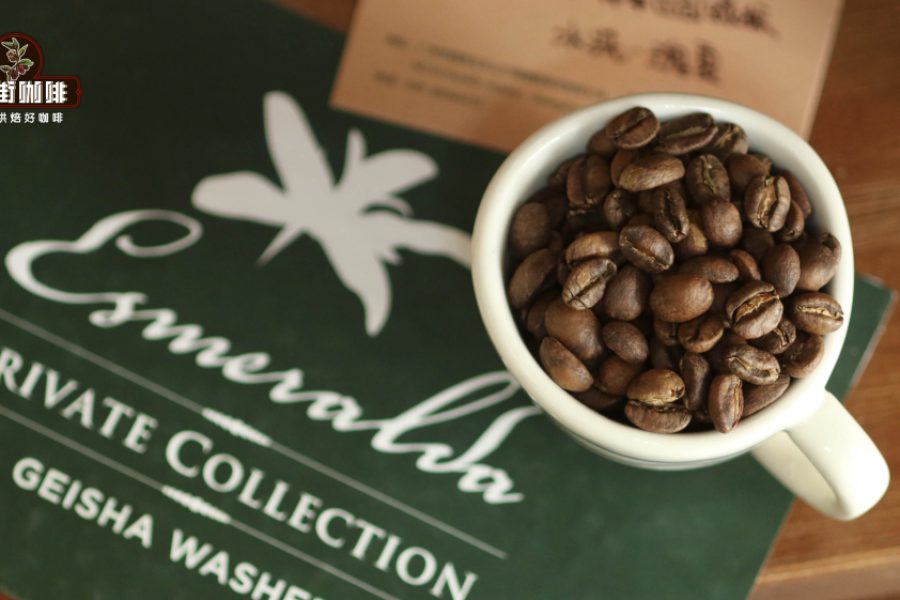
Introduction: Panama Hacienda Esmeralda Geisha coffee is renowned worldwide for its distinctive floral and fruity aroma, but the red, green, and blue label grading standards often confuse consumers. This article provides an in-depth analysis of the origin differences, processing method distinctions, and flavor characteristics of the three grades, along with professional pour-over parameter recommendations, to help you choose precisely according to your taste preferences and avoid costly missteps.
In recent years, Geisha coffee from Panama's Hacienda Esmeralda has become a sought-after target for specialty coffee enthusiasts thanks to its signature jasmine aroma and citrus notes. Faced with red label, green label, blue label, and other grade products on the market, many consumers often find themselves paralyzed by choice—what exactly do these labels represent? Which one is better suited to everyday drinking? This article systematically breaks down the core logic of the Geisha grading system, from growing altitude and processing techniques to flavor performance.
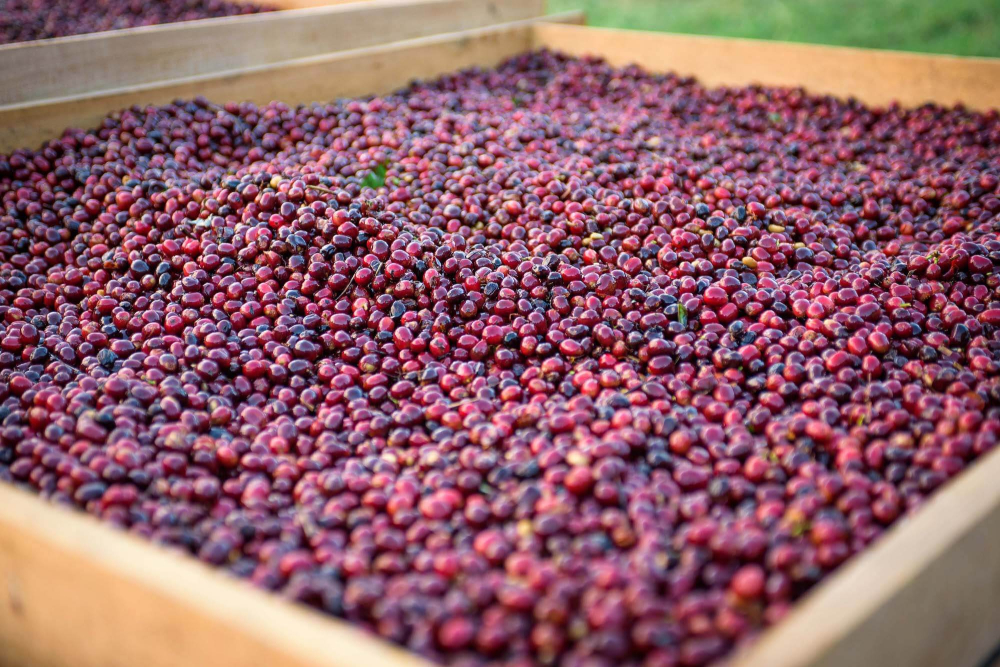
The legend of the Geisha variety began in Ethiopia but found new life at Panama's Hacienda Esmeralda. The estate was founded in 1964 by American immigrant Rudolph Peterson, originally as a livestock operation. It was not until 1996, after acquiring the neighboring high-altitude Jaramillo estate, that wild coffee trees overlooked on the property were accidentally discovered—these plants, growing above 1,600 meters and once used as windbreaks, were the prototype of the Geisha variety that would later astonish the coffee world. In 2004, the estate's Geisha won first place upon its first competition entry in auction form, and genetic identification confirmed its Ethiopian origin, thus opening a new era for global specialty coffee.
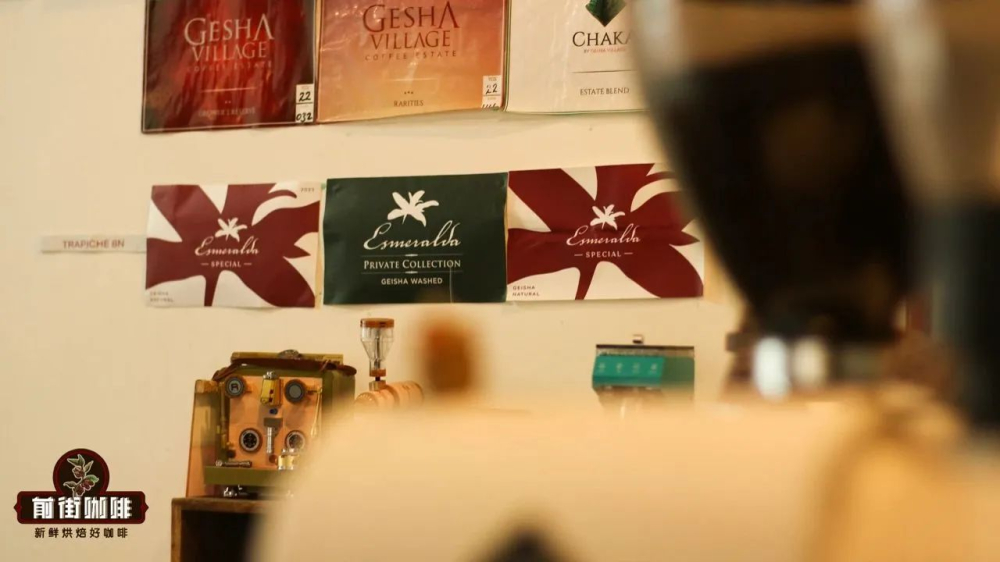
Hacienda Esmeralda employs a compound grading system, with growing altitude and cupping score as the core criteria: Red Label (Esmeralda Special) sits at the top of the pyramid, requiring an altitude of 1,600–1,800 meters and a cupping score above 90, limited to the two core production areas of Jaramillo and Cañas Verdes; Green Label (Private Collection) is the next tier of quality lots, also from high-altitude plots but blending multiple micro-regions; Blue Label (Geisha 1500) is the entry-level choice, with altitude dropping to 1,400–1,500 meters and covering blended bean sources from three sub-estates.

The scarcity of Red Label Geisha stems from a rigorous selection process. Each lot must be individually numbered and labeled with its specific plot (such as the Mario plot), and some top lots are released through the estate's separate auction. Beyond auction channels, non-auction Red Label sold on the market, though also from high-altitude single-origin areas, is relatively more affordable because it did not participate in public auctions. In terms of processing, Red Label mostly uses natural or washed methods, highlighting bright floral notes (such as rose and jasmine) and tropical fruit notes (such as citrus and pineapple), often with a honey sweetness in the finish.

Green Label, as the high-value choice, does not participate in auctions but still maintains a growing altitude above 1,600 meters. Its characteristic is blending multiple micro-lots, so flavor consistency is slightly lower than Red Label, yet typical Geisha traits remain prominent—clean, transparent acidity (lemon, bergamot), full juice-like body, and a refreshing white tea-like finish. Note that Green Label is usually predominantly washed; if you seek richer fermentation layers, watch for natural-process versions in some years.

Blue Label (formerly the 1500-meter Geisha) targets everyday consumption scenarios, with altitude dropping to 1,400–1,500 meters, integrating bean sources from the three sub-estates of Jaramillo, Cañas Verdes, and El Velo. Its flavor profile leans toward a milder route: delicate white florals (such as lily of the valley), soft citrus acidity (yuzu, orange peel), paired with a light green tea-like sweetness. Natural-process lots added after 2019 enhance sweetness by extending drying time, suitable for drinkers who prefer lower acidity.

The core differences among the three grades can be summarized in three points: first, the higher the altitude (Red > Green > Blue), the livelier the acidity and the stronger the aroma complexity; second, Red Label has unique single-plot traceability and auction attributes, Green Label is blended micro-lots, and Blue Label is a multi-region blend; third, the market price gradient is obvious—Red Label is typically 2–3 times that of Green Label, while Blue Label is closer to the mass-consumption range. Common purchasing misconceptions include blindly pursuing high-priced auction lots, or mistakenly assuming all Blue Label is low quality—in fact, after 2021 the original Blue Label bean sources have moved to new brand channels such as "Volcanic Rock," and some lots still maintain a high standard.

Pour-over recommendations for the different grades: a light roast (Agtron 65–70) maximizes Geisha's floral and fruity notes. For Red Label, a V60 dripper (#01) is recommended, with a 1:15 coffee-to-water ratio, water temperature of 90±1°C, grind close to fine sugar (80% passing a No. 20 sieve), and attention to a 30-second bloom in the first pour to release aroma; for Green Label, lower the water temperature slightly to 88°C to reduce sharpness and extend brew time to 2 minutes 30 seconds to balance acidity and sweetness; for Blue Label, because the flavor is lighter, it is recommended to increase the coffee-to-water ratio to 1:16 and speed up the flow rate to prevent over-extraction and astringency.

For storage, note three points: unopened coffee beans should be stored away from light at 15–20°C, and freshly roasted Geisha's peak flavor period is 7–21 days after roasting; if you buy pre-ground product, use it within 3 days to avoid oxidation; before brewing, you can do a 20–30 second cupping pre-smell to judge bean vitality by aroma intensity. Common mistakes include using boiling water (>93°C) that damages the acidity structure, or over-grinding (close to powder) that lets bitterness dominate.

In summary, Red Label suits seasoned enthusiasts seeking the ultimate expression of terroir, Green Label strikes a good balance between quality and price, and Blue Label is the entry bridge to experiencing Geisha flavor. Consumers can choose flexibly according to their budget and taste preferences—what matters is understanding the logic behind the grading, not simply relying on label tiers. As a coffee farming proverb says: 'The best Geisha is not on the certificate, but in the brewer's taste memory.'