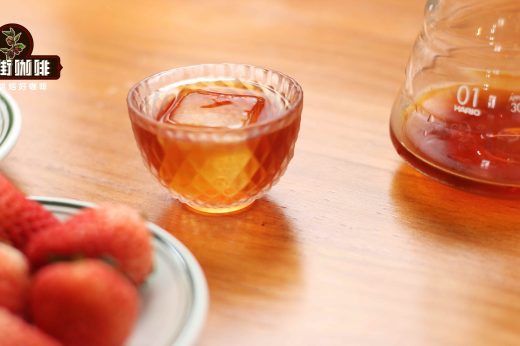
Ice Drip Coffee: Flow Rate, Timing, and Flavor Guide
Introduction: Ice drip coffee has drawn attention for its unique low-temperature extraction process and complex flavor, but making it often leaves people puzzled. This article explains the standard ice drip coffee process in detail, from equipment selection to water-drip rate control, analyzes the key factors affecting extraction time, and offers practical advice on professional grind size, coffee-to-water ratio, and resting time to help you master the essence of this slow-extracted coffee.
"Excuse me, do you have ice drip coffee?" "Yes, but today's ice drip was made in advance." Conversations like this are not uncommon in cafés. Because of its long production cycle and higher price, ice drip coffee is often shrouded in mystery. Unlike common hot brewing or cold brew, ice drip coffee uses low-temperature water dripping for extraction, giving it a unique flavor but a more complex process.

Although both rely on cold-water extraction, the processes of ice drip and cold brew are completely different. Cold brew simply mixes coffee grounds with room-temperature water and steeps it in the refrigerator—so simple that it can easily be done at home. Ice drip coffee, however, requires special equipment and achieves continuous extraction through precise control of the drip rate; the process is rigorous and time-consuming.

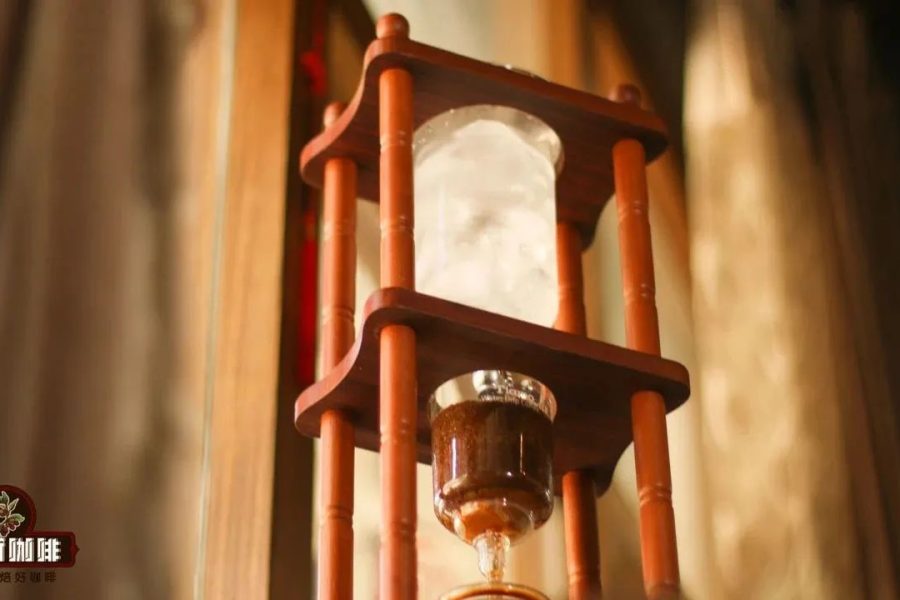
Standard ice drip production requires a three-layer ice drip brewer: the top layer holds an ice-water mixture, the middle layer holds coffee grounds, and the bottom layer collects the filtered coffee liquid. The core of the device is an adjustable flow valve that ensures water drips penetrate the coffee bed at a constant rate. The entire extraction process may last several hours, and after completion the coffee must be refrigerated to rest so the flavor becomes rounder.

Making high-quality ice drip coffee requires control of four key elements: grind size, drip rate, coffee-to-water ratio, and resting time. Any deviation in any step directly affects the final flavor, which explains why most coffee lovers choose to buy it rather than make it themselves.

Water temperature has a decisive influence on coffee extraction. Ice drip uses < strong >ice water below 5℃ as the solvent and belongs to low-temperature drip coffee. Compared with high-temperature extraction, low temperature effectively suppresses the release of astringent substances such as tannic acid, making it particularly suitable for showing coffee's delicate flavor layers.

Grind size is the primary parameter in ice drip production. It is recommended to calibrate with a < strong >No. 20 sieve (0.85mm), with a pass rate controlled in the < strong >83–85% range—slightly coarser than regular pour-over but clearly finer than a French press. Too coarse causes water to flow too fast and underextract, while too fine easily causes channeling and bitterness.

Drip rate directly affects extraction efficiency. Ideally, water drops should penetrate the coffee bed evenly. Recommended parameters: < strong >7 drops per 10 seconds for light-roast beans (highlighting floral and fruity notes), < strong >5 drops per 10 seconds for medium-roast beans (enhancing body). Too fast results in flat flavor, while too slow may cause over-fermentation and off-flavors.

The professionally recommended < strong >base coffee-to-water ratio is 1:10, and it can be adjusted to < strong >1:12–1:14 when a lighter mouthfeel is desired. For example, for 200ml of finished coffee, use 20g of coffee grounds with 240g of ice water (including the water absorbed by the grounds); at a flow rate of 7 drops/10 seconds, basic extraction takes about < strong >2.5 hours.

The resting stage is crucial to flavor development. Freshly made ice drip coffee should be refrigerated and left still; < strong >it reaches its flavor peak in 3–5 days, and < strong >the aroma gradually fades after 6 days. Taking everything into consideration, it is recommended to finish drinking within < strong >5 days after production, observing flavor changes every 1–2 days during that time.

Actual production time varies with scale. A single 200ml cup takes about < strong >2.5 hours, but commercial production is usually done in batches—for example, with a 650ml-capacity device, < strong >60g of coffee grounds with 600g of ice water at the same flow rate takes < strong >7 hours, and with overnight resting added, a "day and night" production cycle is entirely reasonable.