Why Is Geisha Coffee So Expensive? Global Geisha Bean Grading Explained
Introduction: From Panama's Hacienda La Esmeralda to Ethiopia's Gesha Village, uncover the variety origins and grading systems behind the high price of Geisha coffee. This article traces Geisha coffee's century-long journey from discovery to fame, detailing the grading standards of Panama and Ethiopia's two major producing regions, including auction lots, red and green labels, and other common classifications by growing altitude, processing methods, and flavor characteristics, helping you choose the right pour-over or extraction experience.
The legend of Geisha coffee (Geisha, transliterated as Guixia) began with an accidental discovery in Ethiopia's Gesha forest in 1931. After passing through Kenya, Uganda, and other places, it was only introduced to Panama in 1970. What truly brought it to fame was in 2004 when Panama's Hacienda La Esmeralda won the BOP competition with this variety—this once-overlooked coffee bean has since stood at the top of the specialty coffee pyramid.
 The Geisha variety is extremely demanding about its growing environment, requiring high altitude (usually above 1600 meters), cloud cover or dense shade trees for protection, and fertile soil. The high-altitude environment slows the ripening of coffee cherries, prompting the fruit to accumulate richer aromatic substances, ultimately forming the signature floral notes (jasmine, rose), bright fruit acidity (citrus, berries), and unique sweetness (honey, sucrose).
 Currently, the regions growing Geisha worldwide are gradually increasing, but the most recognized are still Panama's Hacienda La Esmeralda and Ethiopia's Gesha Village. Although both belong to the Geisha variety, they present different flavor layers and grading logic due to regional terroir differences. Understanding these differences is the key first step in choosing high-quality Geisha coffee.
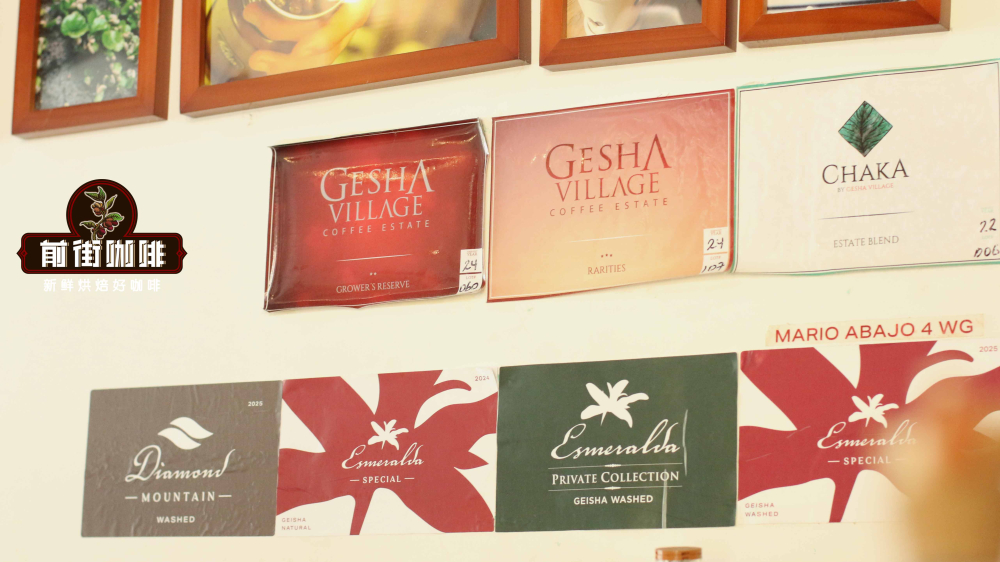
 Hacienda La Esmeralda's Geisha is divided by quality into three main grades: auction, red label, and green label (the original blue label has been adjusted). Its planting plots are finely divided into three core areas: Jaramillo, Cañas Verdes, and El Velo, among which Jaramillo and Cañas Verdes produce the highest quality beans.
The auction lot (commonly known as "red label auction") is the top representative of Hacienda La Esmeralda, selecting only Geisha from specific plots (such as the Sucrose plot), grown at altitudes above 1600 meters, with cupping scores ≥91 points. Each lot provides detailed traceability information: including micro-plot location, altitude, latitude and longitude, tree age, harvest date, and processing method (such as 25-day slow natural). These beans often have complex floral notes (jasmine, cranberry) and fresh fruit tones (passion fruit, citrus), with a cinnamon spice finish.
 The non-auction red label (i.e., "Esmeralda Special") also comes from the above high-scoring plots but does not participate in the estate's independent auction, making the price relatively more affordable. Processing methods are mainly natural or washed, with flavors highlighting bright floral notes and citrus tones, and cupping scores consistently above 90 points.
The green label (formerly "Private Collection") is a blended lot, with raw materials sourced from Geisha at altitudes of 1600-1800 meters across the three main estates: Jaramillo, Cañas Verdes, and El Velo, with the blend ratio adjusted by year. After 2022, the estate began labeling sub-estate information: Jaramillo green label features jasmine and rose aromas; Cañas Verdes highlights tropical fruits (mango, pineapple); El Velo estate presents lemongrass and delicate floral notes.
 The blue label (formerly "Geisha 1500") is an entry-level option, blending Geisha beans from the three main estates at altitudes of 1400-1500 meters, with flavors mainly light floral and fruity notes (faint jasmine, melon sweetness), soft acidity but shallower layers. This grade was suspended from 2019 to 2022, with some bean sources integrated into the "Las Rocas" (volcanic rock Geisha) brand for sale.
 Ethiopia's Gesha Village is located in the Bench Maji region, at an altitude above 1900 meters, with a total area of 471 hectares, of which 320 hectares are coffee planting areas. The estate is subdivided into 8 single-variety plots to ensure the terroir uniqueness of each lot. The main plantings are Gori Gesha, Gesha 1931, and the disease-resistant variety Illubabor Forest.
Gesha Village's grading is more detailed, including auction, gold label, red label, green label, and Chaka lots. The auction lot accounts for only 3.7% of annual production and is the top-grade bean, requiring acquisition through global auctions (such as the 2018 champion selection cupping score of 88.15-92.67 points), with extremely high flavor complexity.
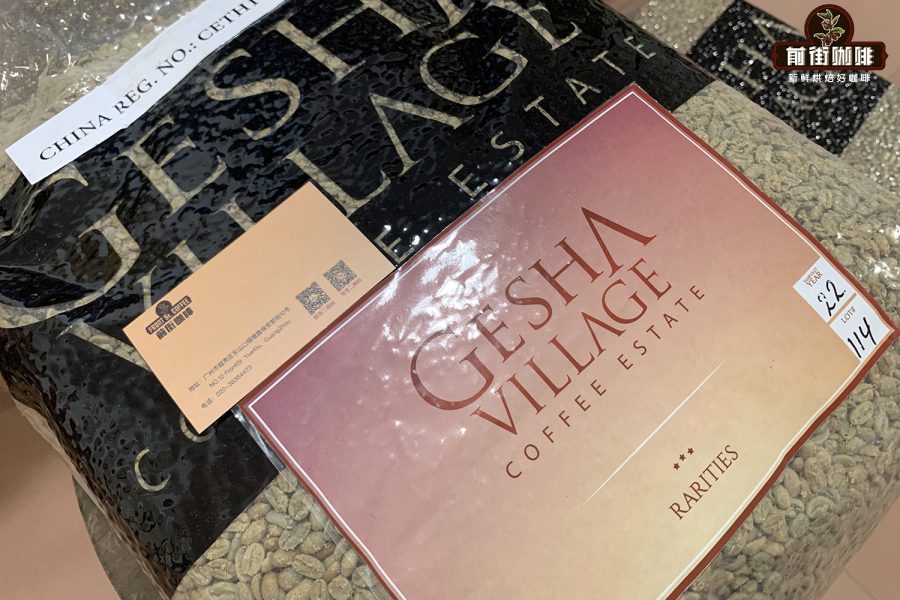
 The gold label (English name Rarities) accounts for 10% of annual production. Although not an auction lot, it is of top quality, with each bean bag labeled with specific plot information. The variety is "Gesha 1931"—selected and cultivated by estate owner Adam based on the appearance of Panama Geisha, inheriting the classic Geisha profile.
The red label accounts for about 15%, with cupping scores ≥88 points (SCA standard), slightly weaker in flavor intensity than the gold label but outstanding in value. The common variety "Gori Gesha" originates from wild plants discovered by the estate owner in the nearby Gori forest, closer to the characteristics of Ethiopian native species.
 The green label is a single plot/variety lot, providing complete traceability information (such as plot name, processing date), with flavors clearly showing specific terroir characteristics. The Chaka lot is a whole-estate blend (including Gesha 1931, Gori Gesha, Illubabor), processed by natural or washed methods, presenting multi-layered floral and fruity notes (citrus, berries) and special textures (creamy, oolong tea).
 In summary, Panama Geisha is top-tier with auction/red labels, emphasizing delicate floral notes and high sweetness; Ethiopia's Gesha Village highlights regional characteristics through subdivided plots, with gold and red labels suitable for enthusiasts seeking balanced flavors. When purchasing, it is recommended to prioritize altitude (≥1600 meters), processing method (natural is usually more intense), and traceability information, and make a choice based on personal taste preferences (prefer fruit acidity choose Panama, prefer mellow choose Ethiopia).