Panama Geisha Coffee: Flavor Profile and Why It Costs So Much
Introduction: Why does Panamanian coffee rank among the world's top producing regions? And why has the Geisha variety become the benchmark for specialty coffee? This article takes a deep look at the history and geographic advantages of Panamanian coffee, uncovers the signature floral, fruity and citrus notes of Geisha black coffee, compares the flavor characteristics of professional-grade washed and natural processing, and offers precise pour-over parameter recommendations to help you fully grasp the essence of these high-priced coffee beans.
In the world of specialty coffee, the name Panama is always closely tied to “high price” and “Geisha.” Why can coffee from this small Central American country sell for hundreds of yuan? The answer lies in its unique geography and strict growing traditions. From the first introduction of coffee trees in 1742 to attracting international capital through its canal advantage at the end of the 20th century, Panama spent two hundred years building a world-class coffee-producing region system.

In 1780, Pedro Antonio de Ayala attempted to plant coffee in Portobelo for the first time and failed; it was not until the 1820s that coffee took root elsewhere in Panama. Wedged between the Caribbean Sea and the Pacific Ocean currents, the high-altitude areas of the Boquete Valley above 6,500 feet form changeable microclimates, and the mineral-rich volcanic soil provides natural conditions for coffee cherries to develop complex aromas. Notably, the construction of the Panama Canal unexpectedly led to an influx of American elites moving south; many well-known estate owners were originally bankers and engineers, and they brought the concept of fine management into coffee cultivation.

The three major producing areas in Chiriquí Province in western Panama each have their own characteristics: the Boquete Valley, as the birthplace, has an altitude of about 1,600 meters combined with morning mist that slows fruit ripening, producing coffee with medium-high acidity; the neighboring Volcán and Renacimiento also benefit from the fertile soil of the Barú Volcano's foothills. Data show that of the country's 20,000 hectares of coffee-growing area, 16,000 hectares are planted exclusively with Arabica varieties, among which Geisha rose to fame after winning the 2004 BOP competition.

The turning point of the specialty coffee wave began in 1996. Facing a low-price crisis of $0.74 per pound caused by the collapse of the International Coffee Agreement, seven estate owners jointly founded the SCAP association and created the first BOP competition. This event, known as the “Oscars of coffee beans,” pioneered the auction model—in 2022, Guagua Gua Estate's natural Geisha won with 95.96 points, and Aurora Estate set a record of 96.15 points in the washed category. The competition strictly divides entries into Geisha and non-Geisha groups, then further subdivides them by natural/washed processing for judging.

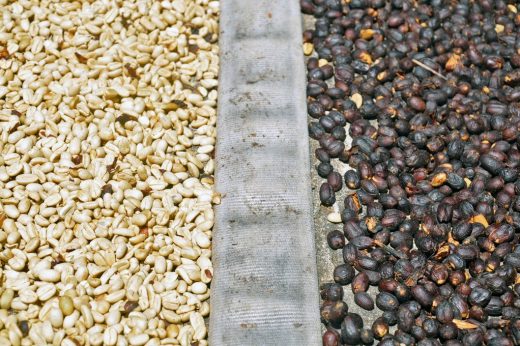
The secret of Geisha flavor lies in its unique processing techniques. The washed method requires 24 hours of mucilage fermentation (key parameters: water temperature 20-22°C, pH 4.5-5.5); after removing the pulp, the mucilage retains some sugar, ultimately presenting layers of citrus (pH 3.5-4.5), green tea notes (catechin content 0.12-0.15%), and honey sweetness (reducing sugars ≥6g/100g). For pour-over, we recommend a V60 dripper (flow rate controlled at 25-30 seconds/100ml), a medium-light roast (Agtron color value #65-#70) to highlight acidity, and a grind size with 80% passing through a No. 20 sieve (about 0.85mm particle size).

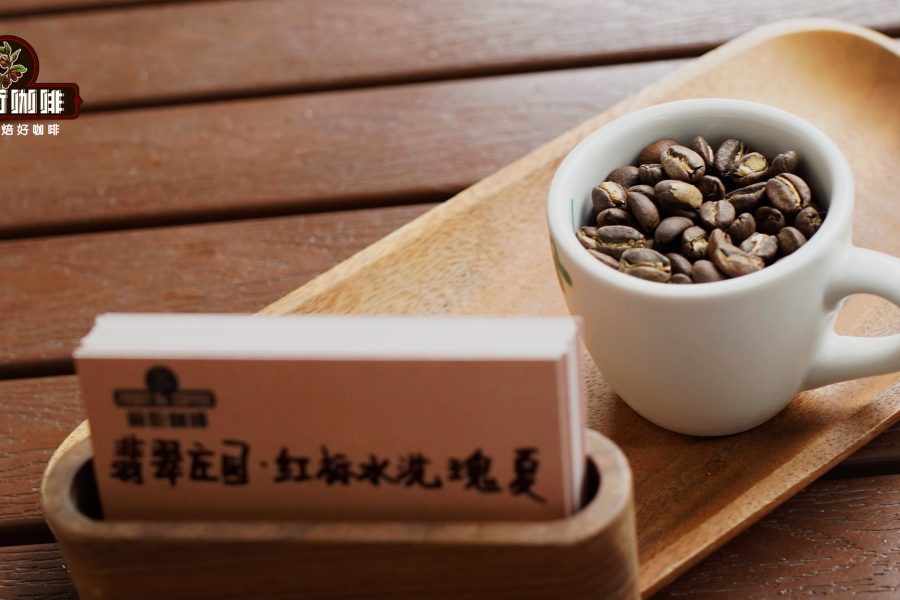
Recommended professional brewing plan: for Emerald Red Label natural Geisha, use 91-92°C water temperature (±1°C), 15g of coffee with 240ml of water (coffee-to-water ratio 1:16). Three-stage pouring: first stage 30g of water for a 30-second bloom (the coffee bed expands to 1.5 times its volume), second stage 120g of water poured linearly to the 150g mark (at the 55-second mark), final stage 90g of water to finish (total time 2 minutes 10 seconds). Common problems include: water temperature too high easily leading to sharp acidity (citric acid conversion accelerates above 93°C), and grinding too fine causing channeling (adjusting the blade angle on a conical burr grinder is recommended).

Natural-process Geisha (fermentation time extended to 36-48 hours) shows richer tropical fruit notes, commonly mango and lychee aromas (ester content 0.3-0.5% higher). For storage, note: vacuum-seal in foil bags (oxygen concentration <1%) and keep away from light; best flavor within 12 months (flavor window of 21 days after roasting). Comparative tests show that under the same conditions, natural Geisha scores 15-20% higher in sweetness than washed, but about 10% lower in brightness of acidity.

From the morning mist of the Boquete Valley to the spotlight of the BOP auction, the legend of Panama Geisha is a case written jointly by geography, technology and the market. Understanding these elements not only lets you more precisely appreciate the value of high-priced coffee, but also provides a scientific basis for buying and brewing—after all, a true specialty coffee experience begins with the ultimate pursuit of detail.