Jamaica Blue Mountain No. 1 Coffee: Why It's So Expensive, Flavor and Brewing Guide
Introduction: Jamaica Blue Mountain coffee is hailed as one of the finest coffees in the world, and Blue Mountain No. 1 in particular is the "holy grail" in the minds of many coffee lovers. This article takes an in-depth look at Blue Mountain coffee's origin, its grading system, its flavor characteristics and the reasons for its high price, and provides professional pour-over parameters and a flavor experience description, so you can fully understand this legendary coffee bean, from getting started to tasting.
Jamaica Blue Mountain coffee has long held a place among the world's top coffees. Its mild, balanced body and rich aromatic layers have earned it a lofty standing among coffee lovers. The best known of these is Blue Mountain No. 1, which is not only the representative of Jamaican coffee but also one of the few specialty coffees in the world named after both its origin and its grade.
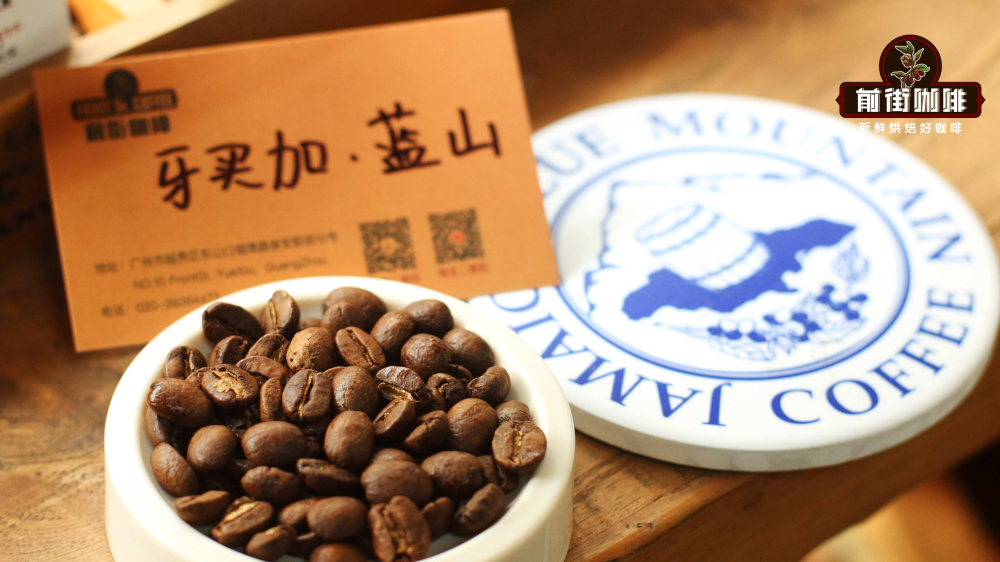
The reason Blue Mountain coffee is famous around the world is inseparable from the unique natural conditions of Jamaica's Blue Mountain range. The high altitude, cool climate, moderate rainfall and the nourishment of volcanic soil provide a near-perfect environment for coffee trees to grow. As early as the 1960s, Jamaica Blue Mountain coffee had already made a name for itself in the international coffee market.

What truly made Blue Mountain coffee famous worldwide was the hurricane disaster of 1969. At the time, the Japanese company UCC not only provided disaster relief but also introduced advanced ecological cultivation techniques to help restore coffee growing. In return, the Jamaican government signed a 30-year agreement with Japan to export 90% of the annual Blue Mountain coffee output to Japan, leaving only about 10%, roughly 245 tons, for other markets around the world. This extreme imbalance between supply and demand, combined with successful promotion in the Japanese market, drove Blue Mountain coffee prices higher and higher, and it gradually became a symbol of the high end in the coffee world.
After 2000, as the agreement expired and emerging markets such as China rose, Blue Mountain coffee gradually entered more countries and regions, including mainland China. Today, many consumers can taste authentic Blue Mountain No. 1 coffee from Jamaica through legitimate channels.

According to Jamaica's Coffee Industry Regulation Act, only Typica variety coffee grown in specific Blue Mountain areas at altitudes between 910 and 1,700 meters is eligible to be called "Jamaica Blue Mountain coffee." These areas mainly include the four producing regions of Saint Andrew, Saint Thomas, Portland and Saint Mary, with a total area of about 6,000 hectares, only one third of the plantable area of the Blue Mountains; the rest of the land is mostly used for growing other grades of coffee. Therefore, beans that can truly be labeled Blue Mountain coffee account for less than 15% of total production, making them extremely rare.

Blue Mountain coffee is divided into four grades by quality: Blue Mountain No. 1, Blue Mountain No. 2, Blue Mountain No. 3 and Blue Mountain Peaberry. Among them, Blue Mountain No. 1 is the highest grade, requiring bean size of 17 screen or above, a defect rate of no more than 2%, a moisture content kept between 10% and 12.5%, and a perfect balance of acidity, sweetness, bitterness, body and aroma in cupping. Because of these strict standards, Blue Mountain No. 1 has an extremely low yield, and every bean is precious.
To ensure that green coffee beans maintain the ideal moisture content during long-distance transport, Jamaican authorities use handmade wooden barrels for packaging, mainly in three sizes: 70 kg, 30 kg and 15 kg. Blue Mountain No. 1 through No. 3 all use this premium packaging. Other grades of coffee are shipped in conventional 60 kg burlap sacks.

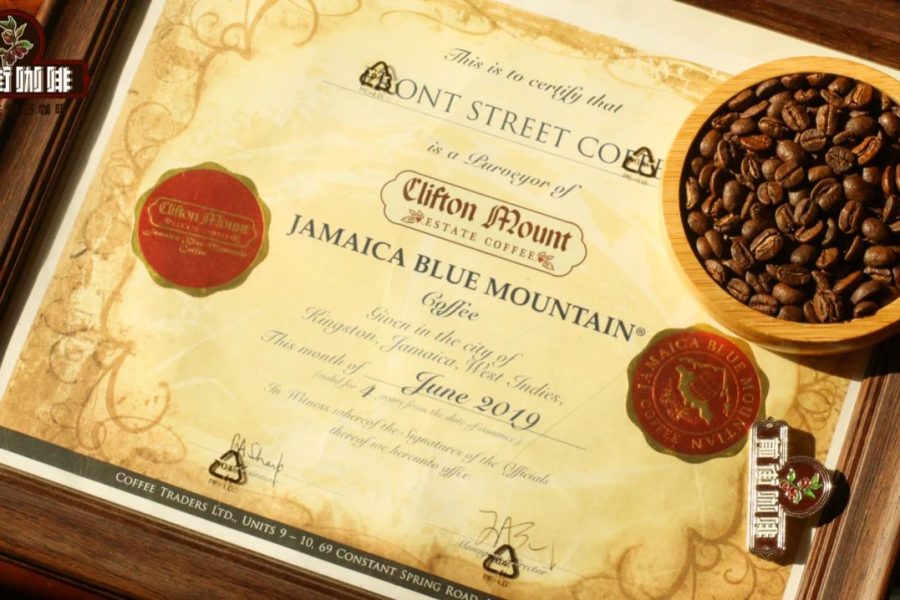
Clifton Estate is one of the oldest coffee plantations in Jamaica, founded in the 1790s, and is also a Rainforest Alliance-certified sustainable farm. On the wooden barrels of green Blue Mountain beans it exports, you can see the green Rainforest water frog certification mark, a double guarantee of environmental protection and high quality. The estate is located on Clifton Mount, with a growing area at about 1,310 meters, where the large day-night temperature difference helps coffee cherries ripen slowly and accumulate more flavor compounds.

In cultivation and processing, Clifton Estate adheres to environmental principles and reduces polluting emissions. Coffee pulp is converted into organic fertilizer, and the water used at the processing plant is recycled, striving to be environmentally friendly from source to finished product. These growing and processing methods also lay the foundation for the pure flavor of Blue Mountain coffee.

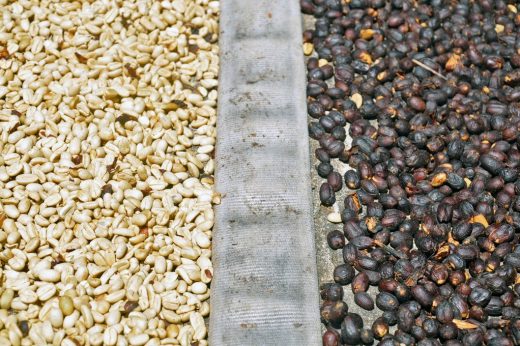
Blue Mountain No. 1 coffee uses the traditional washed process. After picking, the coffee cherries first undergo flotation to separate ripe from unripe beans. Then, water is used to send the ripe beans into a depulper to remove the skin, after which they enter fermentation tanks to remove the mucilage. The entire process is meticulous and rigorous, effectively reducing the defect rate while giving the coffee a clearer, brighter flavor expression and greater consistency.

When brewing Blue Mountain No. 1 coffee, a medium-dark roast is recommended to highlight its mellow depth while preserving soft layers of fruit acidity. The Jamaica Coffee Industry Board also suggests that this roast level better reflects the traditional flavor characteristics of Blue Mountain coffee.

To avoid over-extraction, use a medium grind with a water temperature of 87–88°C. After grinding, the coffee grounds should pass through a No. 20 standard sieve at about a 75% pass rate. As for the brewing device, the KONO dripper is a good choice; its lower rib design helps extend the contact time between water and grounds, making extraction more even.

The specific brewing parameters are as follows: 15 grams of coffee grounds, a coffee-to-water ratio of 1:15, and an EK43s grinder setting of 10.5 (or an equivalent 75% pass rate through a No. 20 sieve). Brewing is divided into three stages: in the first stage, pour 30 grams of water and let it bloom for 30 seconds; in the second stage, pour steadily to 125 grams; after the water level drops by half, continue pouring to 225 grams to complete extraction. Keep the total time to about 2 minutes, which fully brings out the flavor layers of Blue Mountain No. 1.

In terms of the final flavor, at high temperatures the cup has an intense dark chocolate aroma with a distinct almond sweetness on the finish; as it cools slightly, it reveals roasted hazelnut and a creamy, silky texture, along with soft acidity and caramel sweetness, with a long, memorable finish.