Jamaica Blue Mountain Coffee: NO.1 Grade Flavor and Authenticity Guide
Introduction: Jamaica Blue Mountain coffee is hailed as one of the world's finest coffees, and its distinctive flavor is inseparable from its strict growing environment. This article examines the origin environment, variety characteristics, processing methods and flavor profile of Blue Mountain coffee, explains in depth what genuine Blue Mountain No.1 beans are, and offers practical tips for identifying authentic products along with pour-over parameter suggestions, helping coffee lovers gain a full understanding of this classic.
When talking with older relatives who rarely drink coffee, Blue Mountain coffee is often the term they associate with "high-end coffee." Even without having tasted it, they know the name for its historical reputation. So what exactly makes this world-famous Jamaica Blue Mountain coffee special? What are its flavor characteristics? How can you tell whether a cup of Blue Mountain coffee is authentic? This article answers these questions in detail.
When it comes to the flavor of Blue Mountain coffee, many people first think of the blends or instant products marketed as "Blue Mountain flavor" on e-commerce platforms, which often promote themselves as "rich and full-bodied." In reality, genuine Blue Mountain coffee is a perfect balance of the four basic tastes—acidity, sweetness, bitterness and a sweet finish—with a rich aroma and layered complexity, which is why it is admired by coffee lovers worldwide.

The distinctive flavor of Blue Mountain coffee is inseparable from its growing environment. The Blue Mountain range lies in eastern Jamaica and is the highest mountain range in the Caribbean, with its tallest peak reaching 2,256 meters above sea level. On clear days, sunlight refracted through the sea reflects onto the mountainsides, giving them a distinctive blue sheen—hence the name Blue Mountain. The area is divided into several ecological reserves, with everything above 1,700 meters designated a nature reserve; coffee cultivation is limited to areas below 1,700 meters.

Jamaica Blue Mountain coffee is made from the Typica variety, known for its elegant sweet-and-tart flavor but also for being delicate and poor at resisting disease, which is why many farmers focused on yield are reluctant to grow it. However, after more than two hundred years of adapting to the special environment of the Blue Mountains, the Typica here has developed stronger disease resistance and formed distinctive flavor characteristics that are difficult to replicate.

Not all coffee grown in Jamaica can be called Blue Mountain coffee. Under the regulations of the Jamaica Industrial Board, only coffee grown in four specific Blue Mountain districts at elevations between 910 and 1,700 meters may be called "Jamaica Blue Mountain coffee." These four districts are Saint Andrew, Saint Mary, Saint Thomas and Portland, with a total planted area of about 6,000 hectares. Coffee grown below 910 meters but above 460 meters is called "Jamaica High Mountain coffee," while coffee produced below 460 meters can only be classified as "Jamaica Prime coffee," with quality and price decreasing in that order.

The harvesting and processing of Blue Mountain coffee are equally meticulous. Because the growing areas are mostly steep slopes, harvesting is usually done by professional women who know the terrain well, selecting coffee cherries at just the right ripeness. After picking, the fruit undergoes traditional washed processing: obviously defective beans are first removed by hand, then the pulp is removed by machine, after which the beans with mucilage still attached are placed in water tanks to ferment for 12 to 18 hours to remove the mucilage layer. Next, the beans are washed several times in clean water channels and sorted again, then spread out on concrete patios or mesh racks to dry until moisture content drops to 10–12%. Finally, the green beans are stored in wooden barrels under controlled temperature and humidity, awaiting final hulling and quality inspection before shipment.

Jamaica has a strict grading system for Blue Mountain green beans. Based on bean size, shape and defect rate, they are divided into four grades: NO.1, NO.2, NO.3 and Peaberry, with NO.1 being the highest grade, also known as Blue Mountain No.1. Beans of this grade are plump and uniform in size, each measuring between 17 and 18 screen sizes, with a defect rate not exceeding 2%. Because of this, the number of Blue Mountain beans that meet the NO.1 standard is small, and prices naturally remain high.

Unlike other countries, which commonly pack green beans in burlap sacks, Jamaica Blue Mountain No.1 coffee is packaged in sealed round wooden barrels. This not only helps keep the beans fresh during transport but also effectively prevents moisture and odors from entering, ensuring the green beans maintain a moisture content of around 11.5% before roasting. Therefore, if you see whole original wooden barrel packaging when buying, it is usually one of the important signs of authenticity.

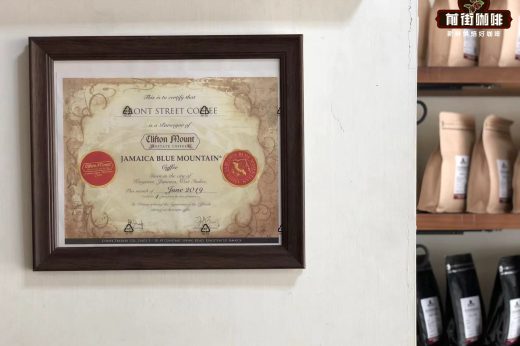
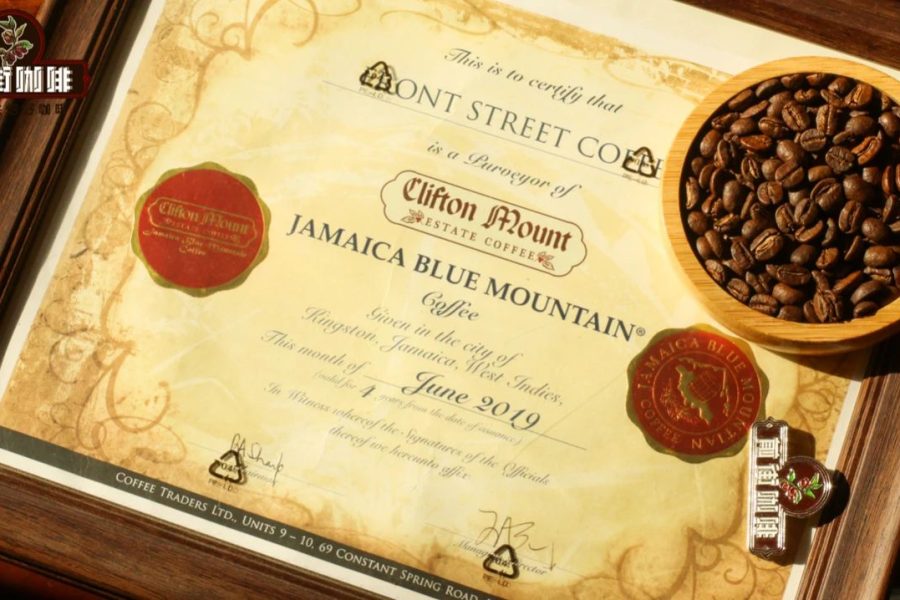
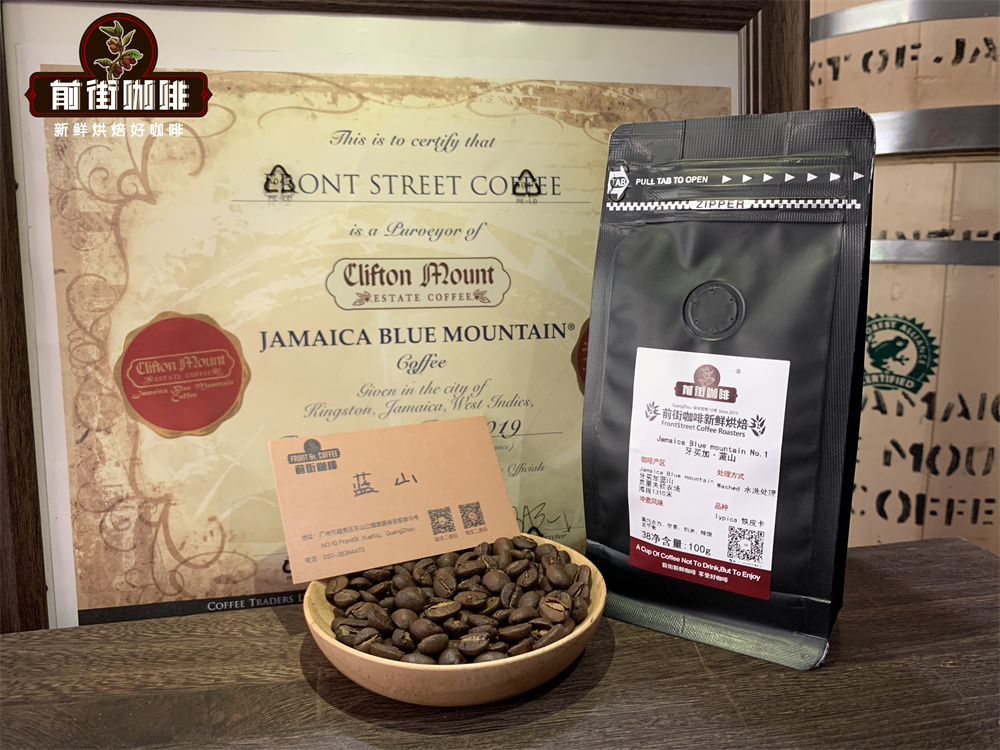
For consumers, authenticity of Blue Mountain coffee beans can be checked in several ways: first, note whether they are exported in whole wooden barrels, which is the most basic criterion; second, you can apply to the Jamaica CIB (Coffee Industry Board) or an authorized estate for a certificate of authenticity to confirm the beans' provenance; in addition, observe the appearance of the roasted beans—genuine Blue Mountain No.1 beans should be uniform, plump and consistent in color.
As for brand choice, it is actually not the most important factor. As long as the Blue Mountain coffee beans come from a legitimate processing facility or independent farm authorized by the Jamaica CIB, quality is assured. Consumers can therefore focus more on value for money rather than relying solely on brand recognition.
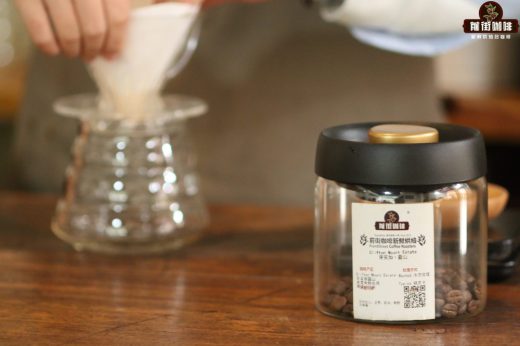
To brew a cup of pure, authentic Blue Mountain No.1 coffee, the roast level and brewing method are equally key. Blue Mountain coffee is known for its balanced acidity, sweetness and bitterness with nutty notes; to bring out its classic flavor, a medium-dark roast is recommended, as this roast profile better highlights chocolate and sweet aromas. In terms of brewing method, pour-over is one of the extraction methods that best expresses its delicate flavor. Using a KONO dripper with medium-dark roasted Blue Mountain No.1, immersion-style extraction can increase the coffee's concentration and complexity, while controlling water temperature and grind size avoids the bitterness caused by over-extraction.

To experience the best flavor of Blue Mountain No.1, choose beans roasted within the last 5 days, as coffee flavor peaks 4 to 7 days after roasting and then gradually fades. Recommended pour-over parameters: water temperature 88°C, coffee-to-water ratio 1:15, 15 grams of ground coffee, grind size set so that 75% passes through a No. 20 standard sieve (about medium-coarse). Use a three-pour method: first pour 30 grams of hot water and let it bloom for 30 seconds, then slowly pour in circles from the center to 125 grams, and once the water level drops, continue pouring to 225 grams, keeping total extraction time to about 2 minutes. Finally, gently swirl the coffee to mix, and it is ready to taste.

Brewed with the right parameters, Blue Mountain No.1 gives off a clear caramel aroma during the bloom; on the palate you can taste rich nutty and dark chocolate flavors, with a full, round mouthfeel and a sweet, clean, lingering finish. For enthusiasts who want to understand Blue Mountain coffee more deeply, mastering these details will help you better appreciate the unique charm of this world-class coffee.