Brazilian Coffee Regions: From Cerrado to Queen's Estate
Introduction: Brazil is the world's largest coffee producer, and its nutty profile and high value for money have made it a daily choice for many coffee lovers. This article takes an in-depth look at Brazil's main coffee regions, including the growing environments and processing differences of Cerrado and Mogiana, and explains Brazil's unique NY grading system in detail. It also offers professional pour-over parameter suggestions to help you better appreciate the nutty, chocolate and caramel flavors of Brazilian coffee.
When it comes to the country with the highest coffee production in the world, Brazil is the one. Thanks to its vast growing area and stable climate, Brazil not only supplies a large share of the world's commercial coffee but also produces many specialty coffee beans with distinctive flavors. For those new to Brazilian coffee, descriptions such as "nutty flavor" and "low acidity, full body" are often heard; these characteristics are exactly the representative flavors of Brazilian coffee.
As an important player on the world coffee map, Brazilian coffee includes both commercial beans suited to bulk trade and specialty-grade beans selected through COE competitions. Although Brazilian coffee is known for high volume and affordable prices, its flavors tend to be fairly concentrated, which is related to the efficient mechanical harvesting and standardized processing commonly used locally. If you are looking for an everyday coffee that is low in acidity, round in mouthfeel and carries nutty and chocolate notes, Brazilian beans are undoubtedly a choice well worth trying.
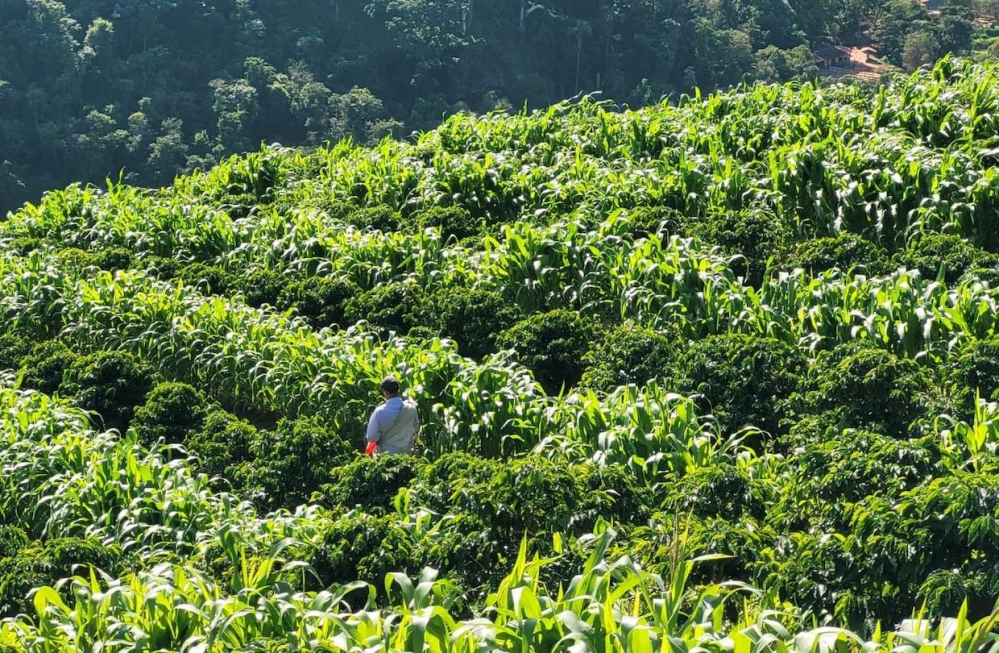
Brazil's coffee regions are widely distributed, among which South Minas and Mogiana are among the most closely watched specialty coffee regions. Based on differences in altitude, microclimate and processing method, these two regions have each developed representative coffee styles. For example, the Cerrado area of South Minas is known for its plateau terrain and mild sun-drying conditions, and the beans produced there often show nutty, caramel and soft creamy aromas; while the Mogiana region, with its high altitude and rich vegetation, often yields coffee with a clean sweet sugarcane flavor and a full body.

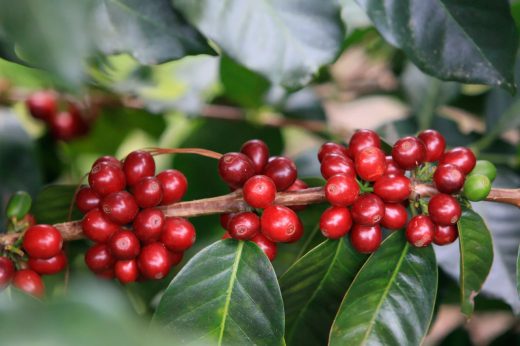
Among Brazil's many regions, Cerrado is a representative plateau region, located in western Minas Gerais state, with an altitude range of about 750 to 1,200 meters. The area has flat terrain and a relatively dry climate, which favors stable coffee growth and harvesting. Cerrado coffee usually uses the Red Bourbon variety; when ripe, the coffee cherries of this variety turn wine-red, the beans are somewhat round, and they have good aroma potential.

The coffee beans of this region commonly use the Pulped Natural processing method, which falls between traditional natural and washed processing. During processing, the skin and pulp of the coffee fruit are first removed, but part of the mucilage is retained, and the beans are dried in the sun. The pulped natural method can effectively shorten drying time while reducing the impact of weather on coffee quality, helping to maintain the coffee's cleanliness and flavor consistency. Compared with full natural processing, pulped natural also allows unripe fruits to be screened out, thereby improving the overall ripeness and flavor balance of the beans.

It is worth noting that although Cerrado as a whole is dominated by natural processing, beans processed by the pulped natural method can better showcase nutty, chocolate and peanut flavor characteristics while reducing the risk of over-fermentation. This processing method also gives Brazilian coffee a more uniform and approachable mouthfeel, making it very suitable for daily drinking or as a blending base.

Besides Cerrado, the Mogiana region is also an important source of Brazilian specialty coffee, especially known for high-altitude cultivation. The area is close to southern Minas Gerais state and has diverse terrain, covering shrubs, grasslands and mountain forests; the growing environment is relatively pristine and ecologically rich. Coffee cultivation here includes both large farms and small family-run operations, combining traditional skills with modern technology to produce many high-quality green beans.

Queen's Estate is one of the representatives of the Mogiana region, with cultivation at altitudes as high as 1,400 to 1,950 meters. The coffee beans produced here often use the Yellow Bourbon variety; its coffee cherries turn golden yellow when ripe, in sharp contrast to the common red bourbon. Yellow Bourbon has low yields and weak resistance to wind and rain, but in high-altitude environments it can display excellent sweetness and complex aromas.

The coffee beans of Queen's Estate usually use refined natural processing, a method that emphasizes fine control of the coffee fruit's drying process and avoids the quality fluctuations that large-scale centralized processing may bring. Through long sun-drying, Yellow Bourbon coffee can develop pronounced sugarcane sweetness and soft caramel flavors, with an overall full and balanced mouthfeel.

Understanding Brazil's coffee quality grading system helps you make wiser decisions when buying. Brazil uses a unique three-part grading method covering defect rate, screen size and cup quality, which differs from the classifications in many other countries that rely solely on altitude or processing method.

The first is grading by defect rate, using a "demerit system," i.e., the number of defective beans allowed per 300 grams of coffee. The highest grade is No.2, requiring defect demerits within 4 points; while No.1 is theoretically the best, because it is scarce and difficult to guarantee a stable supply, the market generally uses No.2 as the specialty benchmark. The second is screen size, usually with 17/18 as the best, using a 1/64-inch standard sieve; the higher the number, the fuller and more uniform the beans. The last is cup quality rating, with common grades including Fine Cup (FC), Good Cup (GC), Fair Cup, etc., among which FC and GC are markers of premium grades.

In the past, Brazilian coffee was once regarded as synonymous with "low-quality coffee" because of its pursuit of volume at the expense of quality. But with the promotion of the COE (Cup of Excellence) competition and the improvement of the NY grading system, Brazilian specialty coffee has gradually gained recognition in the international market. Today, many Brazilian estates have succeeded in creating high-quality coffees with distinctive flavors through refined management and innovative processing methods.
For coffee lovers who enjoy pour-over, Brazilian coffee is very suitable for daily brewing because of its mild mouthfeel and low acidity. A KONO dripper is recommended, with about 15 grams of coffee, water temperature controlled at 90°C, and a medium-fine grind (70% passing a No.20 sieve). Use staged extraction: first bloom with 30 grams of water for 30 seconds, then pour in a small stream in circles to 125 grams and pause, and when the water level drops continue pouring to 225 grams to finish, with a total extraction time of about 2 minutes.

With these parameters, Cerrado coffee usually shows prominent sweetness and a clean, smooth character, with obvious peanut, almond and chocolate flavors; while Queen's Estate coffee presents a fuller mouthfeel, with sugarcane sweetness interwoven with cocoa flavors and a long finish. Whether for daily drinking or as a blending base, Brazilian coffee can bring you a stable and pleasant taste experience.