Yellow Bourbon Coffee: Origin, Flavor and Brazil's Classic Regions
Introduction: Yellow Bourbon coffee is highly regarded in the specialty coffee world for its distinctive yellow fruit and excellent flavor. This article takes an in-depth look at the variety's origins, genetic characteristics and differences from Red Bourbon, telling the story behind this Brazilian classic. From flavor characteristics to cultivation essentials and notable producing regions, it offers a comprehensive grasp of Yellow Bourbon growing and tasting knowledge.
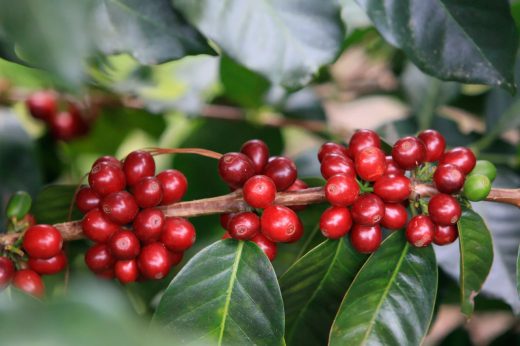
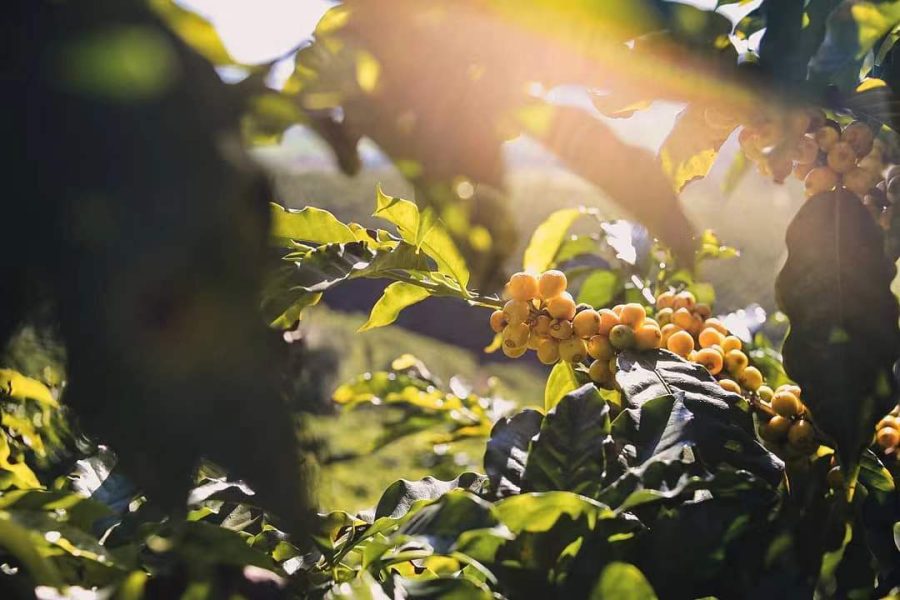
Coffee fruit usually turns red when ripe, but one special variety—Yellow Bourbon—is named for its bright yellow ripe fruit. This coffee is not only considered a precious variety in Brazil but is also favored by coffee lovers and roasters worldwide for its unique flavor and appearance.
Although the history of Yellow Bourbon can be traced back nearly 90 years, its true origins go back further in the evolution of coffee varieties. By the mid-19th century, Brazil had become an important coffee-producing country, relying mainly on the Typica variety. However, because Typica yields were low, Brazil began seeking alternative varieties. In the 1850s, a Brazilian traveled to Réunion Island (an island in the Indian Ocean east of Madagascar) and brought back Red Bourbon seeds. By the 1870s, Red Bourbon was widely planted in Brazil.

In 1871, a curious phenomenon appeared in the Botucatu region of Brazil: a Typica mutation with yellow fruit quietly emerged. This was the first recorded yellow-fruited coffee tree in the area, named Yellow Botucatu. Although its yield was not high, its unusual fruit color sparked interest among many farmers. Some researchers believe that the later Yellow Bourbon may in fact be the result of a natural mutation of Red Bourbon.
The Yellow Bourbon variety in its modern sense can be traced back to around 1930, when it appeared naturally on a farm growing Red Bourbon near Pederneiras in São Paulo State, Brazil. It is presumed that the variety may be a natural hybrid offspring of Red Bourbon and Yellow Botucatu. Besides its signature yellow fruit, the variety is extremely similar to Red Bourbon in other respects, but its yield is superior, gradually attracting the attention of agricultural researchers.
In 1942, Carlos Arnaldo Krug of the Campinas Agronomic Institute (IAC) in Brazil carried out the first systematic study of this yellow variant. Over the following three years, the research team planted and evaluated 30 related varieties at the IAC's research station in Jaú. After years of observation, by the 1950s the most promising group of Yellow Bourbons was numbered "IAC J" and began to be promoted to farmers. Research data showed that among varieties including Typica, Yellow Botucatu, Sumatra, Red Bourbon, Yellow Bourbon and Maragogipe, Yellow Bourbon had the most outstanding yield.

However, despite its excellent yield performance, Yellow Bourbon did not become a mainstream coffee variety in Brazil over the following decades. Its planting range was relatively limited, and it was seen more as a novelty variety with a distinctive appearance. At the time, coffee research focused mainly on yield, disease resistance and plant health rather than flavor performance. Meanwhile, emerging varieties such as Caturra (1937), Mundo Novo (1943) and Catuaí (1949) were also rising rapidly, further diverting attention from Yellow Bourbon.
It was not until the rise of specialty coffee and the third wave that Yellow Bourbon came back into view, offering consumers a whole new taste experience thanks to its outstanding flavor performance.
So why does Yellow Bourbon's fruit take on its distinctive yellow color? In 1942, Professor Krug revealed the genetic mechanism behind it. The trait comes from a gene combination called "Xanthocarpa," made up of the Greek words "xanthus" (yellow) and "carpus" (fruit).
Specifically, if a coffee plant carries a pair of dominant XcXc genes, it produces red fruit; if it carries a pair of recessive xcxc genes, the fruit is yellow; and if it carries one dominant and one recessive gene (Xcxc), it may produce orange fruit. In yellow fruit, the key component is a flavonoid substance called luteolin, which is also found in plants such as vanilla and broccoli.

Yellow Bourbon trees typically grow to around 2.8 meters, and their maturation cycle is relatively short. According to 1945 research, of the 30 Yellow Bourbon varieties tested that year, only 7 are still grown on a commercial scale in Brazil today.
It should be noted that Yellow Bourbon has a low yield and weak resistance to leaf rust, so growing it requires more management effort. The variety is suited to highlands above 1,000 meters in elevation, and extra care is needed during harvesting and processing to fully bring out its flavor potential.
Yellow Bourbon's flavor is highly distinctive, typically featuring pronounced sweetness, rich aroma and bright citric acidity. Common flavor descriptors include ripe fruit and raisins, often accompanied by caramel and nutty notes. Recent research has found that its sucrose content, fat and organic acid composition are closely related to its excellent cupping performance. However, luteolin, the substance that gives the fruit its yellow color, is not directly linked to flavor performance.

In 2005, Brazil's IAC refocused on Yellow Bourbon's flavor potential, re-screening the 30 varieties from its 1945 study. After cupping, 16 of them scored above 85 points, and these varieties were selected as important lineages for further research. Related research led by Professor Gerson Giomo is still ongoing, with the goal of selecting potential varieties that combine high yield with excellent flavor performance.
In 2017, a Yellow Bourbon coffee stunned the field in the natural category of Brazil's Cup of Excellence competition with a high score of 92.33 points, and later sold at auction for US$126 per pound, 100 times the average futures market price at the time—clear evidence of its quality potential.

How Yellow Bourbon is grown and processed has a huge influence on its final flavor. Some Brazilian specialty estates, for example, use small-scale, meticulous natural or pulped natural processing, drying carefully on African raised beds with dedicated staff turning the beans at set intervals and monitoring moisture content, thereby improving the coffee's overall quality and consistency.

Yellow Bourbon's unique flavor and cultivation challenges make it a rare variety in the eyes of coffee lovers and professional growers alike. From genetic origins to flavor characteristics, from growing elevation to processing methods, a deeper understanding of this variety not only enriches one's knowledge of coffee diversity but also opens a window onto the endless possibilities of specialty coffee.