Panama Butterfly Geisha Pour-Over Guide: Tea-Like Notes and Brewing Parameters
Introduction: This Butterfly Geisha coffee from Panama's Boquete region blends 70% Geisha heritage with Caturra and Catuai varieties, presenting a distinctive tea-like character and floral-fruity profile under natural processing. This article analyzes its terroir advantages, variety characteristics and processing techniques, and provides professional pour-over parameters and a flavor tasting guide to help you recreate a specialty coffee shop-level experience with high-value beans.
 Panama's Boquete, located at the border of Chiriqui Province and Costa Rica, neighbors the Baru Volcano (3,475 m elevation), and this unique geographical setting has created a specialty coffee region of global renown. The area's 1,000-2,000 m highland elevation, combined with volcanic rock soil and a misty climate with average annual humidity above 75%, provides near-perfect growing conditions for the Geisha variety.
 As one of Panama's oldest coffee regions, Boquete has not only nurtured top estates such as Hacienda La Esmeralda but also gathered well-known farms including Elida and Kotowa Duncan. Its microclimate diversity (seven distinct microclimate zones within the region) and the day-night temperature difference formed by steep mountain terrain allow coffee cherries to slowly accumulate sugars and flavor compounds.
 The market often equates Panama Geisha with high prices, yet this coffee, whose packaging lists three varieties, is actually a single-origin single-variety bean—Butterfly. Although the variety list names Geisha, Caturra and Catuai together, because the three are interplanted in the same garden and harvested simultaneously, it is essentially a single-origin selected lot. Geisha accounts for 70%, paired with the other two varieties grown in 1,600 m volcanic rock soil to form a unique flavor balance.
 Butterfly's core competitiveness lies in its high-value Geisha experience: its natural processing method preserves the fruit's natural sugars, presenting an obvious tea-like base and fermented fruit aroma. Compared with Hacienda La Esmeralda Geisha that often costs over a thousand yuan per pound, Butterfly—interplanted from the same region and same varieties—retains the signature Geisha flavors (such as jasmine fragrance and bergamot finish) while retailing at a much more affordable price.
 The legend of the Geisha variety began in 1931 with wild plants collected in Ethiopia's Kaffa forest; after being replanted in Kenya, Costa Rica and other places, it finally flourished at Hacienda La Esmeralda's Jaramillo farm in Panama. In the 2004 BOP competition, the variety won with its revolutionary expression of white floral fragrance, clean acidity and black tea mouthfeel, and the T2722 variety became known to the world from then on.
 The Caturra variety in the blend (about 20%) is a Bourbon mutation that inherits bright berry acidity and adaptability to 1,700 m high altitude; its 1.2-1.5 kg medium yield ensures the cherries ripen fully. The more disease-resistant Catuai (about 10%) balances the overall flavor with a nutty base, and its hybrid nature makes the coffee cherries more resistant to falling off in wind and rain.
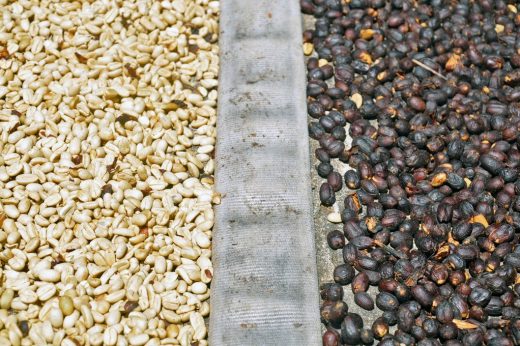
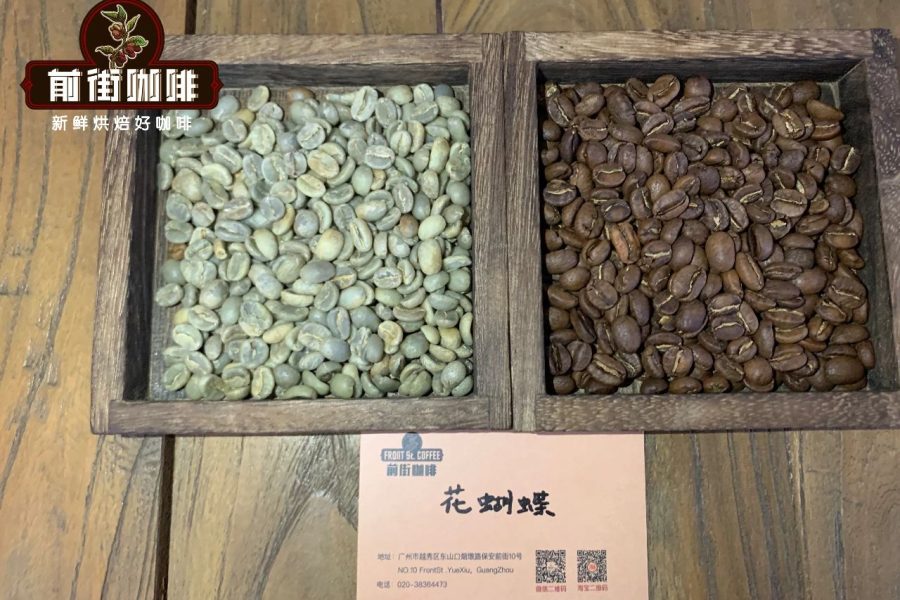
 The natural processing method used for Butterfly is a model of traditional craft: selected red cherries are floated to remove defects, then spread directly on raised drying beds for 21-28 days of natural drying. During the process they must be turned three times a day with temperature and humidity monitored (ideal range 45-55°C) to prevent excessive fermentation from localized overheating. When moisture content drops to 11.5%-12.5%, the green beans take on a deep blue-green color with an obvious fermented sweet aroma.
 For professional pour-over, a V60 cone dripper is recommended (the large-hole version with 0.6 mm diameter suggested), with parameters: medium-fine grind (Chinese standard No. 20 sieve pass rate 80%), coffee-to-water ratio 1:15, water temperature 90±1°C. The process is divided into three stages: first pour 30 ml hot water for a 30-second bloom to activate aroma, then pour in a slow circular stream to 125 ml to form a saturation layer, and when the water level drops by one third, continue pouring to a total of 225 ml, with total brew time controlled at around 2 minutes 00 seconds.
 The flavor expression shows layers as temperature changes: the initial stage (above 85°C) highlights green tea character and fermented pineapple aroma, the mid-temperature zone (70-85°C) develops black plum sweet-tartness and almond nuttiness, and the finish (below 70°C) leaves a honey-like caramel sweetness. Avoid over-grinding, which can cause bitterness, and adjust pouring speed to control extraction uniformity.
 Freshness directly affects flavor expression: choose beans 5-14 days after roasting, when carbon dioxide release is sufficient and flavor compounds are at their peak. After receiving, store in a cool, dark place; no need to refrigerate (temperature differences easily cause condensation that damages the beans). If you purchase pre-ground coffee, use it within 24 hours to reduce oxidation loss.
 Common misconceptions: ① Naturally processed beans do not need an extended resting period (the usual 4-7 days is enough); ② water that is too hot (>93°C) easily amplifies defective flavors; ③ a pouring stream that is too strong may cause channeling. By precisely controlling variables, even home equipment can recreate a specialty-shop-level flavor experience.