Why Cold Brew Is Also Called Kyoto or Dutch Coffee: Five Names Explained
Introduction: The most popular coffee of summer, cold brew, actually hides several names: ice drip, ice-brewed, Dutch coffee, Kyoto coffee… These names look different, but all relate to low-temperature extraction. This article thoroughly clarifies the origins and differences of these five common terms—cold brew coffee, ice drip, ice-brewed, Dutch coffee, and Kyoto coffee—to help you accurately understand the characteristics of each method, with practical parameters and buying advice, so you can easily master the core knowledge of this type of black coffee.
When learning about coffee on their own, many people are often confused by similar technical terms. For example, with today's popular iced coffee—cold brew—a search brings up many "alternative names" such as ice drip, ice-brewed, cold steep, Dutch coffee, and Kyoto coffee, making them hard to tell apart at first. Among them, "ice-brewed coffee" is especially vaguely defined: some think it is cold steep, some think it is ice drip, and others understand it as a method of soaking coffee grounds in a mixture of ice and water. To sort out these concepts, it helps to start with the broad category of cold brew coffee.
The term "cold brew coffee" is a direct translation from the English "Cold brew coffee," and its spread is inseparable from commercial promotion. In the broad sense, all black coffee extracted with cold water (low temperature), whether obtained by immersion, drip filtration, or pouring, belongs to the category of cold brew coffee. However, because Chinese already had the term "cold-brewed tea," the "cold brew coffee" people mention in daily life usually specifically refers to the cold-steep method of soaking coffee grounds in room-temperature water for a long time—mixing coffee grounds with water, refrigerating for several hours, then filtering out the coffee grounds.
< >
As a typical immersion extraction, cold-steep coffee is simple to make, highly error-tolerant, and has few restrictions on the type of coffee beans, so it is not only a common option in coffee shops but also a popular choice for home brewing.
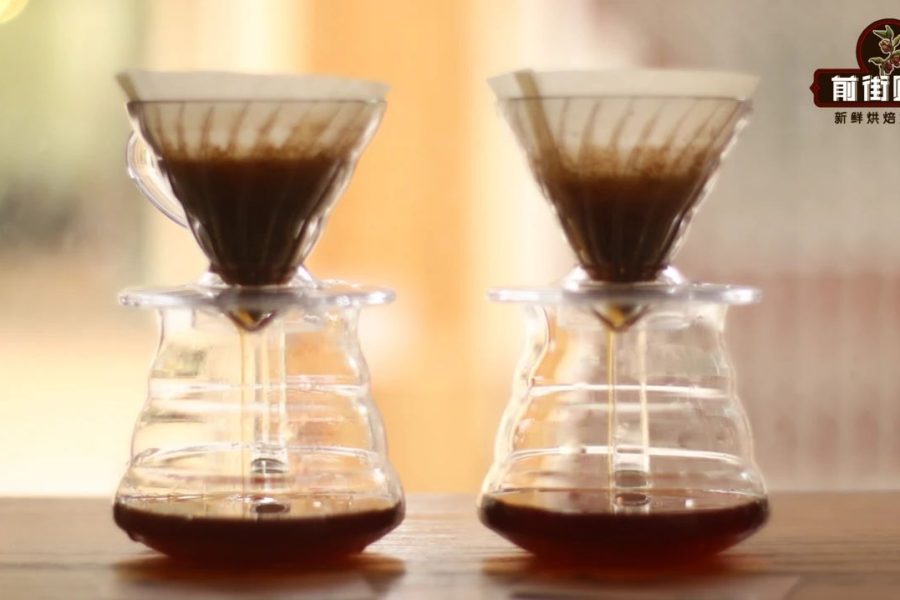
Another common low-temperature extraction method is drip filtration: by controlling a mixture of ice and water to drip slowly, bit by bit seeping through coffee grounds for a long extraction, this method is called ice drip. In many English sources, ice drip is usually not called "Ice Drip Coffee" but Dutch Coffee, so it is often literally translated as "Dutch coffee."
< >
Regarding the name "Dutch coffee," there is a widely told story: in the 17th century, Dutch sailors on sea voyages tried soaking coffee grounds in cold water and unexpectedly found that coffee made this way was less bitter and easier to preserve and transport over long periods. Later, this cold-drink method spread through trade to Japan in the Edo period and became popular there, hence the name Dutch Coffee. Although the truth of this story is hard to verify, what is certain is that the multi-layer drip filtration device commonly seen in coffee shops today was improved and invented in Japan, and the ice drip coffee made with this device also mainly became popular in Japan.
< >
In the 1950s, the owner of a shop in Kyoto called Hana Fusa, inspired by the cold brew process, worked with several chemistry students to develop a three-layer, valve-equipped tower-shaped ice drip brewer. This device extracts coffee grounds by slow, even drip filtration with low-temperature cold water, and was praised at the time as one of the most artistic coffee brewing methods. Subsequently, as well-known Japanese equipment brands such as HARIO, KINTO, and Kalita successively launched the cold brew bottles and ice drip brewers common today, this type of low-temperature extracted black coffee gradually spread in Japan. By the time the third wave of coffee arose, this distinctive-looking device reached Europe, where Westerners called it "Kyoto Coffee."
< >
Compared with cold brew and ice drip, the term "ice-brewed" appears less often in domestic coffee shops, is harder to trace to an exact source, and is explained differently by different people. Generally speaking, "ice-brewed coffee" can be seen as an elegant translation of "Cold Brew," almost equivalent in meaning to cold brew coffee in the broad sense. But the word "brewed" highlights the process of "brewing"—originally related to making wine—suggesting that after extraction, the coffee liquid usually needs to be sealed and stored for a period (from several hours to a day or two) for aging, allowing soluble flavor compounds to further integrate with the water and develop a mellow taste like a fine wine.
< >
Therefore, whether ice drip or cold steep, as long as it has gone through a certain period of storage and aging, the resulting black coffee can be understood as "ice-brewed coffee."
In summary, cold brew coffee is the broad general term for black coffee extracted with cold water at low temperature; cold steep is the most common immersion method for home and commercial use; ice drip is a low-temperature extraction method using ice-water drip filtration, often called Dutch Coffee in English; Dutch coffee comes from a historical legend and is also related to the ice drip device; Kyoto coffee is the name given by the West after Japanese-improved drip equipment became popular; and ice-brewed emphasizes the aging process after extraction, with a scope that highly overlaps with cold brew. Understanding the differences behind these names can help you more accurately choose and describe the low-temperature coffee you like.
< >