The Complete AeroPress Guide: From Basics to World Championship Syringe Coffee
Introduction: The AeroPress, a uniquely shaped and highly flexible coffee brewing device, is favored by coffee enthusiasts worldwide for its simplicity, portability and varied flavor expression. This article begins with the AeroPress's invention background, explains its working principle, introduces operating steps and brewing parameter settings, and explores in depth its development and innovative methods in coffee competitions, helping you fully master the techniques and appeal of this “syringe coffee.”
This distinctive coffee device, made of just two main parts, can quickly extract rich, full-bodied coffee through simple hot water pouring and manual pressure. It does not rely on gravity drip filtration like traditional pour-over gear, nor does it use the immersion extraction of a French press; instead, it borrows the pressure extraction concept of espresso machines, except the pressure comes from human operation. This is the AeroPress, an innovative brewing tool that drew attention as soon as it debuted in 2005.

The AeroPress's design inspiration actually comes from engineering thinking. Inventor Alan Adler initially sought to solve the problem of coffee bitterness, trying to optimize flavor by shortening extraction time, and ultimately hit on using pressure to accelerate the extraction process. To this end, he designed a sealed brewing chamber in which the user pushes a piston to generate pressure, forcing hot water quickly through the coffee bed for efficient extraction. This design not only simplified the operating process but also laid the foundation for the diverse brewing methods that followed.


Although the AeroPress was not favored by the specialty coffee world when first launched—and was even mistaken for a creative product from a toy manufacturer—its reputation gradually reversed as more and more users personally experienced its excellent extraction results. Compared with traditional gear, the AeroPress not only brews quickly, usually in about 1 minute, but is also easy to clean and compact, suitable for home, office or outdoor use. In addition, its affordable price and extremely high operational flexibility have made it the first choice for many coffee beginners and brewing players who love to experiment.

The AeroPress's brewing parameters are highly adjustable, including brew time, coffee-to-water ratio, water temperature, pressing speed, and whether the standard or inverted orientation is used—all of which can significantly affect the final coffee's flavor expression. For example, using a finer grind and slightly higher water temperature with appropriate stirring can highlight the coffee's bright acidity and complexity; adjusting pressing speed and pressure can control extraction evenness and body. This rich playability is also an important reason the AeroPress has spawned numerous brewing schools and given rise to global competitions.

Speaking of the AeroPress's global influence, one must mention the World AeroPress Championship (WAC). This competition began in 2008, initially launched by several coffee enthusiasts and professionals in Oslo, Norway, with only three competitors. However, thanks to its relaxed, fun competitive atmosphere and encouragement of creative brewing, WAC gradually attracted the attention of coffee enthusiasts worldwide. By 2018, 3,157 competitors from 61 countries had competed on site, and online viewership exceeded 68,000. The competition encourages competitors to freely express themselves under standard rules, trying different brewing parameters and techniques to show the AeroPress's endless possibilities.

Next, through hands-on practice, we will experience how to use the AeroPress to make a cup of balanced coffee. This time we chose a coffee bean with rich layers, whose flavor presents bright acidity and juicy fruit sweetness, very suitable for showing the AeroPress's extraction characteristics. A dose of 18 grams is recommended, with a grind slightly finer than regular pour-over, roughly close to fine sugar in texture, ensuring sufficient but not excessive extraction; the coffee-to-water ratio should be controlled at about 1:11, with a total water volume of about 200 milliliters; the water temperature is recommended at around 90°C to balance sweetness, acidity and body. We use the inverted method to improve extraction stability and operational margin for error.

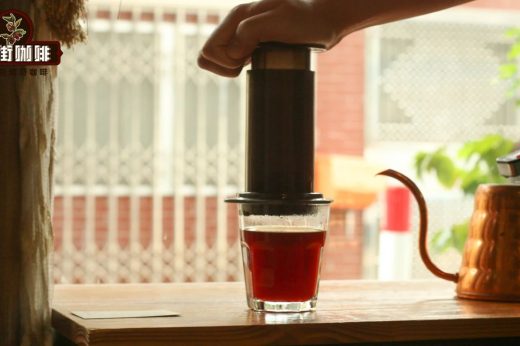
The specific steps are as follows: first, wet the filter paper and press it firmly onto the filter cap to ensure filtration; then assemble the plunger and the chamber, pre-press the plunger to about the 4th mark, and place the whole device upside down; next, pour the ground coffee into the chamber, add an equal amount of hot water, and start the timer; stir slowly in circles with a stirrer for about 10 seconds to help the coffee grounds saturate evenly; then attach the filter cap and place the container underneath to catch the coffee; when the timer reaches 1 minute, flip the AeroPress upright and press the plunger slowly and steadily to “press” the coffee liquid into the cup. The whole process takes about 1 minute 20 seconds, and the resulting coffee is usually balanced in sweetness and acidity, smooth in texture and clearly layered.

The biggest advantage of the inverted method is that it is more stable to operate, especially suitable for coffee beginners. Compared with the standard method, the inverted method controls pressure release better and reduces the risk of channeling and over-extraction, thereby achieving more even extraction. Whether you seek bright fruit acidity or a full body, by adjusting grind, water temperature and pressing speed, the AeroPress can express ever-changing coffee flavors—which is also an important reason it is deeply loved by coffee enthusiasts worldwide and continues to be popular.