Dirty Coffee Tutorial: A Summer Iced Latte Alternative and Layering Tips
Introduction: Dirty coffee has become a popular summer drink thanks to its unique hot-and-cold sensation, but many people find it hard to recreate the striking layers they get in cafés when making it at home. This article explains the core steps of making Dirty coffee, from choosing the roast level of the coffee beans to controlling the milk temperature, analyzes how to create clear layers through temperature and density differences, and offers practical tips to avoid extraction mistakes, helping you easily make a rich, iced Dirty.
[Why has Dirty coffee become a summer hit?]
Compared with a regular iced latte, Dirty coffee creates a strong sensory contrast through the collision of hot espresso and cold milk, delivering a double impact of temperature and flavor in the first sip. This unique drinking experience has made it quickly popular in summer, especially among young consumers seeking fresh flavors. Although the principle seems simple, home preparation often results in blurred layers and flat flavor because key details are overlooked.
[Revealing the soul elements of Dirty coffee]

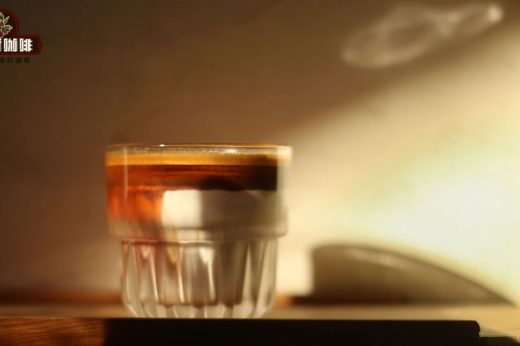
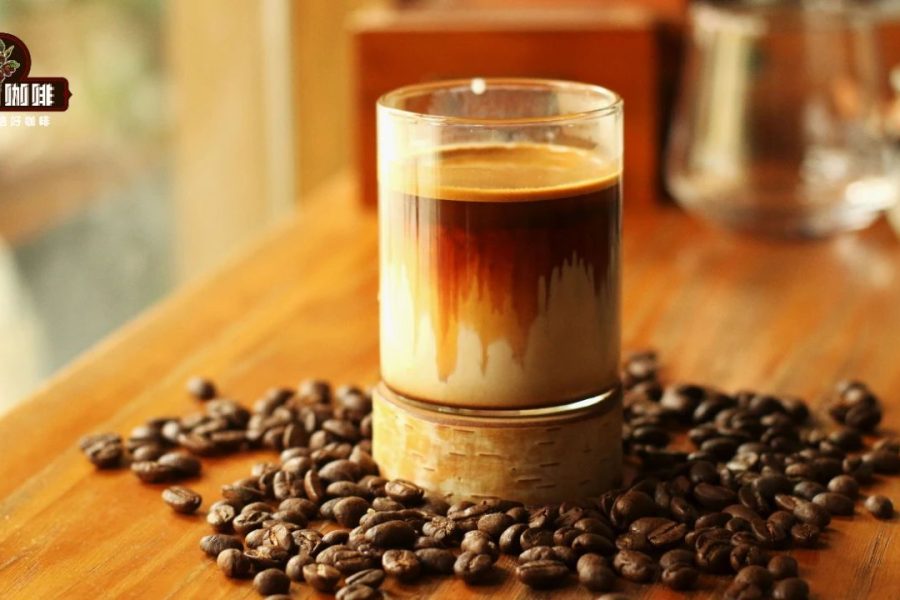
A truly high-quality Dirty coffee needs to build a triple contrast: the visual layering effect, the hot-and-cold stimulation brought by the temperature difference, and the taste contrast between the coffee's bitterness and the milk's sweetness. Among these, a temperature difference of 8-12°C is ideal: it keeps the milk icy while preventing the espresso from cooling too quickly and affecting flavor release.
[The scientific basis for choosing coffee beans]

The flavor base of the espresso determines the success of the whole Dirty. A medium-dark roast (SCA roast standard #45-#55) blend is recommended; such beans have a moderate degree of caramelization—they will not produce sharp acidity that disrupts the overall balance due to too light a roast, nor will a dark roast make the bitterness too heavy and mask the milk's fresh sweetness. Ideal extraction parameters are 92-94°C water temperature, 9-10 atmospheres, and 30 ml of espresso extracted in 25-30 seconds.
[The golden standard for milk quality]

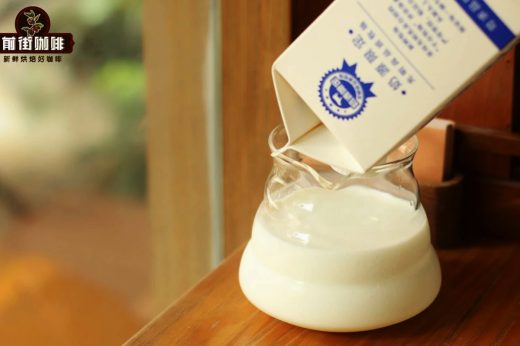
Whole milk (3.2%-4% fat) is the best choice for making Dirty; its rich milk fat not only enhances sweetness, but its higher protein content also helps maintain layer stability. Experimental data show that for every 0.5% increase in milk fat per 100 ml of milk, the layering duration can be extended by 15-20 seconds. Note that ultra-high-temperature (UHT) milk should be avoided, as its processing destroys the protein structure and may worsen the layering effect.
[Practical points for temperature control]

Before making, chill the coffee cup for 15-20 minutes in advance (below 4°C is recommended), and make sure the milk stays refrigerated (2-4°C). The ideal extraction temperature for hot espresso is 88-92°C, which forms the most pronounced temperature gradient when it contacts the iced milk. If using a commercial espresso machine, you can rinse the portafilter with cold water beforehand to lower the basket temperature; at home, a pre-infusion method is recommended to control extraction temperature.
[Analysis of professional-level layering techniques]

The key to perfect layering lies in controlling the flow rate and impact force of the espresso. During operation, keep the portafilter spout close to the milk surface (at a distance of 0.5-1 cm) and pour slowly at 1-2 drops per second. Advanced techniques include: ① using a long-spout milk pitcher with a thin stream; ② placing the back of a stainless steel spoon on the milk surface to guide the espresso flow; ③ using a combined method of "a central pour point plus small circular motions." Be careful to avoid vertical pouring, which causes the liquids to mix.
[The hidden influence of equipment choices]

A wide-mouthed glass cold drink cup (200-300 ml capacity) is most suitable as the vessel for Dirty; its transparency makes the layering easy to observe, and the larger rim helps control the pouring angle. Tests show that chilling the cup to below 3°C can extend the layering time to more than 90 seconds. Avoid mugs with a coated interior wall, as such materials may affect the molecular interaction between coffee and milk.
[Solutions to common problems]

When layering fails, check the following: ① confirm whether the espresso is over-extracted (normal TDS concentration should be 8-12%); ② adjust the degree of milk steaming (for Dirty, unsteamed refrigerated whole milk is recommended); ③ improve the pouring technique (try lowering the height or reducing the flow rate). Special note: in high summer temperatures, shorten the time between making and drinking; the best tasting window is the first 30-45 seconds after the layers form.