Why espresso has little crema: is crema actually oil?
Introduction: Many coffee lovers believe you can judge whether an espresso tastes good simply by looking at the crema on its surface, and a fine, thick, golden crema is often seen as a sign of quality. But is it really that simple? This article takes a closer look at what crema actually is, analyzes the key factors that affect its appearance, and uses real examples to show why crema alone cannot fully determine a coffee's flavor, helping you understand espresso extraction quality more scientifically.
You often hear claims like this: "To judge whether an espresso tastes good, just look at the crema on the surface; the best is the kind that is fine, thick and golden." But can espresso quality really be determined by this layer of crema alone?
To test this idea, let's start with a small quiz. Look at the two groups of espresso below. Based only on the appearance of the crema, can you accurately pick out the one that tastes best?



The correct answers are: the third cup in the first group, and the second cup in the second group. Many people may guess the first group correctly, but the second group requires more experience. This shows that although crema can reflect extraction status to some extent, it cannot fully represent whether a coffee's flavor is good or bad.

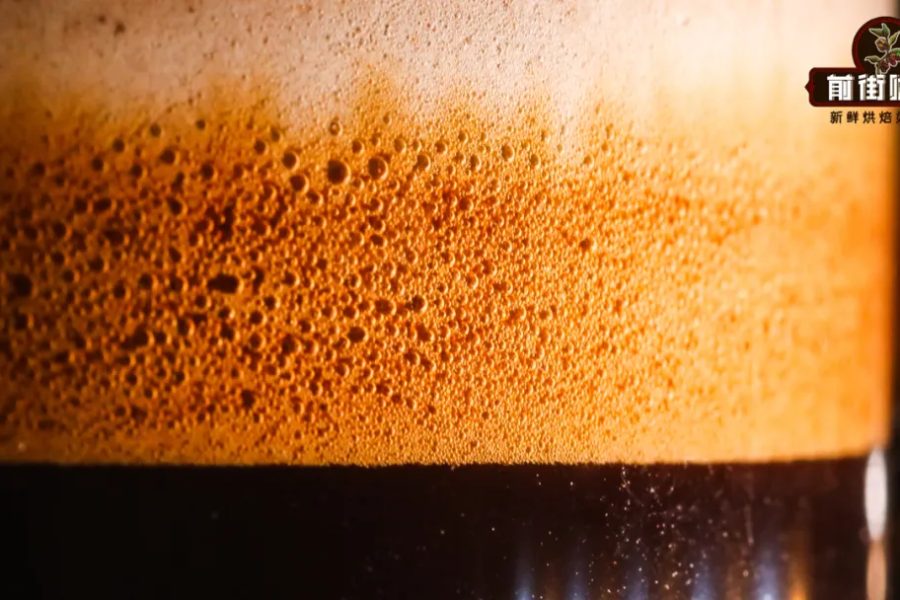
So what exactly is this golden foam commonly called "crema"? In fact, it is not pure oil, but a foam layer formed by the interaction of insoluble microscopic oil particles in the coffee beans and carbon dioxide. Under the extraction pressure of an espresso machine, which can reach as high as 9Bar, these substances are forced into the coffee liquid under high pressure, and because oil does not dissolve in water, they eventually form a fine, golden layer on the surface, which we usually call crema, the crema layer.

Therefore, the formation of crema is closely related to three key factors: the carbon dioxide content in the coffee beans, the grind size of the coffee grounds, and the degree of roast. These variables not only affect the thickness and color of the crema, but also indirectly reflect the freshness of the coffee and its extraction status.
For example, when coffee beans are too fresh, they contain a large amount of active carbon dioxide. Although this can produce a thick, fluffy crema, the bubble structure is often unstable and tends to burst quickly or gather into rough foam, sometimes with visible clumps of bubbles. This kind of crema may look full, but it is often accompanied by unclear flavor and diffuse aroma.

Conversely, if coffee beans are left for too long, the carbon dioxide inside gradually escapes, so even with correct technique, the resulting crema will appear thin and dull in color, and the overall extracted flavor will be greatly diminished.

Besides freshness, grind size is also an important factor affecting crema. If the coffee is ground too coarse, there is insufficient resistance when water passes through the coffee puck, and extraction is too fast, resulting in a paler, thinner crema with an obvious watery quality. The coffee extracted in this case often shows sharp acidity and a thin, watery body, lacking the fullness it should have.
If the grind is too fine, the puck becomes too dense and water struggles to pass through. Although this may form a dark, viscous crema, it often carries the risk of over-extraction, and the coffee flavor tends to show burnt bitterness and smoky notes.

It is worth noting that even if the crema looks ideal—fine, rich and golden—it does not mean the coffee will necessarily taste good. Here are two common examples:
First, the crema extracted from dark-roasted and light-roasted coffee beans is significantly different to begin with. Dark-roasted beans usually have a looser cell structure and more extractable substances, making it easier to form a dark, thick crema with a stronger body. But this does not mean light-roasted coffee is inferior; the two are simply different styles, each with its own strengths.

Second, pressure changes have a limited effect on crema but a significant effect on flavor. For example, coffee extracted at 6Bar, 9Bar and 11Bar may show little difference in crema appearance, all presenting a fine, golden visual effect, but when actually tasted, coffee extracted at 6Bar often has a flat flavor with a single layer, while coffee extracted at 11Bar tends to show the burnt bitterness and harshness of over-extraction.

In summary, although crema is one important reference for evaluating espresso extraction status, it cannot serve as the sole criterion for judging whether coffee tastes good. The key factors that truly determine the flavor of an espresso also include the coffee bean variety, roast profile, freshness, grind size, extraction parameters (such as pressure, water temperature and time), and the barista's technique. Only by understanding the principles behind these can you more fully appreciate and evaluate the true quality of an espresso.