Home Coffee Machine Buying Guide: Espresso, Capsule and Pour-Over Compared
Introduction: With so many coffee machine types on the market, how do you choose a suitable device based on your own needs? Starting from home scenarios, this article explains in detail the core principles, operating characteristics and suitable users of espresso machines, capsule coffee machines, American drip machines and pour-over equipment, and provides key parameter references and flavor pairing suggestions to help you find your ideal coffee solution.

Since the first coffee machine appeared in 1818, more than two centuries of technological innovation have gradually extended home coffee equipment to cover the full range of needs, from professional extraction to convenient brewing. Whether you pursue the ritual of manual preparation or an efficient and stable quick experience, different types of coffee machines can add a unique flavor to daily life. Next we will systematically sort out the characteristics of mainstream models to help you make a precise choice based on your drinking habits and budget.

Espresso machines: the core experience of high-pressure extraction
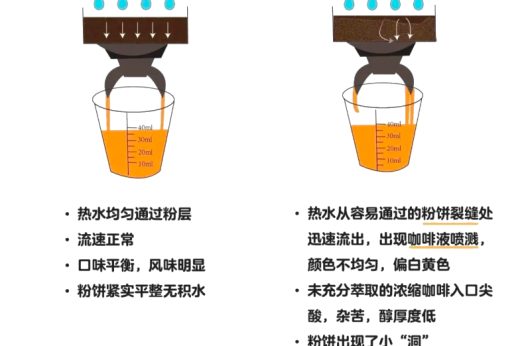
These devices, equipped with a boiler system, force water close to boiling point through a finely ground coffee puck (recommended: 70%-75% passing through a No. 20 standard sieve) at 9-10 Bar high pressure, finally forming about 30ml of espresso base. Their signature feature is the golden-brown Crema layer (about 2-3mm thick) formed on the surface; this thin film, composed of carbon dioxide and fine coffee particles, directly affects the expression of flavor layers.

Models are divided into semi-automatic and fully automatic types: the former requires manual control of extraction time (usually 20-30 seconds) and dose filling, suitable for commercial environments consuming more than 15 cups per day; the latter integrates grinding, tamping and cleaning in the whole process. Although a single cup takes longer (about 1 minute), it ensures output consistency. Note that using medium-dark roasted beans (such as Sumatra Mandheling or Brazil Santos) better highlights their full-bodied character, and it is recommended to pair with a pre-infusion function to optimize the uniformity of water flow distribution.

The espresso can be diluted with water into an Americano, or combined with steam-frothed milk into lattes, cappuccinos and other variations. During operation, note that the boiler pressure gauge needle should remain stable in the 1-1.5 Bar range; too low may lead to under-extraction, while too high easily causes channeling.

American and drip equipment: the practical choice for balanced extraction
Using the classic structure of an upper filter basket with a lower carafe, progressive extraction is achieved through gravity. Ordinary models usually make 8-12 cups at a time (about 240ml per cup), but some high-end models support constant temperature control technology (maintaining 90-96°C water temperature) and an adjustable coffee-to-water ratio (recommended range 1:15 to 1:18). Although such devices cannot produce Crema, they have a low operating threshold and are easy to clean and maintain, making them especially suitable for daily home drinking.

Electric siphon: a dual experience of vision and flavor
The unique upper and lower dual-chamber design uses the principle of vacuum negative pressure. When the water in the lower chamber is heated to 85-90°C, an updraft is generated, driving hot water through the filter cloth in the middle to contact the coffee grounds. The whole process takes about 3-4 minutes, and the resulting coffee liquid has a distinctly bright acidity and layering. Modern electric versions have integrated automatic stirring and timed power-off functions, but note the regular replacement cycle of the silicone sealing ring (checking once every six months is recommended).

Capsule systems: a quick solution for standardized operation
Aluminum foil capsules of pre-packaged coffee grounds, combined with the 15 Bar high-pressure extraction of dedicated models, can complete a single cup in 25-30 seconds. The advantages are no need for grind adjustment and no worries about fresh storage, and some models are equipped with a milk frother for one-button latte making. When purchasing, pay attention to capsule compatibility labels (such as Nespresso or L'OR native systems), and note humidity control in the storage environment (relative humidity below 60% is recommended).

Automatic pour-over equipment: intelligent assistance for precise parameters
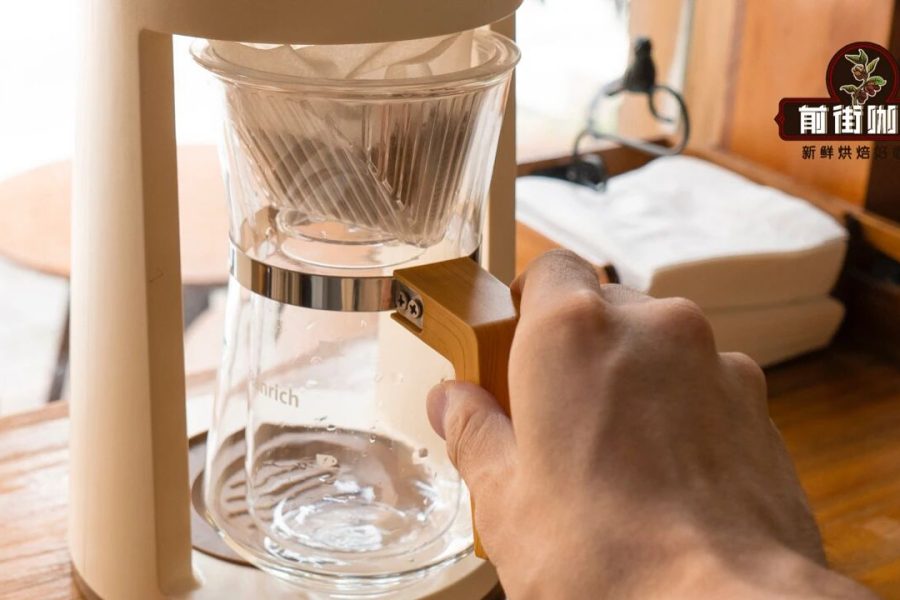
Multi-angle water pouring is achieved through a rotating or linear distributor, combined with ±1°C water temperature precision control and preset brewing curves (such as a three-stage pouring scheme: a large flow to moisten in the initial stage, a fine stream for extraction in the middle stage, and a finish in the final stage). Advanced models support Bluetooth connection to a phone app to record brewing data, making it easy to reproduce ideal flavors. For light-roasted beans (such as Ethiopian Yirgacheffe), a water temperature of 93-95°C with a medium-coarse grind (similar to fine sugar texture) is recommended to highlight citrus aromas.

No matter which type you choose, regular cleaning and maintenance are key links to ensuring coffee quality. Espresso machines require monthly backflushing and descaling, drip equipment should have the filter paper replaced and residue cleaned after every 20 uses, and capsule systems require attention to moisture-proof sealing of the capsule compartment. We hope this guide can help you find, among the many options, the coffee companion that truly fits your lifestyle.