Finca Alasitas, Bolivia: Growing and Processing 400 kg of Geisha Coffee
Introduction: Step into Finca Alasitas in Bolivia's Caranavi Valley and learn how the Rodriguez family, through scientific cultivation and meticulous processing, produces 400 kg of distinctly flavored Geisha coffee. This article details the secrets of growing at 1,600 meters, the blue-crate transport method, the 48-hour dry fermentation process, and the estate's practical experience as a regional model farm, offering coffee enthusiasts and industry professionals a first-hand reference for high-altitude specialty coffee.
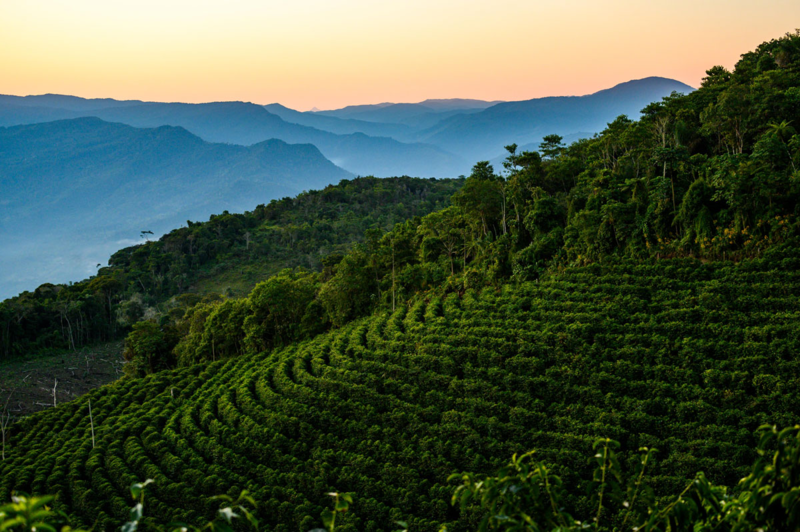
In a steep valley about 10 kilometers from the town of Caranavi in Bolivia sits a small estate producing only 400 kg of Geisha coffee: Alasitas. This 20-hectare farm belongs to the Rodriguez family's Bolinda colony holdings, with 16 hectares dedicated to coffee. The estate lies in a prime zone at 1,600–1,650 meters, where stable day-night temperature differences allow the coffee cherries to ripen slowly and accumulate sufficient sugars, ultimately forming their signature sweet flavor.
Alasitas is part of the Agricafe family business, a company founded by Pedro Rodriguez in 1986 with the initial mission of addressing Bolivia's coffee industry crisis. That year, Bolivia's annual production plummeted from 70,000 bags to 22,000 bags, as farmers switched to coca or struggled with aging plantations. Pedro gave up his career as an accountant to go into agriculture, leading his children Daniela and Pedro Pablo to build a wet mill, promote selective harvesting, and uncover the potential of quality varieties through micro-lot processing.
To rescue the endangered coffee supply chain, the Rodriguez family began investing in their own plantations in 2012, buying land around the Buena Vista mill in Caranavi to establish their first farm. Today, "Fincas Los Rodriguez" encompasses 12 farms totaling 130 hectares of planted area, 7 in Caranavi and 5 in Samaipata in the Santa Cruz department. As a core model farm, Alasitas has tens of thousands of seedlings in its nursery, demonstrating the family's long-term commitment to sustainable production.
The estate employs a highly systematized cultivation management model: coffee trees are densely planted in rows by variety, which facilitates mechanical work and improves fruit consistency. The day-night temperature difference at 1,650 meters extends the ripening period to 20–25 days, giving 5–7 more days of sugar conversion than in the lowlands. Specially designed blue aerated slatted crates (based on wine transport standards) are used to transport the precious varieties; their ventilated structure effectively suppresses premature fermentation during transport.
During harvest, fully ripe red cherries are strictly selected, and picking teams undergo repeated field retraining. The beans go through the complete processing chain at the Buena Vista mill: first weight grading to remove floating beans, then 48 hours of dry fermentation without water—a key step that activates specific enzyme activity by controlling temperature and humidity, laying the flavor foundation. They then move to mechanical dryers, reducing moisture from 60% to 16% within 75 hours, and finally rest in silos for 5 hours to transition to a final moisture content of 11.5%.
After post-processing, the green beans are transported to the La Luna dry mill in La Paz. This internationally certified processing center is equipped with an optical sorting system; under dual inspection by ultraviolet and natural light, manual sorting ensures every bean meets specialty standards. The factory's cleanliness and sorting precision are regarded by the industry as a "South American benchmark," fully preserving the flavor characteristics imparted during processing.
The name Alasitas comes from the Aymara phrase "Buy Me," echoing the traditional Bolivian blessing festival held every January 24. This festival, which coincides with Pedro Pablo's birthday, carries people's prayers to the Andean deity Ekeko. The Rodriguez family uses this symbolism to develop the estate into a regional training center for coffee farming techniques—through the "Sol de la Mañana" program, they teach neighboring farmers variety selection, soil improvement, and post-harvest processing techniques, driving quality upgrades across the entire Caranavi production region.
For coffee professionals, Alasitas offers a complete practical example of high-altitude specialty coffee: from the logic of matching variety with altitude (Geisha performs best above 1,600 meters), to dry fermentation duration and temperature control (48 hours at ambient temperature), to multi-stage drying with temperature curve management (progressive dehydration not exceeding 40°C). These proven parameters provide a reliable reference for producers pursuing flavor excellence.


