Espresso Extraction Ratios and Dose Control: A Professional Guide

Introduction: The extraction results of espresso are closely tied to basic operations such as dose and tamping. This article systematically explains the internationally used espresso extraction ratio standards, from coffee grounds distribution and tamping technique to pressure control, offering practical, actionable points. Mastering these professional details helps baristas precisely adjust extraction parameters, avoid common defects, and improve the flavor consistency of every Espresso.
Before discussing common espresso extraction problems, it is necessary to first clarify the basic preparation process. According to the practical experience shared by veteran barista David Schomer in technical articles, correct coffee grounds distribution and tamping steps directly affect the final extraction quality. Below is an optimized professional operating guide.
First, place freshly ground coffee into the portafilter basket, forming a loose mound. Then start filling from the low point of the basket, gradually pushing the coffee grounds toward the 12 o'clock direction to ensure even coverage at the bottom. Next, use your finger to smooth the coffee layer from the top toward the 6 o'clock direction, then gather the excess coffee on the surface into the center area, repeating the leveling motion to ensure an even coffee surface.
The tamping stage requires strict force control: first press the puck vertically with about 40 pounds of force, and when lifting the tamper, make a slight rotation to level the surface. To ensure proper technique, it is recommended to practice with a bathroom scale until you can consistently apply 40 pounds of pressure. Finally, apply a second press with 20 pounds of force and rotate the tamper clockwise to further refine the surface, forming an even and dense coffee puck.
Professional baristas specifically point out three key details: the basket choice must match the espresso machine specifications, and dose error should be controlled within ±0.5 grams; before tamping, be sure to confirm there are no clumps in the coffee layer, and finger distribution should be radial; the tamper rotation angle is recommended to stay at 30-45 degrees to avoid excessively damaging the coffee layer structure.
Regarding extraction ratios, the international standard usually adopts a 1:2 coffee-to-liquid ratio (for example, 7 grams of coffee extracting 14-18 milliliters of espresso), with extraction time controlled in the 25-30 second range. In practice, fine-tune according to the coffee bean roast level: light roasts can appropriately extend extraction time to 35 seconds, while dark roasts are recommended to shorten it to 20-25 seconds to reduce the extraction of bitter substances.
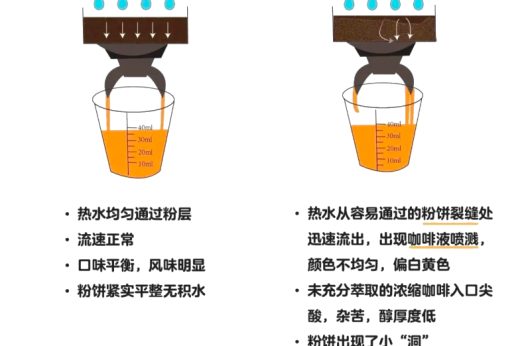
Common tamping mistakes include: uneven force causing channeling, too little dose causing under-extraction, and a tilted puck surface after tamping affecting water flow distribution. It is recommended to record dose, pressure values, and flavor changes after each parameter adjustment, and find the best balance point through systematic comparison.
After mastering these basic operations, baristas can further study advanced parameters such as grind size and pre-infusion time. A stable espresso base is the prerequisite for making quality milk coffee, and precise dose control is the guarantee of flavor consistency.