Three Native Coffee Species: Arabica vs Robusta Flavor & Growing Guide
Introduction: Coffee beans are the seeds of a plant in the Rubiaceae family, and global commercial cultivation centers primarily on three native species: Arabica, Robusta, and Liberica. This article provides an in-depth analysis of the biological characteristics, growing environment requirements, bean morphology, and flavor differences of these three coffee trees, and offers reference brewing parameters typical of Arabica varieties, helping coffee enthusiasts understand the logic behind coffee flavor formation from the source.
Coffee beans are essentially the seeds of the coffee cherry. What makes this crop special is that the fruit pulp accounts for a very small proportion yet has outstanding sweetness. Similar to crops such as sunflower seeds and nuts, which are mainly used for their seeds, coffee varieties can be traced back through botanical classification to three native species—these are the core raw material base of today's global coffee market.
{{IMG}}
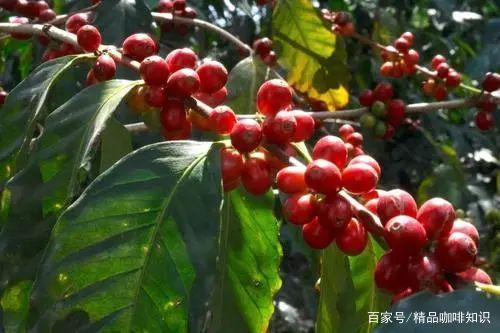
As an evergreen shrub in the genus Coffea of the Rubiaceae family, this species has about 40 native species, but only Arabica, Robusta, and Liberica have commercial value. The first two account for more than 98% of the global consumer market, while the latter has gradually become marginalized due to limitations in yield and flavor.
{{IMG}}
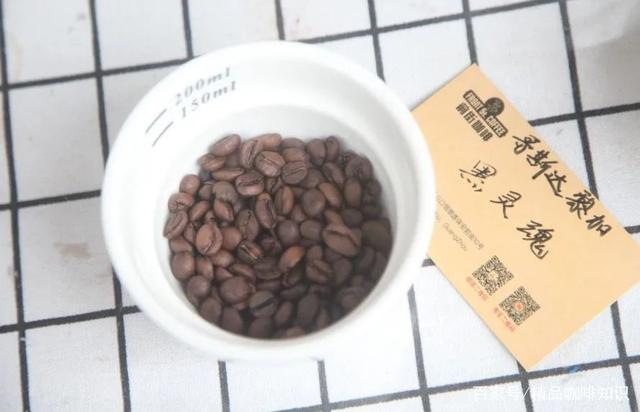
Arabica, commonly known as small-bean coffee, originated on the Ethiopian highlands. The plant is extremely demanding about its growing environment: it needs to grow in cool highlands at altitudes of 500-2,000 meters, with an ideal temperature range of 15-24°C, annual rainfall exceeding 1,500 mm, and good drainage. This species has weak disease resistance but rich flavor complexity. The beans are elongated ovals, with two symmetrically arranged inside the fruit pulp, and the central crack has a distinctive S-shaped curve. Well-known varieties in the specialty coffee system, such as Bourbon and Typica, all belong to this category, and their caffeine content remains at a relatively low level of 0.8%-1.5%.
{{IMG}}
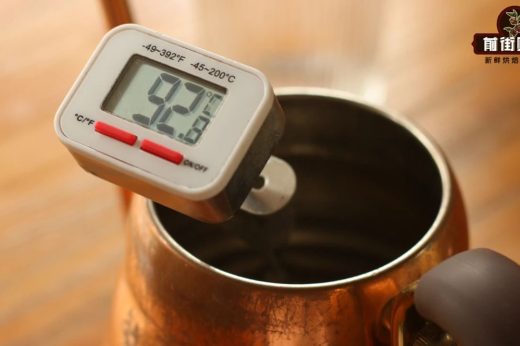
Typical cultivation cases show that the day-night temperature difference in high-altitude areas enables Arabica beans to accumulate more aromatic substances. When the growing altitude exceeds 1,500 meters, sugar conversion in the pectin layer is more complete, and the final flavor often presents a balance of citrus notes, floral undertones, and bright acidity. Professional roasters recommend brewing this variety at a water temperature of 90-93°C, with a medium-fine grind to highlight the layering.
{{IMG}}
Robusta (note: the original text's "Luobajinta" is a typo), also known as medium-bean coffee, is native to the Congo Basin. This variety is highly adaptable, able to grow in lowlands below 500 meters in altitude, tolerant of high temperatures of 24-29°C and humid environments, and naturally resistant to common diseases such as leaf rust. Its beans are short, round, and plump, with straight grooves resembling the appearance of soybeans. Its caffeine content is as high as 3.2%, more than three times that of Arabica.
In terms of flavor characteristics, Robusta usually shows obvious woody notes and a strong bitter-sweet aftertaste. Its crema production is superior to Arabica, so it is often used in espresso blends or instant coffee production. It should be noted that its low-acidity character makes it unsuitable for pour-over scenarios that pursue bright mouthfeel, and the optimal extraction water temperature should be controlled within the range of 88-91°C to avoid over-extracting bitter compounds.
{{IMG}}
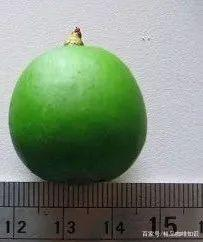
As the third native species, Liberica's large-bean form (up to twice the diameter of ordinary coffee beans) and thick fruit skin bring processing challenges. Native to Liberia in West Africa, these plants prefer low-altitude slopes of around 200 meters, and the growing temperature needs to remain stable within the range of 19-27°C. Although its output accounts for only 5% of global commercial coffee, its high-concentration character still has special application value in some traditional recipes.
The leaves of this variety are significantly larger than those of conventional coffee trees, and it is propagated through grafting. Flavor evaluations generally report that it has high body but thin aroma, with a strong tactile sensation on the tongue and a long-lasting finish. Professional processing plants usually need to extend fermentation time to effectively soften its thick pectin layer, and this characteristic leads to persistently high processing costs.
{{IMG}}
A comprehensive comparison of the core differences among the three native species: • Arabica—representative of refined flavor from high altitudes, with high sweetness-acidity balance but difficult to cultivate • Robusta—a highly stress-resistant choice for the masses, with prominent bitterness suitable for dark roasting • Liberica—special body size and intense mouthfeel, with limited commercial application but unique flavor
For home brewing enthusiasts, the reference parameters for Arabica varieties are as follows: when using a V60 dripper, it is recommended to use 15 grams of ground coffee with 225 milliliters of water, a coffee-to-water ratio of 1:15, and a grind between medium-fine and fine granulated sugar (about BG#5R). During the pre-infusion stage, pour in 30 grams of hot water and let it bloom for 30 seconds to activate degassing, then use a center-pour method to complete extraction in two stages, with the total duration controlled at about 2 minutes to obtain a balanced flavor performance.
{{IMG}}