Arabica coffee beans: origins and a guide to major producing regions
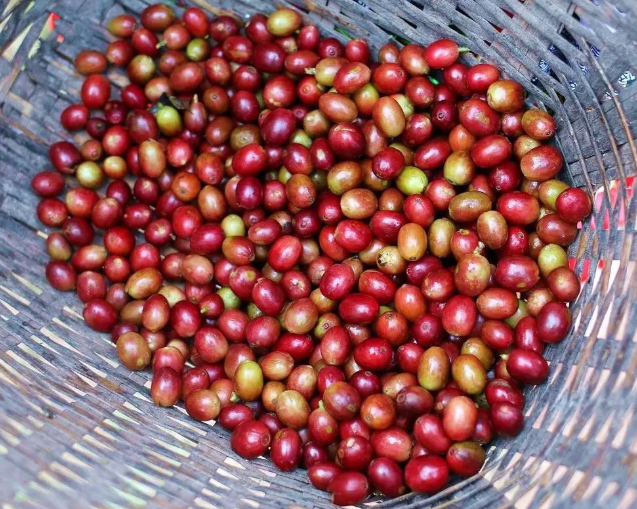
Introduction: Arabica coffee beans are known for their quality flavor and aroma and account for the major share of the global coffee market. Understanding what the name means, the growing environment it suits, and the characteristics of major producing regions around the world helps you better recognize and choose high-quality coffee beans. This article examines growing conditions, flavor characteristics and classic producing regions one by one, taking you deeper into the world of Arabica coffee.
The coffee tree is a tropical crop suited to cool, frost-free regions. Growing quality coffee places strict demands on geography and climate. Around the world, which places are suitable for growing coffee? And where did Arabica coffee originate? Let us explore together.
The ideal growing zone for coffee trees is the area centered on the equator, between 25° south latitude and 25° north latitude; this ring-shaped zone is called the “Coffee Belt.” This region provides not only the temperature and rainfall suited to coffee growing but also well-drained soil conditions. Here, most coffee varieties, including Arabica and Robusta, can find a suitable growing environment.

Among them, Arabica coffee has stricter requirements for its growing environment. It is better suited to highlands at altitudes of 900 to 2,200 meters, preferring cool, humid and sheltered environments. Within this altitude range, large day-night temperature differences help the coffee fruit ripen slowly, thereby accumulating richer flavor substances and aromatic compounds. In addition, Arabica coffee trees are not tolerant of frost and need a relatively stable climate. For this reason, they are mainly distributed in high-altitude areas of the Coffee Belt with suitable climate.

Arabica coffee is considered a premium representative among coffees, accounting for about 70% to 75% of total global coffee production. Its caffeine content is lower, at about 0.9% to 1.2%, but its fat and sugar content is higher, which makes its mouthfeel softer and sweeter, with a pleasant fruity acidity. Because of its rich flavor layers, Arabica beans are widely used in various brewing methods, including pour-over, espresso and cold brew coffee.

Globally, coffee cultivation is mainly concentrated in three major regions: Latin America, Africa, and the Asia-Pacific region. Because of differences in geography and climate, the coffee produced in each region shows distinctly different flavor characteristics.
First, the Latin American producing regions. Take Brazil as an example: its coffee-growing areas are mostly concentrated at altitudes of 800 to 1,300 meters. Although the overall altitude is not as high as in other regions, the soil is rich in minerals and the climate is stable, and the coffee produced usually has a full, balanced mouthfeel with nutty and creamy aromas. The Cerrado region is Brazil’s first coffee-producing region to obtain “origin” certification, and the coffee here is a representative of this style.

Another example is Colombia, whose main coffee-producing areas are distributed in the highlands around the Andes Mountains, usually at altitudes above 1,500 meters. High altitude brings pronounced day-night temperature differences, causing the coffee fruit to ripen more slowly and the flavor to be more concentrated. The Huila region is outstanding among them, known for washed coffees with a clean flavor and bright fruit acidity and nutty-chocolate notes.

In Guatemala, the Huehuetenango region, because of its high altitude and dry climate, mostly produces SHB grade strictly hard beans, with rich layers of floral and fruity aromas and honey sweetness. The region’s volcanic soil also provides a unique mineral foundation for the coffee’s flavor.

The Asia-Pacific region is also an important coffee-producing region. Take Sumatra in Indonesia as an example: its coffee is known for the unique wet-hulling process, which speeds up drying and gives the coffee intense herbal, spice and woody notes. Mandheling coffee from the Lintong region often has a finish of dark chocolate and caramel, with a heavy, full mouthfeel.

Yunnan, China, is also a coffee-producing region that cannot be ignored and has developed rapidly in recent years. Baoshan, Lincang and other places in Yunnan, relying on a dry-hot valley climate and high-altitude environment, produce coffee with distinct nutty, chocolate and brown sugar flavors. After washed processing, the local Catimor variety presents a balanced mouthfeel with a sweet aftertaste and is a representative of domestic coffee.

Finally, mention must be made of Africa, the birthplace of coffee. Ethiopia is the genetic treasure trove of Arabica coffee, with tens of thousands of native coffee varieties. Among them, the Yirgacheffe region is above 2,000 meters in altitude, with a mild, humid climate and year-round fog, very suitable for specialty coffee growing. The coffee here excels in washed processing, often showing fresh citrus notes and jasmine aroma, with bright acidity and a delicate entry.

Overall, Arabica coffee not only represents the benchmark of coffee flavor; the diversity of its cultivation and producing regions also offers coffee lovers a rich range of taste experiences. From the balance and fullness of South America to the fresh floral aromas of Africa and the heaviness and complexity of Asia, each producing region tells a unique story. Understanding this background will help you better choose and appreciate every cup of coffee.