Yemen Mocha Coffee Origins: Regions and Flavor Guide

Introduction: Yemen Mocha coffee is renowned worldwide for its unique chocolate flavor and long history, but many know little about its origins and varieties. This article provides an in-depth introduction to Yemen's main Mocha coffee regions, including the terroir characteristics, altitude, and flavor profiles of well-known origins such as Mattari and San'ani, and offers practical pour-over parameter suggestions to help coffee enthusiasts better understand and choose this precious coffee bean.
The legend of Yemen Mocha coffee began hundreds of years ago, and its name derives from the important port of Mocha on Yemen's Red Sea coast. The coffee produced here is not only unique in flavor but also expensive due to its scarcity, with half a pound of premium Mocha coffee selling for around 150 yuan. Yemen Mocha coffee is known for its intense chocolate, red wine aroma, and complex fruit flavors, making it a classic in the minds of many coffee lovers.
Yemen's Mocha coffee mainly comes from several famous regions, each with its own unique geographical environment and planting traditions that cultivate distinctly different coffee flavors. Understanding the characteristics of these regions helps us better appreciate and choose Yemen Mocha coffee.
Mokha Mattari is one of Yemen's most prestigious coffee regions, located in the Bani Mattar province west of the capital Sana'a. Here, coffee is grown on highlands at altitudes of 2000-2400 meters. Thanks to the high altitude and dry climate, Mattari coffee typically has a rich red wine aroma, dried fruit flavors, and a thick body. When dark roasted, it often exhibits a captivating chocolate bittersweetness. Premium Mattari coffee beans are small in size, and the green beans carry a sweet wine aroma and moderate ripe fruit fermentation notes, making them a typical representative of the Yemeni style.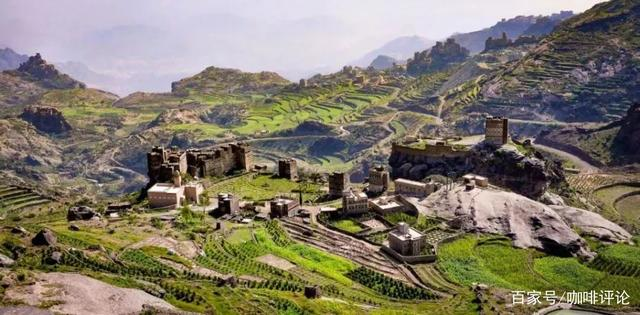
Mokha San'ani is a blend from tens of thousands of small farms on the hillsides around Sana'a. Compared to Mattari, San'ani is grown at a slightly lower altitude, about 1650 meters, resulting in a relatively thinner body and lower acidity, but with rich fruit aromas, often featuring more abundant ripe fruit notes and a unique wild character. This coffee suits drinkers who prefer fruity and soft flavors.
Mokha Ismaili is an ancient variety from the high-altitude regions of central Yemen, grown at altitudes exceeding 1981 meters, and even up to 2438 meters in some rugged mountainous areas. The beans are round but uneven in size, with a thick body and high complexity, often surpassing Mattari. Ismaili is scarce and expensive, and is a top-grade coffee with an excellent reputation among locals in Yemen.
Mokha Rimi comes from the Djebel Remi area and has a flavor similar to San'ani, but with a usually heavier fermented taste, occasionally revealing astonishing raisin sweetness. When roasted properly, these beans emit a rich jam-like aroma that is impressive.
Mokha Yafeh is a rare variety from southern Yemen, representing the "southern taste." Its production is extremely small, and almost all of it is sold to neighboring UAE, making it rarely seen on the international market.
In addition, there is Arabian Mocha, which comes from the mountainous regions of Yemen and is known for its high viscosity and rich wine-like acidity, considered one of the best cultivated coffees in the world.
Each region's Mocha coffee has its own unique flavor characteristics, such as Mattari's chocolate and acidity, San'ani's wildness and fragrance, and Ismaili's complexity and body. These differences make Yemen Mocha coffee an excellent choice for coffee enthusiasts exploring flavor diversity.
Taking Yemen Mocha Mattari as an example, this coffee typically uses Typica and Bourbon varieties and is processed via the Natural/Sundried method. Its growing altitude is between 1300-1900 meters, giving the coffee rich flavor layers.
In cupping, medium-roasted Yemen Mocha Mattari emits caramel aroma after grinding, and upon sipping, it offers rich layers with a slight grape acidity and a lingering spice finish. The aftertaste has a neutralizing sensation like Middle Eastern milk tea, and the malt sweetness lingers at the bottom of the cup. It is recommended to brew within 7-14 days after roasting to fully reveal its complex fermented flavors.
Suggested pour-over parameters are as follows: use 15 grams of coffee grounds, grind size medium-coarse, water temperature 88-89°C, and a V60 dripper. First, do a bloom with 30 grams of water for 25 seconds, then pour until the water amount reaches 104 grams and stop; after the water level in the coffee bed drops by half, continue pouring to 220 grams. The total extraction time is about 2 minutes, with a water-to-coffee ratio of 1:15. These parameters can fully bring out the chocolate and caramel sweetness of Yemen Mocha.

Yemen Mocha coffee is not only a gem in coffee history but also a treasure for flavor explorers. From the depth of Mattari to the liveliness of San'ani, each one is worth savoring.