Salvadoran Coffee Regions: Flavor Profiles and Grading Guide
Introduction: Want to understand the unique appeal of Salvadoran coffee? This article takes an in-depth look at the coffee-growing regions of this small Central American country, its classic flavor characteristics and its traditional grading system, exploring the cultivation secrets of varieties such as Bourbon and Pacamara—from the influence of altitude and harvest seasons to variety composition—to help you build a professional framework of coffee knowledge.
El Salvador is the smallest country in Central America, yet it is known worldwide for consistently high-quality coffee. The country's coffee industry history is closely intertwined with the trajectory of its national development—after coffee replaced indigo as the main export crop in the late 1880s, coffee's share of exports had reached as high as ninety percent by the 1920s. It is worth noting that the early coffee economy was dominated mainly by an elite class holding large tracts of land; they drove the construction of infrastructure such as roads, but also caused a severe imbalance in wealth distribution.
In terms of flavor, El Salvador is known for the sweetness and balance of its Bourbon variety, whose bright acidity and harmonious layers of mouthfeel are highly praised. More noteworthy is that the country is the birthplace of two distinctive varieties: Pacas and Pacamara. Among them, Pacamara, a cross between Pacas and the Maragogipe (elephant bean) variety, often displays lush tropical fruit, a syrupy, full-bodied texture, and a finish with the signature fragrance of yellow grapefruit.
El Salvador's coffee grading system still partly follows the traditional altitude standard, but note that this is not necessarily linked to final quality: Strictly High Grown (SHG) refers to growing areas above 1,200 meters, High Grown (HG) to the 900–1,200 meter range, and Central Standard covers the 600–900 meter range.
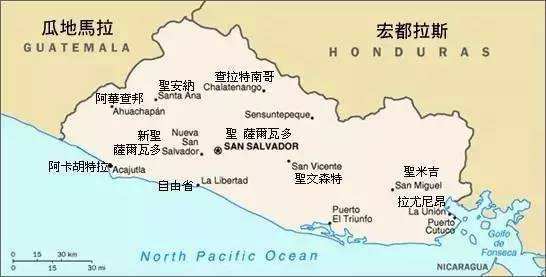
In terms of regional distribution, the Apaneca-Ilamatepec mountain range can be called the cradle of Salvadoran coffee; here lies the famous Santa Ana Volcano (which erupted in 2005). The region spans altitudes from 500 to 2,300 meters, with the main harvest season from October to March of the following year. The planting structure is mainly 64% Bourbon, 26% Pacas and a small amount of other varieties, and most of the well-known large estates are concentrated here.
The Alotepec-Metapan mountain area, bordering Guatemala and Honduras, is the country's wettest region, with rainfall exceeding the national average by one third. Despite the geographical proximity, it produces a distinctive coffee style—within the 1,000–2,000 meter altitude range, a variety combination of 30% Bourbon, 50% Pacas and 15% Pacamara creates a different flavor expression.
The El Balsamo-Quezaltepec mountain range carries the historical imprint of the pre-Hispanic Quetzalcotitán civilization, and the Peruvian balsam resin produced locally is still used in the fragrance industry today. This region, at altitudes of 500–1,950 meters, maintains traditional coffee-growing patterns; a variety mix of 52% Bourbon and 22% Pacas, together with the area's unique cultural soil, forms a distinctive flavor base.
The central Chichontepec volcanic region, though it started later, offers superior conditions for coffee growing thanks to its fertile volcanic soil. The old planting method of one row of coffee trees paired with one row of orange trees is preserved here, and this tradition may be related to the citrus notes commonly found in the region—a planting structure dominated by 71% Bourbon, showing a unique fresh character during the harvest season from October to February of the following year.
The Tepeca-Chinameca mountain range, the country's third-largest region, produces coffee often eaten with local tortillas. Across the vast area from 500 to 2,150 meters, the classic combination of 70% Bourbon and 22% Pacas maintains a stable quality output during the harvest season from October to March of the following year.
Finally, worth mentioning is the Cacahuatique mountain range, where the story of first president Gerardo Barrios promoting coffee cultivation is passed down. Known for its heavy clay soil (often used to make pottery), farmers here need to improve the growing environment—digging through the clay layer and filling it with fertile soil to raise coffee seedlings. A variety structure dominated by 65% Bourbon shows a unique flavor adaptability to the special soil conditions during the harvest season from October to March of the following year.