Central American Specialty Coffee Regions: Flavors and Growing Stories
Introduction: Central America is a major region for specialty coffee worldwide, where fertile volcanic soil and favorable climate conditions nurture many coffees with distinctive flavors. This article takes you deeper into the coffee-growing history, flavor characteristics, and industry conditions of major regions such as Costa Rica and Guatemala, helping you choose beans that suit your taste while also learning the stories and practical knowledge behind the regions.
More than sixty countries and regions around the world produce coffee, most of them located in the tropical and subtropical zones between the Tropic of Cancer and the Tropic of Capricorn, where the equator passes through and forms the suitable “coffee belt” for coffee growing. Today, we focus on the Central American coffee regions, to learn about the representative countries in this area and the unique appeal of their coffee beans.
Costa Rica is a standout in Central American coffee, known for plump beans, ideal acidity, and intense aroma. Its famous Tarrazu region, located south of the capital San José, is one of the world’s important coffee-producing areas. Coffees here usually have a fresh, pure flavor and pleasant aroma, thanks to the local fertile volcanic soil with excellent drainage. It is worth noting that Costa Rica introduced coffee from Cuba in 1729, and today it has become one of the countries with the most well-organized coffee industry in the world, with yields reaching 1,700 kilograms per hectare. Although the country has a population of only about 3.5 million, it has more than 400 million coffee trees, and coffee exports account for 25% of the country’s total exports.
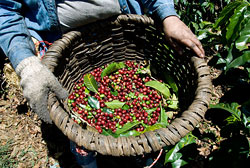
In Costa Rica, growing altitude has a great impact on coffee quality. **Areas above 1,500 meters are called “strictly hard bean” growing zones**, where the large temperature difference between day and night and the long growing cycle help accumulate flavor compounds, resulting in brighter acidity and a richer mouthfeel. However, high-altitude growing also faces the challenge of high transport costs. Local producers use advanced technology to improve efficiency, for example by using an “electric eye” sorting system to remove beans of irregular size. La Minita Tarrazu coffee from Tarrazu is a local specialty, with an annual output of only about 72,600 kilograms; the growing process insists on no artificial fertilizers or pesticides, and picking and sorting are done entirely by hand to ensure the flavor is not damaged by machinery.
In addition to La Minita, Costa Rica has many other high-quality regions, such as Juan Vinas, H. Tournon, Windmill, Monte bello, and Santa Rosa. Geredia and the Central Valley produce superior coffee, while Sarchi coffee comes from the slopes of Poás Volcano, about 53 kilometers from San José; this area is also known for handicrafts and attracts visitors from around the world.
Cuba is another Central American coffee-producing country, and its best coffee is called Turquino or Extra Turquino. Unlike many Central American coffees, Turquino is grown at lower altitudes, so its acidity is weaker, but the flavor remains pure and the bean size is medium. Were it not for political factors, Cuba could have been an important coffee supplier to the United States and Japan.
The Dominican Republic shares the island of Hispaniola with Haiti, and its coffee-growing history dates back to the early 18th century. Barahona in the southwest of the country is the main producing region, while Santo Domingo coffee from Juncalito and Ocoa is also excellent, characterized by a fresh, light elegance, plump beans, good acidity, and pleasant aroma; most is washed, a symbol of high quality.
El Salvador is a small, densely populated country in Central America, and its coffee is known for balance, accounting for 40% of national exports. The highest-quality coffee is usually harvested from January to March, and 35% of its strictly hard beans are exported to Germany. Although the guerrilla war in the 1990s severely affected the coffee industry and caused output to plummet for a time, the government began privatization reforms in 1990, helping coffee exports recover. Salvadoran coffee is also graded by altitude, with higher altitude meaning better quality; Pipil is a well-known premium brand that has obtained US organic certification. In addition, Pacamara coffee is a cross between Pacas and Maragogipe; the beans are plump but the aroma is relatively mild, and the main producing area is near Santa Ana, close to the Guatemalan border.
Guadeloupe was once an important coffee-producing area in the Caribbean, with more than 1 million coffee trees in 1789 and an annual output of 4,000 tons. However, the expansion of sugarcane and banana planting, the damage caused by Hurricane Ines in 1996, and the political factors of land redistribution between 1962 and 1965 reduced the coffee-growing area sharply to 150 hectares today. Bonifieur was once praised as the finest coffee of the area, but the island no longer exports coffee.
Guatemalan coffee once enjoyed a world-class reputation, and although it has gone through ups and downs, quality is gradually recovering. It was introduced by Jesuit priests in 1750, and German colonists promoted the development of its coffee industry in the late 19th century. Today, the slopes of the Madre Volcano in the south of the country are the core producing area for high-quality coffee; the high-altitude environment gives the coffee a spicy blended flavor, and the strictly hard beans are plump with balanced acidity, much loved by tasters. Guatemalan coffee is graded by altitude, and **the higher the altitude, the better the coffee quality**; among them, coffee from Antigua is especially famous. EL Pulcal from the Carmona estate is rich and full-bodied with a unique tobacco aroma. This area experiences volcanic eruptions about every 30 years, replenishing nitrogen in the soil, and together with ample rainfall and sunshine, creates ideal growing conditions. Other well-known regions include San Marco, Oriente & Coban, Palcya, and La Uman in Zacapa. At present, Guatemalan coffee exports are mainly controlled by private companies, but the national coffee council is responsible for supervising the industry’s development. The area also benefits from US-funded planting projects aimed at improving the growing and processing levels of small-scale producers and promoting the sustainable development of high-quality coffee.
With their unique geographical and climatic advantages, Central American coffee regions produce beans with diverse flavors and excellent quality. Whether you seek the bright acidity of Costa Rican strictly hard beans or prefer the spicy flavors of Guatemalan high-altitude beans, every bean from this land carries rich growing stories and regional character, waiting for coffee lovers to explore and savor.