Specialty Coffee Regions of the Americas: Flavor Secrets from Costa Rica to Cuba
Introduction: Explore the unique terroir and bean characteristics of major coffee regions in the Americas, revealing the high-altitude hard beans nurtured by Costa Rica's volcanic soil, the scarce coffee shaped by Cuba's revolutionary history, and the full-bodied flavors of the Dominican Republic's washed processing. Through altitude parameters, processing methods and flavor wheel analysis, this guide helps you build a knowledge system for selecting and tasting coffee beans from the Americas.
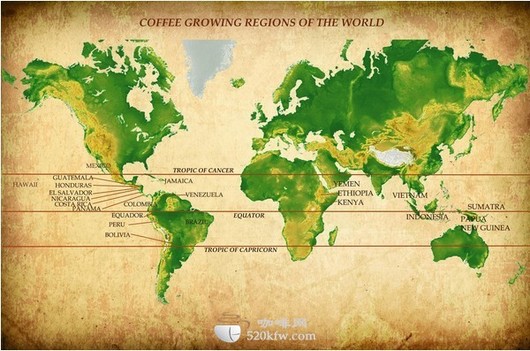
More than 60 coffee-producing countries worldwide are concentrated in the "Coffee Belt" between the Tropics of Cancer and Capricorn, and the regions of the Americas are known for their distinct regional flavors. This article focuses on the core producing regions of Central America and the Caribbean, analyzing how altitude, soil and processing shape classic coffee flavors.
Costa Rica: The "Strictly Hard Bean" Legend Gifted by Volcanoes
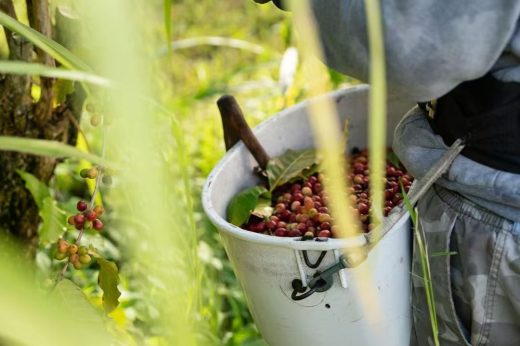
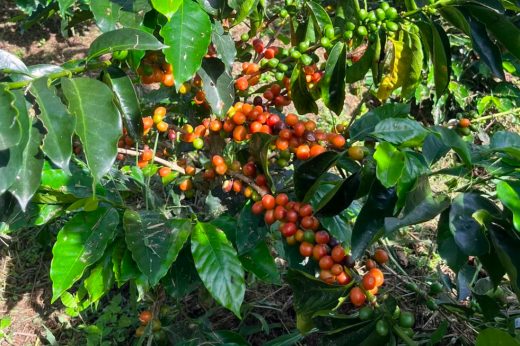
The country is dominated by high-altitude regions above 1,500 meters. Tarrazu, as a core producing region, relies on volcanic ash soil and large day-night temperature differences to produce plump beans with bright acidity. "Strictly Hard Bean (SHB)" must be grown above 1,500 meters, where the low-temperature slow-ripening process accumulates complex sugars. The town of Tarrazu south of the capital is known for producing the top-grade "La Minita" beans, with an annual output of only 72.6 tons, insisting on manual harvesting and washed processing to avoid mechanical damage. Notably, the country uses electric-eye color sorters to remove defective beans, increasing efficiency by more than 30%. Notably, local coffee exports account for 25% of the country's foreign trade, and per capita consumption is twice that of Italy, while substandard coffee is marked with blue dye and diverted to the domestic market.
Cuba: The Cigar Companion Coffee Amid Political Turmoil
Although famous for cigars, Cuba's Turquino special-grade coffee is equally competitive. This grade named after a place is grown in low-altitude areas, with medium-to-small beans, mild acidity and a full body, forming a flavor contrast with neighboring Jamaica Blue Mountain. Constrained by international trade restrictions, its quality potential has not yet been fully realized; if policies are relaxed, it could become an important supplement to the North American and Japanese markets.
Dominican Republic: The Balanced Aesthetics of Washed Processing
In the Dominican Republic on the island of Hispaniola, the southwestern Barahona region produces plump coffee beans. Santo Domingo coffee is known for its fresh fruity aroma and high acidity; the washed processing method removes the pectin layer and preserves bright floral and fruity notes. Compared with the natural-process coffee of neighboring Haiti, this country's regions focus more on refined processing, and secondary regions such as Ocoa also produce medium-roast beans with excellent value, suitable for pour-over or cold brew.
(The original image placeholder is retained here, showing a map of American producing regions or a schematic of coffee processing)
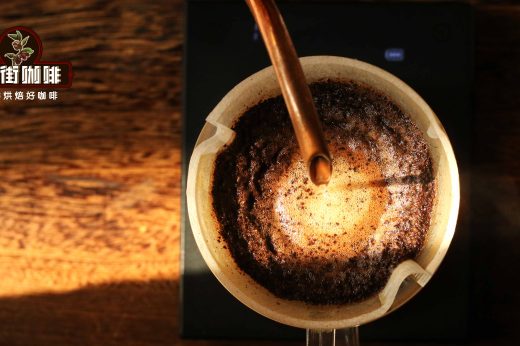
The common features of American producing regions are strict grading systems and application of technological innovation: from Costa Rica's electric-eye sorting to the Dominican Republic's washed standardization, every step affects the final cupping performance. Consumers can choose body (1,500 m+ high altitude) or acidity liveliness (1,000–1,200 m medium altitude) according to altitude parameters, and pair with suggested pour-over parameters (such as a V60 dripper with 92°C water and a 1:15 coffee-to-water ratio) to further explore flavor layers.