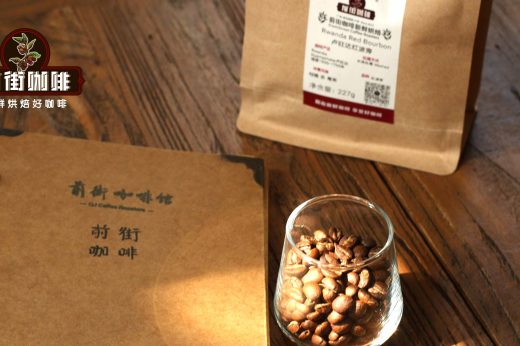
Rwanda coffee beans in depth: flavor and brewing parameters
Introduction: Rwanda, an emerging specialty coffee region in Africa, produces bright-flavored Bourbon-family coffee beans thanks to its high-altitude growing environment and distinctive processing methods. This article details Rwanda coffee's development from colonial history to modern industry upgrading, focusing on the flavor layers, regional differences and best brewing methods of its signature washed Bourbon beans, to help you precisely master the tasting and brewing techniques for this African specialty bean.
On the map of African specialty coffee, Ethiopia is often regarded as the core region, while Rwanda, a landlocked country also located on the East African plateau, is gradually gaining attention from coffee lovers worldwide thanks to its distinctive washed Bourbon coffee beans. Unlike Brazilian Bourbon, which has gradually fallen out of the mainstream due to weak disease resistance, Rwanda's high-altitude environment (1,700-2,000 meters) and stable climate conditions allow the Bourbon variety to display excellent fruit-toned and floral aromatics here.

Rwanda's coffee-growing history began in the early 20th century during the colonial period. German and Belgian colonizers introduced the coffee cultivation system; although it drove rapid growth in output, the exploitative purchasing system long limited coffee quality. After independence in 1962, Rwanda gradually improved its production structure by establishing the official coffee organization OCIR, and in the 1980s it reached a peak in output. However, the social turmoil of 1994 dealt a severe blow to the industry, and only in recent years has it rebuilt its reputation through a smallholder fine-cultivation model.

The country's unique geographical environment is practically a natural laboratory for coffee growing: the "Land of a Thousand Hills" terrain creates countless microclimates, volcanic soils are rich in minerals, and the mild average annual temperature of 15-22°C allows coffee cherries to accumulate sugars slowly. About 33,000 hectares of coffee gardens across the country are run by 500,000 smallholders; this decentralized production actually helps maintain varietal purity—Bourbon accounts for over 60%, making it the most representative variety.

Looking at the flavor map, coffees from the southern Huye mountains and Nyamagabe area generally show jasmine florals and citric acidity, while the western Nyamasheke production area by Lake Kivu (1,700-2,000 meters) produces beans with red apple sweetness and a black tea finish thanks to humidity regulation from the nearby lake. Notably, even adjacent plots may show flavor variation due to microclimate differences—this is precisely the unique charm of specialty coffee.

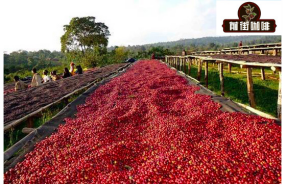
The modernization of Rwanda's coffee industry began with the PEARL project in 2000 (led by Michigan State University). The project helped establish 46 standardized washing stations, revolutionizing the traditional processing flow: after picking, coffee cherries undergo three manual sorting passes to remove defective fruit, followed by 16 hours of washed fermentation at a low temperature of 12-18°C (pH precisely controlled to 4.5-5.2), and finally 18-21 days of graduated drying on raised beds (daily average dehydration rate ≤0.8%), stabilizing green bean moisture content at 11-12%.

At the first COE Cup of Excellence competition in 2008 (the first in Africa), Rwandan Bourbon beans made their mark with an average price of US$18 per pound; by 2014 the champion bean price had soared to US$37 per pound, confirming its quality improvement trajectory. Note, however, that this region has twice detected potato defect flavor (a raw-potato-like aroma), which is related to a specific storage pest; when buying, look for lots with a defect-sorting record.

For home brewers, a medium-light roast level (Agtron 65-70) is recommended to preserve bright acidity. Professional roasting curves show that dropping the beans when the first-crack development stage reaches 194°C ± 2°C balances floral-fruit notes and body. Recommended pour-over parameters: V60 dripper + 90°C water + 1:15 coffee-to-water ratio, using the standard flow of "30 g water bloom for 30 seconds → staged pouring to 225 g," with total extraction time controlled at 2:00 ± 10 seconds.

In terms of flavor, high-quality Rwandan Bourbon beans usually present a three-layer structure: the first layer is citrus acidity (bergamot/orange peel) and berry sweetness, the middle develops honey texture and stone-fruit flavors (peach/plum), and the finish turns to caramel sweetness and almond-nut notes. Special tip: for every 5°C increase in brewing water temperature, perceived acidity strengthens by about 15%; if you prefer a gentler cup, lower it to 88°C.

For storage, note that Rwandan coffee beans are at their best within 10-25 days after roasting. Store in one-way valve foil bags in a cool 18-22°C environment, and avoid storing alongside strongly scented items such as spices. For grind size, cone drippers suit a Chinese standard No. 20 sieve with 80% pass rate (about BG#5G), while flat-bottom brewers need a finer 75% pass rate to compensate for flow-rate differences.