Brazil's coffee bean storage crisis: falling global demand and warehousing woes
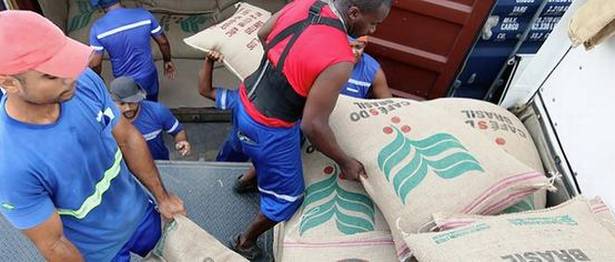
Introduction: Affected by the pandemic, global coffee consumption demand is weak, while Brazil, as the largest coffee-producing country, has welcomed a record harvest. Warehouses are full, trucks are stranded, and exports are blocked—the Brazilian coffee industry is facing unprecedented storage and logistics pressure. This article provides an in-depth analysis of the reasons behind Brazil's coffee bean storage overflow, discusses its impact on the global supply chain, and provides key data and useful background information.
In Brazil's main coffee-producing regions, large numbers of trucks loaded with coffee beans are facing long waits. These vehicles must line up outside warehouses for days before they can unload the freshly harvested coffee beans. Currently, the world's largest coffee exporter is encountering a rare problem: production has hit a new high, but storage space is severely insufficient.
The situation is particularly severe in Franca, about a five-hour drive north of São Paulo. About 90 trucks transporting coffee beans are parked outside a warehouse operated by Dinamo, anxiously waiting to unload. Luis Alberto Azevedo Levy Filho, a director of Dinamo, revealed that just two days earlier, the number of queued trucks was 40 to 50, and now it has surged to nearly double. "We are approaching our maximum capacity limit," he said. "Even with the warehouse operating two extra hours per day, including weekend overtime, trucks still need to wait about three days to complete unloading." Similar situations have also appeared at Dinamo's branch in Machado, Minas Gerais, and at other major storage points in the state and in São Paulo state.
Global coffee demand has fallen significantly due to the large-scale closure of restaurants, coffee shops and cafeterias. Nick Genthier, executive partner of New York-based Nick Jen Capital Management, pointed out: "Consumer demand remains weak, and there are even rumors that some private warehouses in the United States are also nearing saturation." According to the latest data from the U.S. Department of Agriculture, global coffee inventories in 2020-21 are expected to grow by 18%, reaching the highest point in the past six years.
Consulting expert Regis Rico Alves mentioned that in order to cope with full warehouses, major cooperatives in southern Minas Gerais have had to temporarily store coffee beans in silos outside the warehouses. He also mentioned that due to longer waiting times, the cost of trucks transporting coffee beans has risen to twice the usual level.
According to agricultural consultancy Safras & Mercado, the proportion of sales by Brazilian farmers this season has reached a historical high, with about 60% of the estimated harvest already sold—a total of up to 68.1 million bags. Of this, about 41 million bags have been delivered, mostly to trading warehouses.
However, storage pressure has begun to affect exports in reverse. Carlos Alberto Fernandes Santana, a director of Empresa Interagricola SA, a subsidiary of trading company Ecom Agroindustrial Corp, said that since the new season began in July, Brazil's coffee exports have continued to decline. "Logistics bottlenecks have caused shipment delays generally exceeding 15 days, and some customers even ask for an additional week before they can pick up goods from the warehouse," he explained. "If sellers do not have enough storage capacity to store coffee beans for more than 10 to 12 days, it is difficult for them to accept new order contracts."


