Coffee Cupping: Complete Process Guide to Scoring Standards and Techniques
Introduction: Want to learn how professional baristas assess coffee quality through cupping? This article systematically explains cupping tool preparation, the standard operating procedure and the ten SCAA scoring dimensions, covering the criteria for judging specialty beans scoring above 80, common flavor-defect deduction rules, and a comparison of the differences with the CoE competition cupping system. It includes key parameters such as a coffee-to-water ratio of 8.25g:150ml and a water temperature of 92-94°C, helping you master a scientific cupping method.
Coffee cupping is the core method the coffee industry uses to evaluate bean quality. Through a standardized process and scoring system, it can objectively judge a coffee's aroma, flavor and overall performance. Professional cupping requires a grinder, digital scale, thermometer, dedicated cups and an anti-static metal spoon. For the cups, tempered glass or ceramic with a capacity of 207-266ml is recommended, with a height of 3-3.5 inches and a diameter of 76-89mm, ensuring every cup has uniform specifications and a lid.

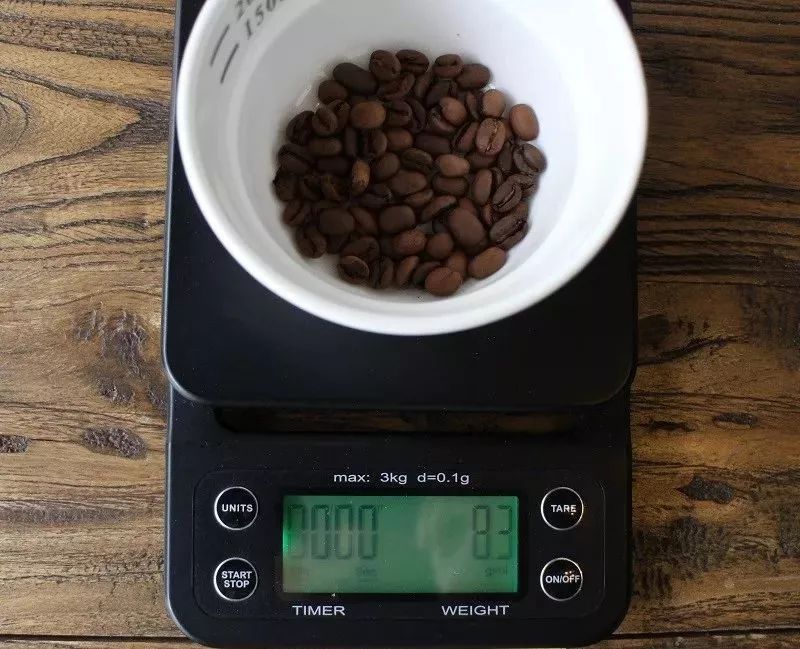
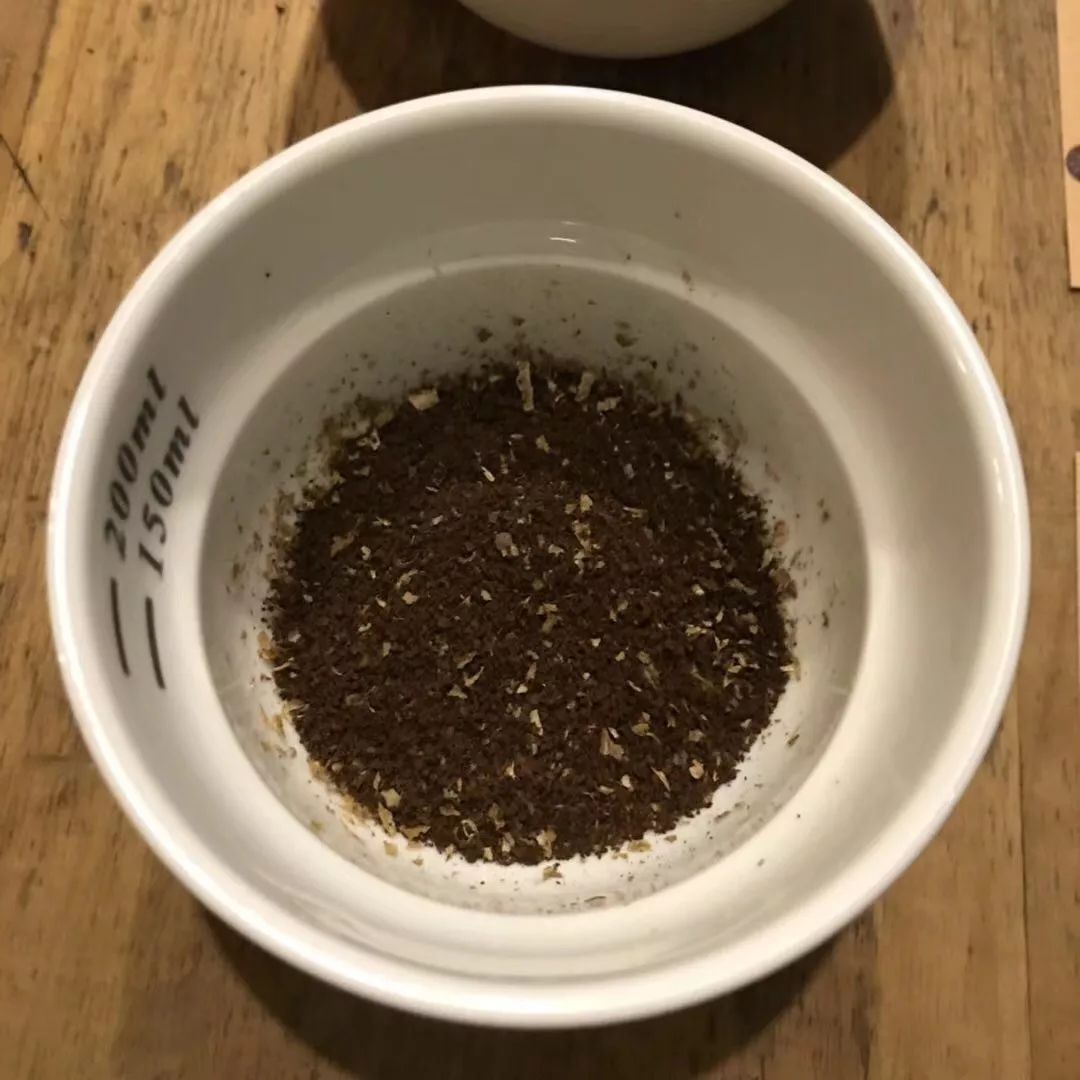
The golden parameters for standard cupping are 8.25 grams of coffee grounds with 150ml of water, with the water temperature controlled in the 92.2-94.4°C range. To begin, pour coarsely ground coffee into the cup and first smell the dry aroma—freshly roasted beans (ideally within 24 hours of roasting) often give off aromas such as nuts and caramel; after pouring water, let it sit for 3-4 minutes to form a crust of coffee grounds, at which point the wet aroma releases more complex volatile substances such as honey and citrus. Note that a water temperature deviation of more than ±1°C may affect extraction uniformity.
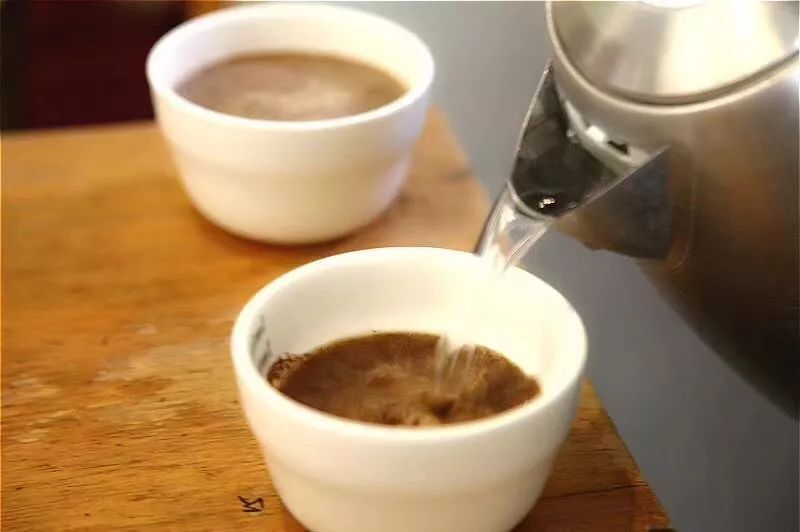
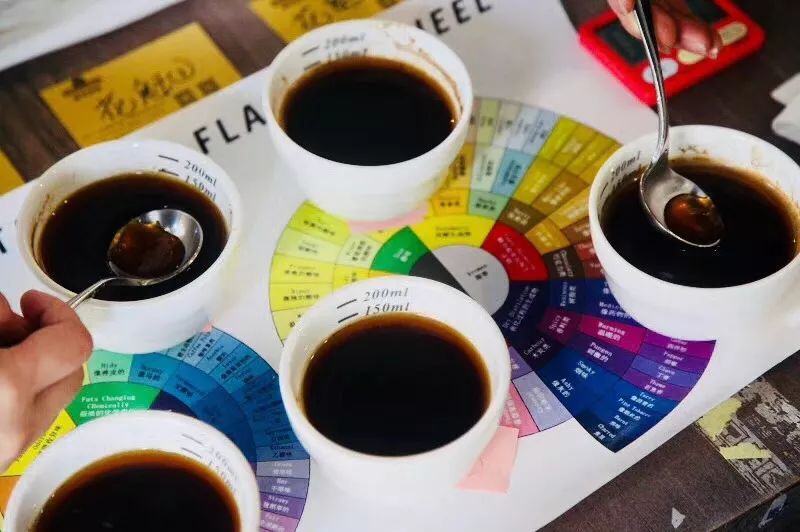
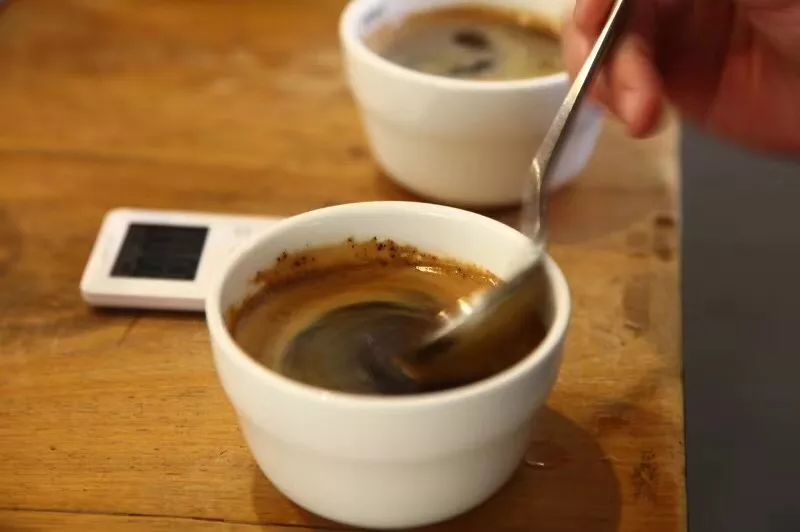
Cupping proceeds in four steps: in the second step, two minutes after pouring water, smell the wet aroma by stirring to form a vortex, noting characteristics such as floral and wine-like notes; in the third step, use a spoon to gently skim the surface and remove the foam, breaking the crust in preparation for tasting; the fourth step is the core stage—when scooping up the coffee liquid with a spoon, slurp it quickly so the liquid is atomized and contacts the entire mouth, focusing on the feedback from different areas of the tongue to sweetness, acidity and bitterness, then spit out the coffee and record the flavor impression. After each tasting, be sure to rinse your mouth and clean the spoon to avoid residue affecting the judgment of the next cup.
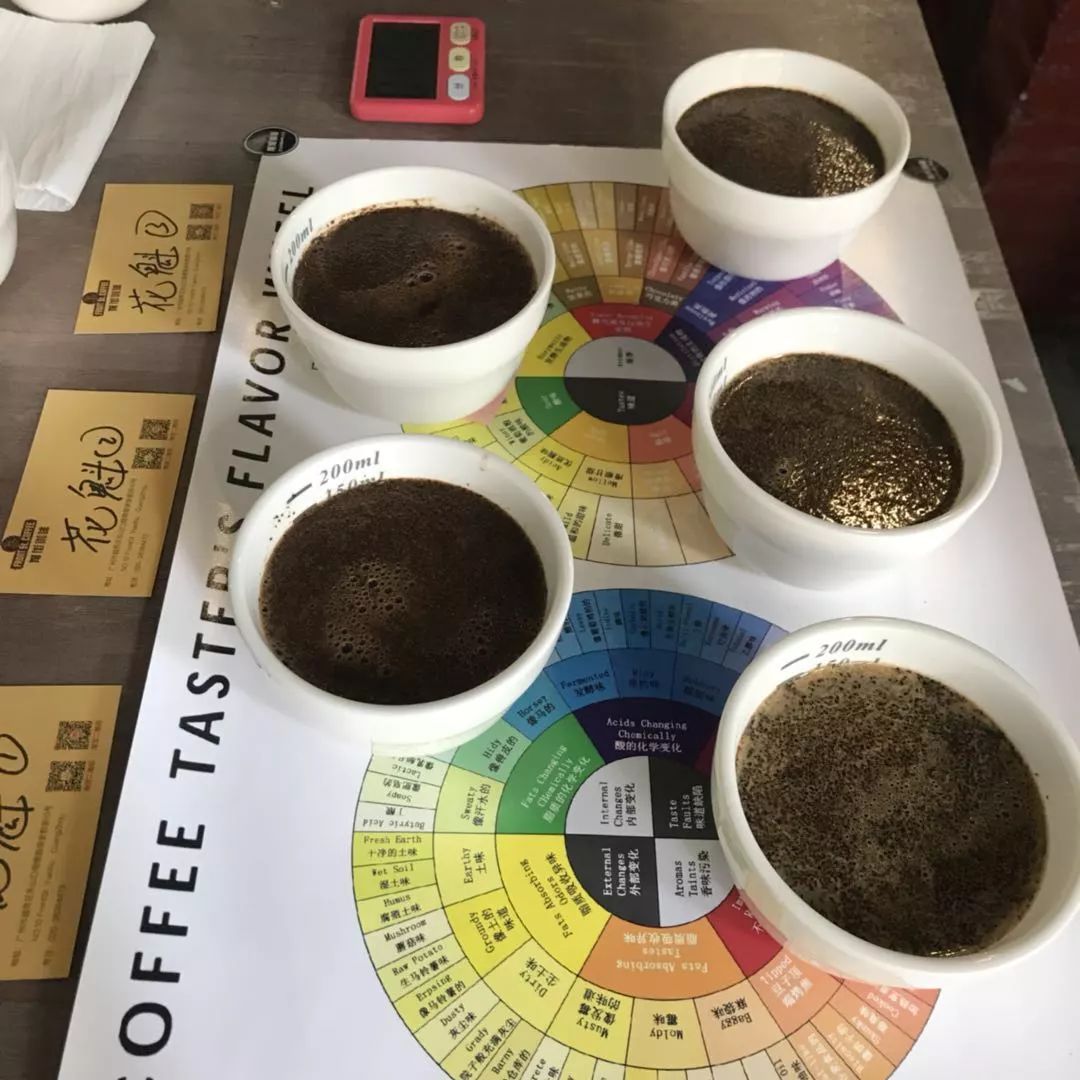
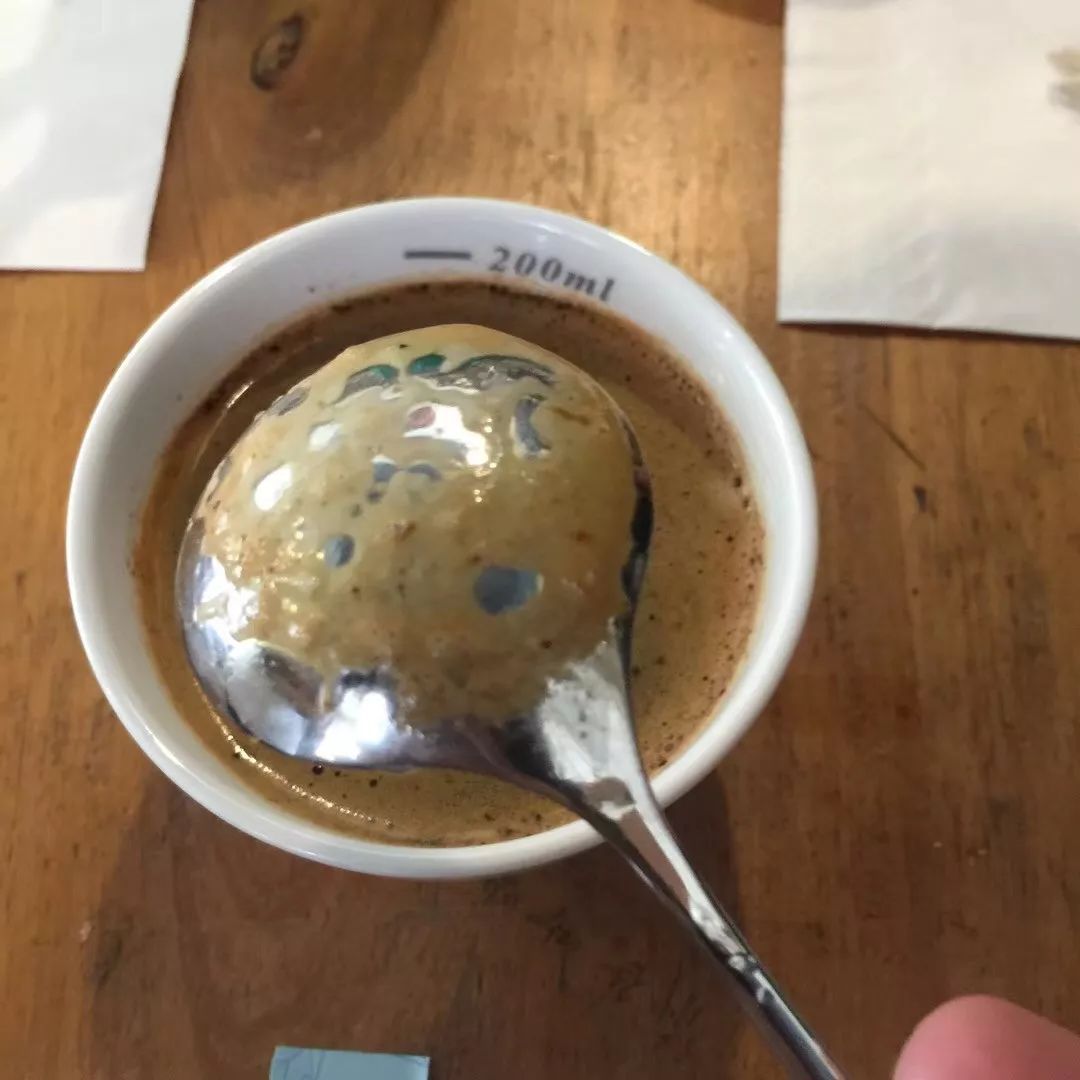
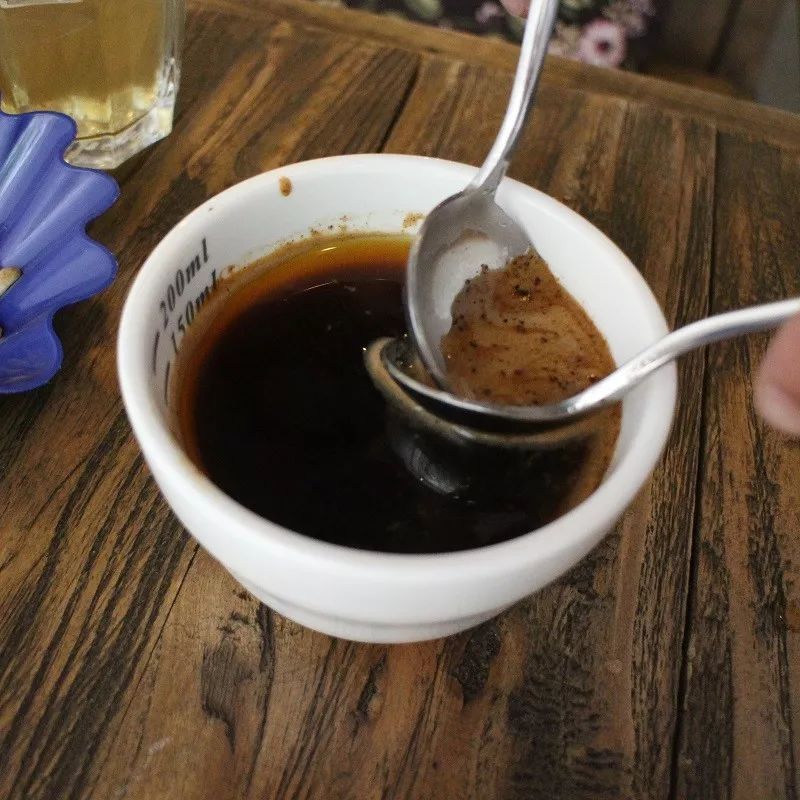
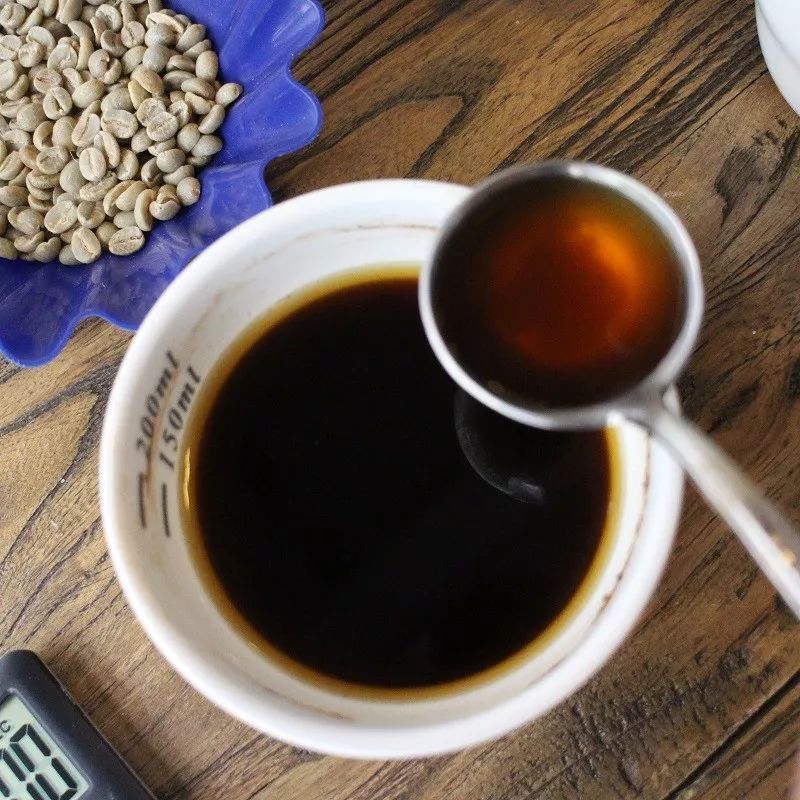
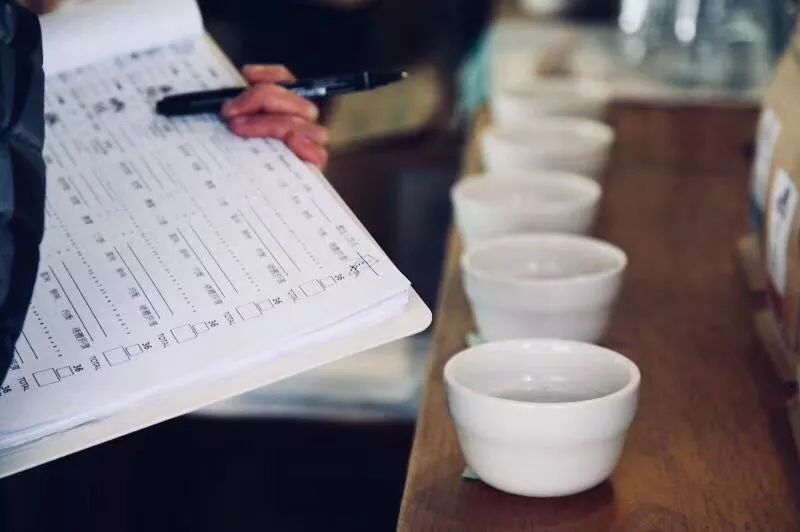
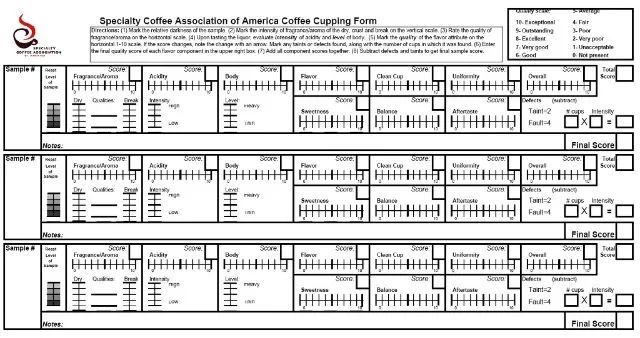
SCAA cupping uses ten scoring items, in which aroma (dry + wet), flavor, aftertaste, cleanliness, sweetness, acidity, body, uniformity, balance and overall impression form the complete evaluation system. Scores range from 0-10, 8.3 and above is the specialty-grade threshold, and 9 represents a top level. Particularly noteworthy is that the 'uniformity' indicator unique to the SCAA examines the flavor stability of multiple cup samples, while 'cleanliness' assesses the presence of interfering off-flavors such as earthiness and mustiness.
Regarding scoring details: flavor intensity is divided into 16 levels (each 0.25 point is one level), and high-quality coffee needs to show a richly layered flavor profile—for example, Ethiopian beans may present bright fruit notes such as blueberry and jasmine, while Sumatran beans are known for herbal and earthy tones. The deduction rules are clear: minor defects (such as a slight fermented taste) deduct 2 points per cup, major defects (such as severe burnt bitterness) deduct 4 points, and the final score must still exceed 80 after deducting defect points to be called specialty.
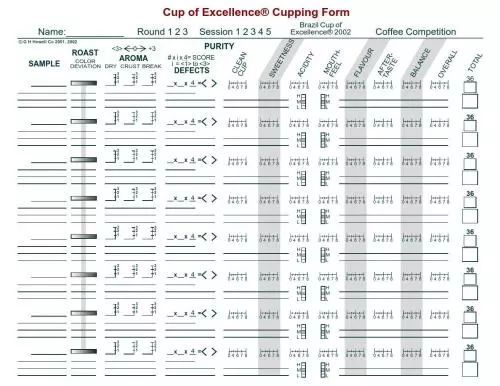
Unlike the SCAA system, CoE competition cupping uses an 8-point scale (100 points total), with 6 points as the competition-level baseline. Its eight evaluation items include cleanliness, sweetness, acidity, body, flavor, aftertaste, balance and overall evaluation, with 85 and above being the Cup of Excellence award level. Common mistakes include neglecting water temperature control, which leads to under-extraction, or failing to clean the spoon in time, which causes flavor contamination—both of which directly affect scoring accuracy.
Professional cupping is not only a decision-making tool for coffee purchasing but also effective training for improving tasting ability. By systematically learning the scoring standards and operating norms, coffee enthusiasts can more precisely describe flavor characteristics and understand the logic by which different origins and processing methods affect coffee quality.