Pour-Over Three-Stage Extraction Guide: Timing and Parameters
Introduction: Master the core techniques of pour-over coffee, from bloom timing to the complete three-stage pouring process. This article details a standard 15g brewing recipe, explains how V60 dripper characteristics affect flow rate, and provides precise guidance on grind size selection, water temperature control and pouring technique. By observing water level changes to judge extraction status, you can avoid common bitterness and off-flavors and consistently extract layered, flavorful coffee.
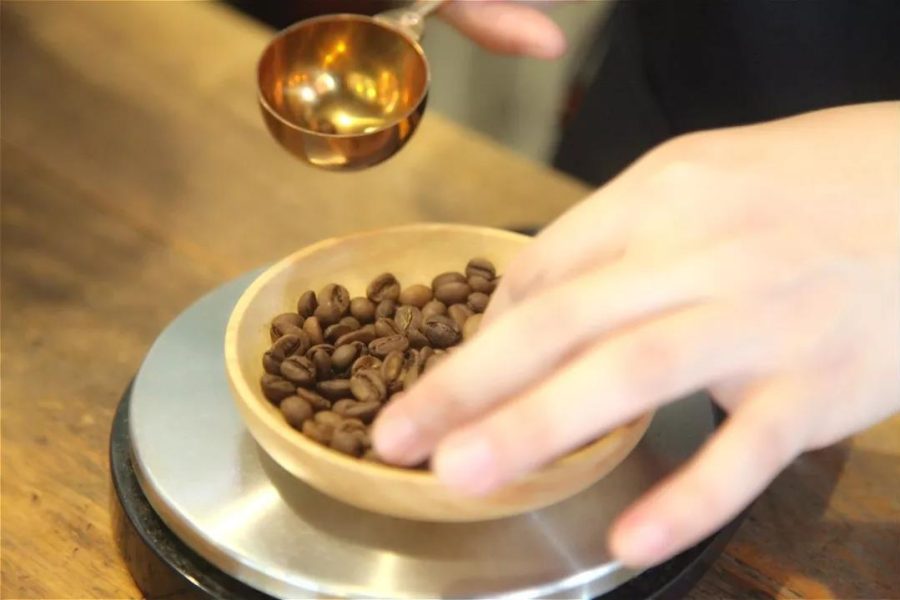
Many beginners are often confused about when to start counting the bloom time in pour-over brewing. In practice, professional brewing timing usually starts after the pour is completed. For example, with 15g of coffee grounds, the standard procedure is to pour 30g of hot water for the bloom and hold for 25-35 seconds. This basic parameter must work together with the subsequent pouring steps to achieve ideal extraction.
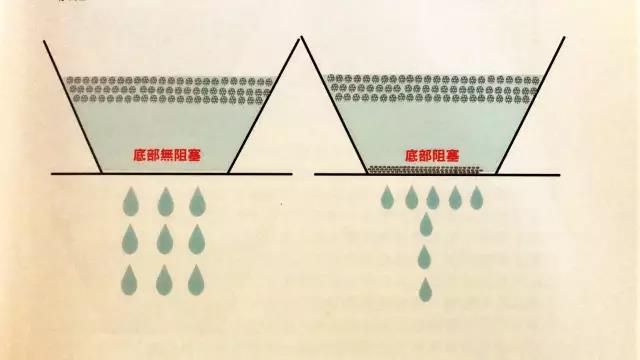
When using a V60 dripper, pay special attention to its flow characteristics—too strong a stream will pass straight through the edge ribs, reducing contact area with the coffee bed. A medium-to-small flow is recommended, which ensures full extraction without producing a thin aroma from overly fast flow. The dripper design itself affects extraction efficiency, and this is an important factor to consider when choosing equipment.
Grind size grades and application: Coffee grounds are divided into five grades by coarseness: coarse, medium, medium-fine, fine, and extra-fine. For light-roasted beans (such as Huakui), a Fuji ghost-tooth grinder setting of 3.5 (about the size of granulated sugar) is recommended; this range balances extraction yield and cup clarity. Optimal water temperature ranges for different roast levels: light-medium roast (90-92°C), dark roast (86-88°C).
In terms of the actual procedure, pour 30g of water for the first bloom of 15g of coffee grounds and start timing from the completion of the pour for about 30 seconds. The pouring action should be completed within 3 seconds, and then observe the expansion of the coffee bed—when the surface water is about to evaporate and the expansion reaches its peak, that is the signal for the second pour.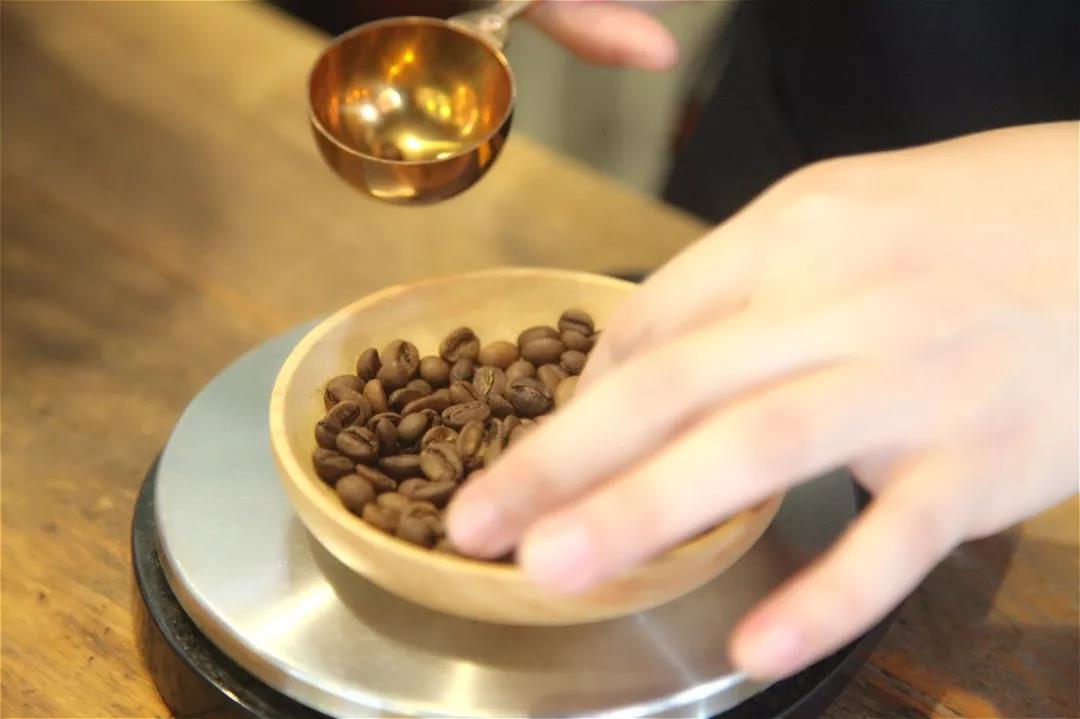
The second pour still starts from the center, using a small stream in an outward spiral. The key is to control the flow rate to avoid localized over-extraction: keep a steady pace while circling to prevent the stream from concentrating in one direction and causing uneven saturation. As the stream approaches the filter paper edge, gradually reduce the flow to ensure the poured volume does not exceed the current bed height. Vigorous early degassing will push the flow toward the edges; at this point, speed up the circling to maintain penetration at the bottom.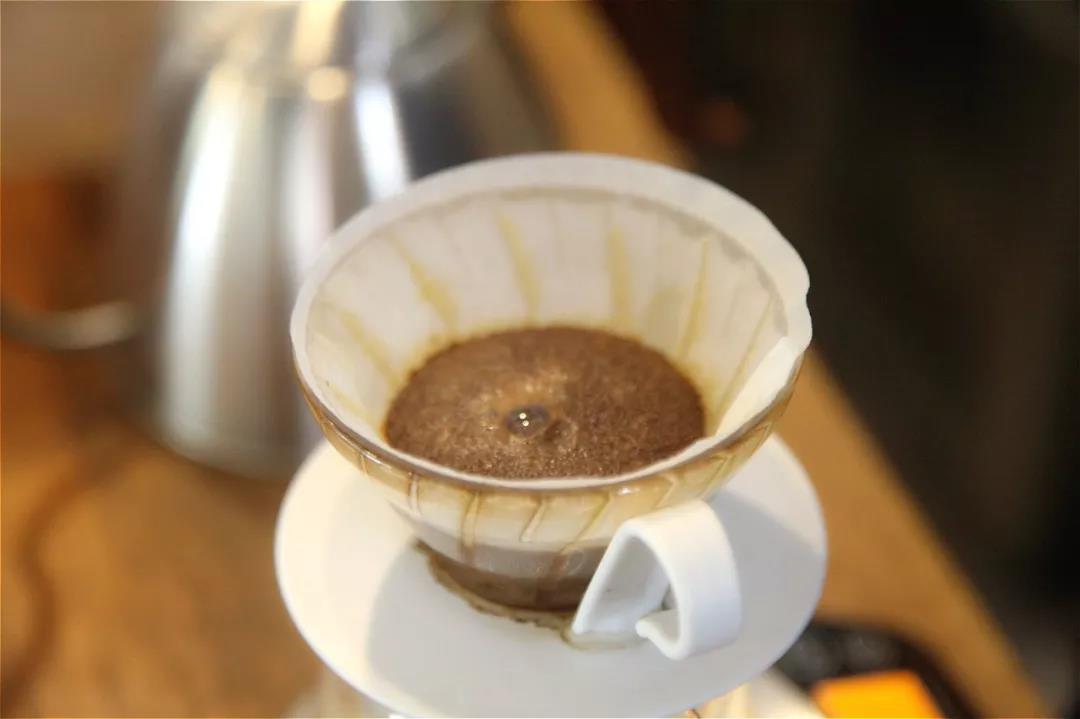
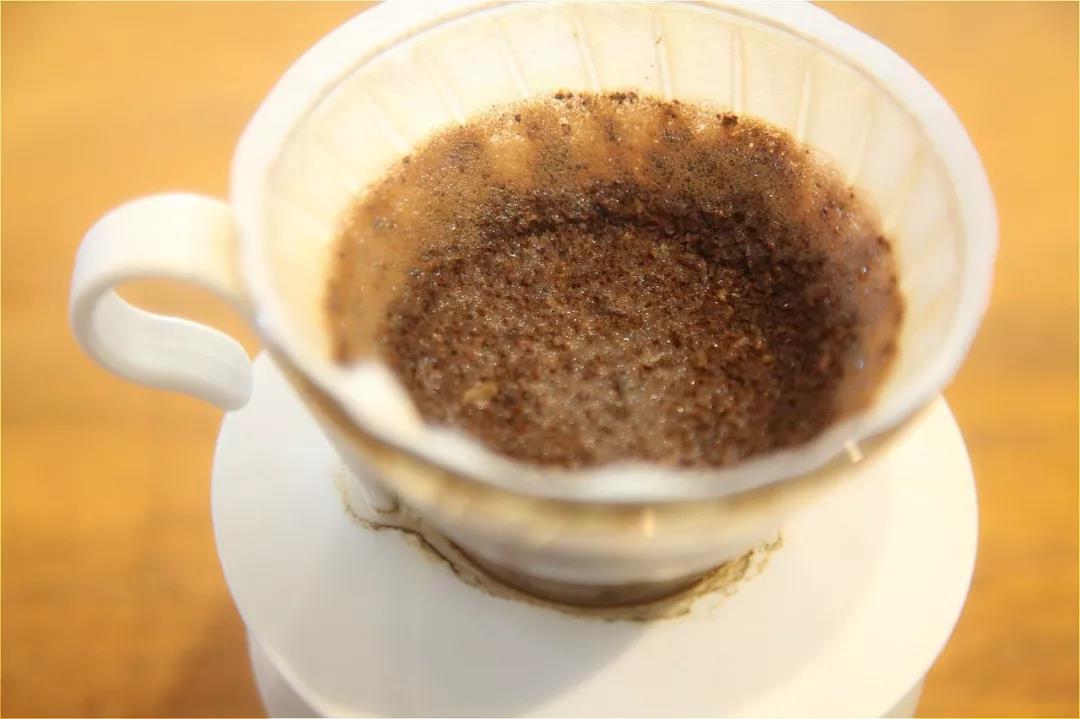
Water level monitoring is an important basis for judging extraction progress. A U-shaped depression after the coffee grounds absorb water is normal in the initial stage; as water absorption increases, the weight of the bed causes the level to drop faster. Adjust pouring when the following occur: if the water level drops too quickly, extraction is insufficient; if too slowly, over-extraction is likely; if it stalls completely, stop pouring immediately to avoid releasing bitter compounds.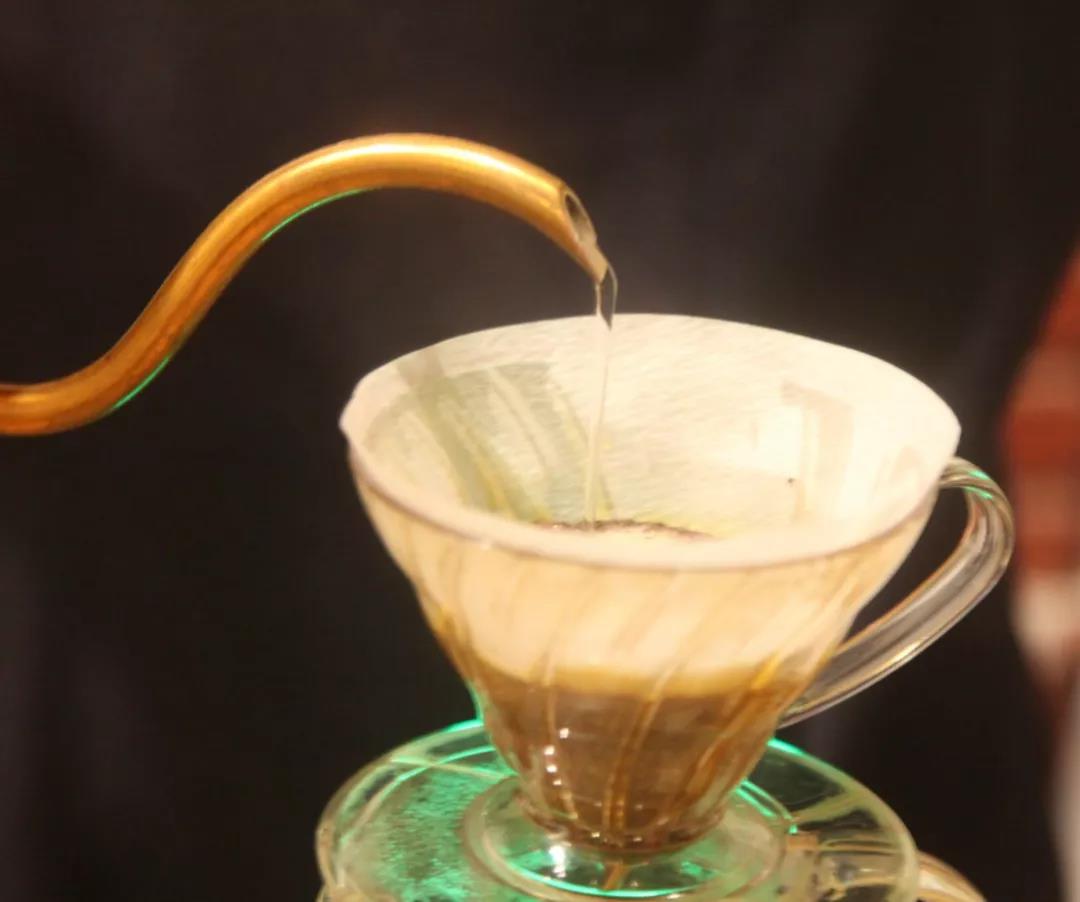
The third pour requires close attention to the foam layer and the mobility of the coffee bed. Continue pouring from the center, moderately widening the circling motion to promote tumbling of the settled particles at the bottom and help soluble compounds dissolve. But mind the rhythm of stopping the flow—frequent interruptions cause over-extraction in the final stage. It is recommended to end pouring when the total approaches a 1:15 coffee-to-water ratio (225g total water). Throughout the process, keep the flow in the dripper steady and continuous, resulting in a clear extracted liquid.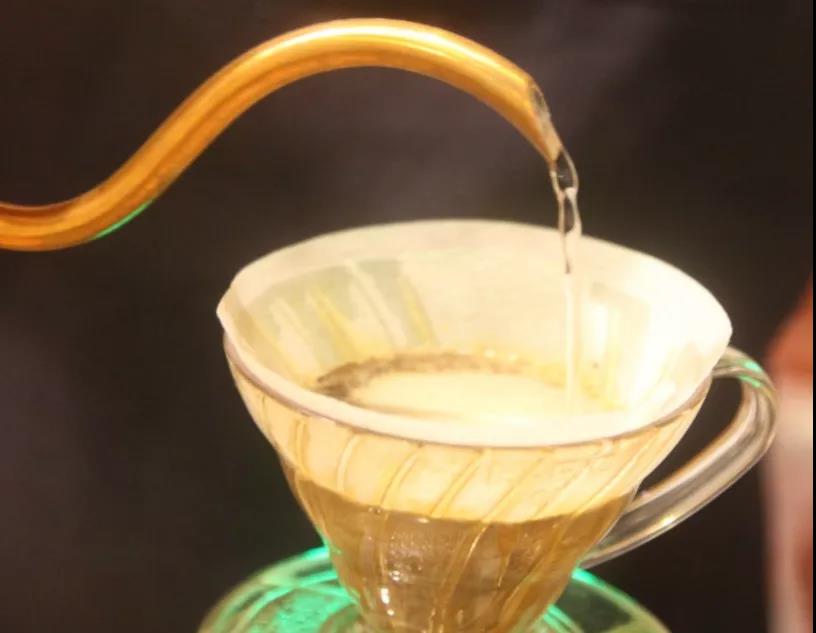
On judging the specific pouring timing: when the surface of the coffee bed shifts from a rapid drop to a gentle flow, it signals the start of the next pour; if the water level clearly stalls, it indicates channeling has formed. By observing these dynamic changes, you can more precisely control the volume and duration of each stage.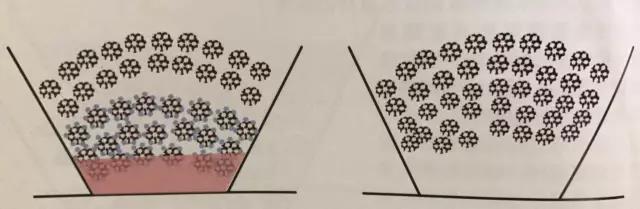
Two common misconceptions deserve special attention for beginners: first, believing that slower pouring is always better—in fact, an overly slow stream prolongs contact time and causes over-extraction; second, ignoring the structural characteristics of the dripper—fast-flow drippers like the V60 require more active pouring than cone-shaped drippers to ensure even extraction.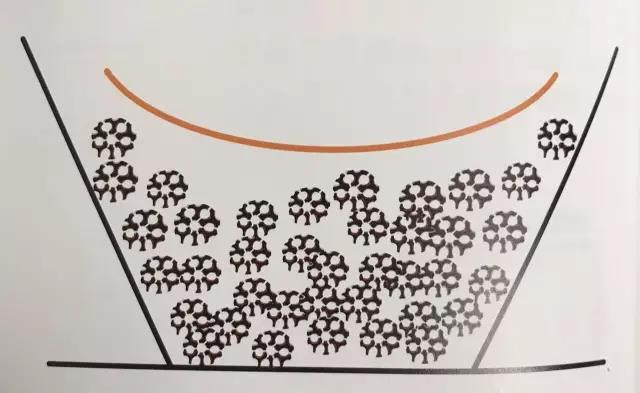
To summarize the core logic of three-stage extraction: the first stage activates flavor compounds, the middle stage stably extracts the body, and the final stage balances the finish. By controlling the three basic parameters—water temperature (light roast 90-92°C / dark roast 86-88°C), grind size (medium-fine), and coffee-to-water ratio (1:15)—and combining them with real-time observation of water level changes, even beginners can consistently brew layered pour-over coffee.