Bolivia vs. Geisha Coffee Beans: Flavor Differences and Pour-Over Guide
Introduction: Bolivia coffee beans and Geisha coffee beans are often discussed together by coffee enthusiasts, but their origins, variety characteristics, and flavor profiles are actually quite distinct. Through an in-depth comparison of two beans from different regions that use similar natural processing, this article examines green bean appearance, roasting curves, cupping flavors, and pour-over performance to help you better understand their unique qualities, and provides practical brewing parameters for reference.
When Geisha is mentioned, people most often think first of its signature floral and fruity aroma, a unique flavor that has made it a star variety in the specialty coffee world. At the same time, another relatively niche but equally promising variety—Bolivian Java—has also drawn attention for its special natural processing and layered flavors. This article compares Geisha coffee beans from Panama's Janson Estate with Java coffee beans from Bolivia, covering variety background, green bean morphology, roasting strategy, and actual cupping and pour-over experience to give you a deeper understanding of the differences and appeal of the two beans.

The legend of Geisha coffee began in 1931, when the variety was discovered in the Geisha forests of Ethiopia and sent to the Kenyan Coffee Research Institute. It then reached Uganda and Tanzania in 1936 and Costa Rica in 1953, but for a long time it did not attract widespread attention. It was not until the variety was introduced to Panama and planted and cupped separately at Hacienda Esmeralda that it became famous overnight, winning numerous accolades in international competitions. Geisha coffee is known for its high sweetness, clean mouthfeel, and complex aroma, with common flavors including citrus, berries, peach, mango, and a signature bergamot finish.
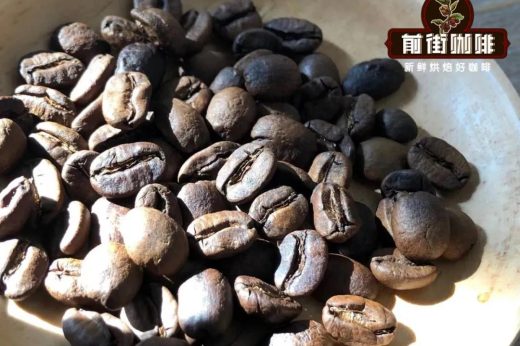
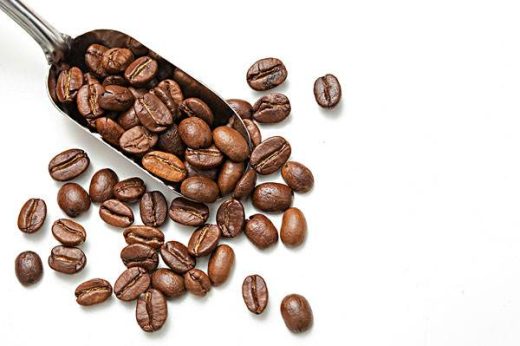
In appearance, both Geisha and Java coffee beans are long-shaped beans, but there are still clear differences in the details. The green beans of Bolivian Java are more slender, with sharp points at both ends; while the Geisha coffee beans from Janson Estate are slightly shorter and rounder, with fuller overall beans (see figure  ). These appearance differences not only affect heat absorption efficiency during roasting but also have some effect on the final flavor expression.

Both coffees in this comparison use the natural processing method, with origin altitudes as follows: Bolivia's Yungas and La Paz regions at about 1,600-1,750 meters, and Panama's Janson Estate at about 1,700-1,750 meters. In terms of roasting strategy, both choose a medium-light roast to highlight their respective regional characteristics and processing advantages.
During roasting, Geisha coffee beans, due to their larger size and higher density, absorb heat faster, and the Maillard reaction proceeds more quickly. Specifically, taking a certain commercial roaster as an example, the charge temperature is set at 200°C, with the airflow initially at 3.5. After 30 seconds, adjust the heat and airflow to control the dehydration pace. When the bean surface turns yellow and the grassy smell disappears, continue observing the timing of wrinkles and dark spots before first crack. Usually after first crack begins (about 9 minutes 47 seconds), extend the development time to 2 minutes 40 seconds, and finally drop the beans at 197.1°C.


By contrast, the roasting of Bolivian Java coffee beans focuses more on extending the development phase to fully bring out the sweetness and cocoa aroma from natural processing. Taking 500 grams of green beans as an example, the charge temperature is 170°C, initial heat 120, airflow 3. After a period of dehydration, gradually adjust the airflow to 5 after the bean surface turns yellow, and closely watch for the first crack signal. Usually after first crack begins (about 10 minutes 18 seconds), develop for 1 minute, and finally complete the roast at 190°C. This approach helps enhance the sweetness layers while preserving the fermented flavors characteristic of natural processing.

The cupping session is the most direct way to experience the differences between the two beans. Geisha coffee's dry aroma carries the fermented notes of ripe fruit, accompanied by a complex aroma of maple syrup, lemon, citrus, apple, rose, dark chocolate, and various berries, rich in layers and clean and transparent. On the palate, the sweet-tart sensation of tropical fruit and berries is pronounced, with a finish of cocoa, grape, and floral tea.
Bolivian Java coffee, on the other hand, shows a completely different personality: the dry aroma is dominated by hazelnut, and on the palate the sweet aromas of cream, hazelnut, and almond stand out, blended with the acidity of citrus and tropical fruit, accompanied by a moderate fermented winey note. As the temperature drops, the sweet orange acidity and floral tea and jasmine tea aromas gradually emerge, the sucrose sweetness is lasting, and the overall flavor has more layered variation.

In the actual brewing experience, it is recommended to use a HARIO V60 dripper, with water temperature controlled at 90°C, a coffee-to-water ratio of 1:15, and a grind size close to fine granulated sugar. Use a phased extraction: first bloom with 30 grams of water for 30 seconds, then pour in a slow circular stream until 125 grams, pausing in stages, and when the water level is about to expose the coffee bed, continue pouring to 225 grams to finish, with a total extraction time of about 2 minutes.
The brewing results show that Geisha coffee is cleaner and more focused in flavor, with the sweet-tartness of tropical fruit and berries prominent on the palate, a distinct maple syrup sweetness, and a finish of cocoa, grape, and floral tea aromas; while Bolivian Java has richer layers of sweet-tartness, with the brightness of citrus and lime prominent, a finish of chocolate and vanilla cream, and after cooling, sweet orange acidity interwoven with jasmine and rose tea aromas, with a lingering sweetness mainly of sucrose that is pleasant and lasting.
Overall, Geisha coffee performs excellently in cleanliness, sweetness concentration, and classic floral-fruity character, suitable for those who prefer a fresh and bright style; while Bolivian Java, with its rich layers and unique nutty and fermented flavors, is better suited to coffee lovers seeking complex taste and a distinctive experience. Whether for daily drinking or specialty coffee tasting, these two beans can each bring a completely different sensory journey.