Ethiopia's Gesha Village Wild Gesha: Origin, Grades & Pour-Over Guide
Introduction: An in-depth visit to Gesha Village Coffee Estate in Ethiopia to understand how it differs from Panama Geisha. This article explains in detail the unique varieties of Gesha Village coffee, the five-tier grading system (including auction, gold, red, etc.), the flavor characteristics and processing methods of each lot, and provides professional pour-over parameter recommendations to help you precisely grasp the essence of this top-tier coffee.
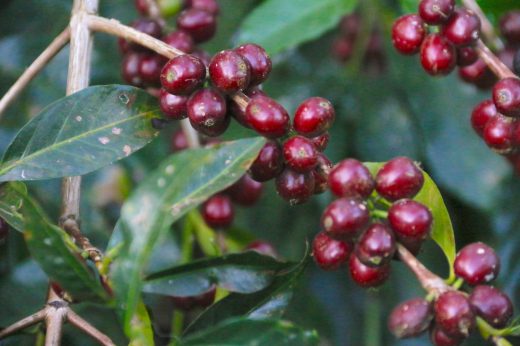
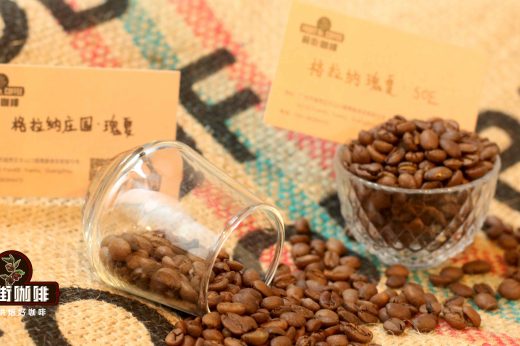
The Geisha commonly mentioned in daily conversation mostly refers to the legendary variety from Hacienda La Esmeralda in Panama. After emerging with its unique flavor in 2003, it has long dominated green bean competitions such as BOP, with classic flavor expressions of rose florals and citrus notes, fresh like floral and fruity tea. But note that the 'Geisha' of Gesha Village Coffee Estate in Ethiopia, though sharing the same name, is actually a completely different bean variety—distinguishable clearly by appearance alone. This estate, located in the Bench Maji region of western Ethiopia, harbors the original genetics of wild Geisha.

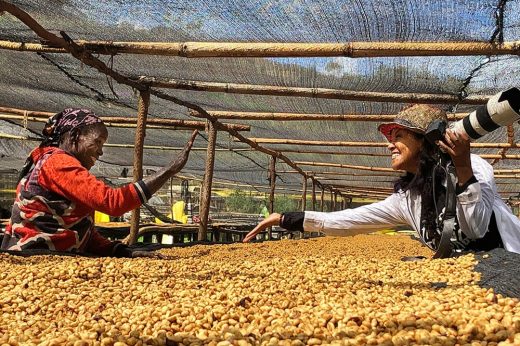
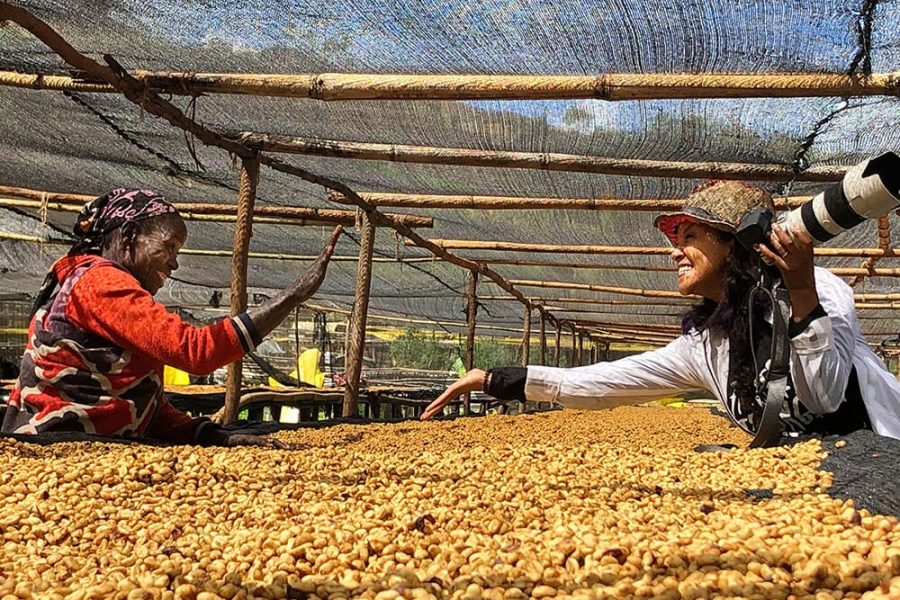
In 2007, documentary director Adam Overton and his photographer wife Rachel Samuel were filming a coffee feature for the Ethiopian government when they happened upon the Gera coffee forest in Bench Maji. This land gave them a new understanding of Ethiopia's coffee potential and sparked the idea of building their own estate. In 2009, they met BOP judge and Finca La Mula owner Willem Boot, whose plan to 'find the birthplace of Geisha' prompted the two to return to Bench Maji in 2011—the several areas locally called 'Gesha Village' are precisely the most likely birthplace of native Geisha.
With Willem Boot's assistance, Adam ventured deep into the surrounding jungle and, in the Gori Gesha forest surrounded by dense forest, discovered multiple wild coffee tree species including native Geisha. They collected native Geisha seeds, planted them here after strict selection, and named the estate Gesha Village Coffee Estate. The estate covers about 471 hectares, with 320 hectares of coffee-growing area; the soil is brown-red loam, and planting density is controlled at 7,000 coffee trees per hectare. Site selection took three years, finally reaching the native Geisha forest under the guidance of local guides, a two-day drive from the capital Addis Ababa.


The flavor expression of Gesha Village Estate is extremely complex and unique, and it is often chosen by baristas in international competitions as competition beans. The estate emphasizes ecological protection, maintains good cooperation with local residents, and has established the Gesha Village Foundation to promote educational development through two nearby schools. Its grading system is strict, covering five major categories: auction, gold, red, green, and Chaka lots.
Auction lots account for only 3.7% of annual production and are the estate's top-tier existence, obtainable only through global auction (for example, the 2018 auction lots cupped at 88.15-92.67 points), subdivided into Champion's Reserve and Farm Reserve. Gold lots account for about 10%, with high flavor complexity and complete traceability; they are the top choice besides auction, often selected by baristas as competition beans or purchased by roasters. For example, lot Oma 059 (natural process for 32 days, altitude 1931-2040 meters) presents fermented wine aromas, citrus acidity, and berry juice when brewed. Red lots account for about 15%, with cupping scores above 88 points (SCA standard); flavor intensity and complexity are slightly lower than gold but value for money is outstanding—for example, the Grower Reserve lot (Gori Gesha, natural process) brews with balanced flavors of coconut, licorice, and cream, with obvious nutty notes. Green lots come from a single plot and variety and provide complete traceability information. Chaka lots are blended lots (containing three varieties: Geisha 1931, Gori Gesha, and Illubabor, with natural and washed processing), blending coffee from all plots and seasons across the estate; when brewed they present citrus and grapefruit acidity along with soft flavors of cream and chocolate.










In terms of processing, the gold, red, and Chaka lots all use the natural method: first remove floating matter and impurities, then spread in thin layers on African raised beds (covered with plastic sheeting); during drying, insect-damaged and green beans are screened out multiple times; total drying time is 18-30 days to ensure quality stability.

Gesha Village Estate manages plots meticulously; based on differences in microclimate such as altitude, soil, and shade, it matches the most suitable varieties to the eight plots (for example, OMA, SURMA, and SHEWA-JIBABU on the west side are at higher altitude, the south side has more shade, and the north side has ample sunlight). After the 2018 auction lot reform, all auction beans are independent lots; screening took 3 months and, through multiple rounds of cupping (each lot cupped at least twice in different orders to prevent error), 31 optimal lots were selected from 117 lots (26 natural, 4 washed, 1 honey). To enhance flavor, the team found through screen-size comparison that larger-screen beans perform better (Geisha 1931 requires screen 17 and above, Gori Gesha and Illubabor require screen 16 and above), and even purchased professional drying nets from the United States for manual screening. Among the 31 auction lots, there are 7 Champion's Reserve (90 kg per lot) and 24 Farm Reserve (120 kg per lot), of which Geisha 1931 accounts for 69.1%, Gori Gesha 27.5%, and Illubabor 3.4%.
The 2019 auction lots were selected from more than 130 lots of high-quality beans scoring above 88 points, divided into Champion's Reserve (7 lots/14 sub-lots, cupping 90+ points, with delicate fruity aromas such as jasmine and strawberry), Farm Reserve (13 lots, 88+ points, rich fruit flavors), and Innovative Reserve (6 lots, with special processing methods bringing complex flavors).






Pour-over reference recommendations (taking gold lots as an example): use 15 grams of coffee grounds, coffee-to-water ratio 1:15, water temperature 90°C, grind size 0.85 mm (80% passing through a No. 20 sieve), paired with a Hario v60 #01 dripper. Pour in three stages: first stage 30 grams of water for a 30-second bloom, second stage pour 95 grams to reach 125 grams (about 1 minute), third stage pour 100 grams to reach 225 grams (about 1 minute 30 seconds), with a total extraction time of 2 minutes. Flavor expression is citrus, florals, berries, and cream, with balanced acidity and sweetness and a moderate finish. Note to use freshly roasted beans (ideally within 5 days of roasting); the rest period of 4-7 days gives the best flavor.