Colombian Medellín Coffee Beans: Origin, Flavor and Brewing Guide
Introduction:This article provides an in-depth introduction to the naming origin, core producing region characteristics and flavor profile of Colombian Medellín coffee beans, detailing the growing environment and cultural background of the 'Coffee Golden Triangle' in the central Andes. From the division of the three major producing regions and the year-round harvest schedule to the smallholder farming model, combined with washed and emerging processing methods, supplemented by professional brewing parameter recommendations, it helps you fully understand the unique charm and purchasing points of this classic bean.
In Colombia's vast coffee landscape, the central 'Coffee Golden Triangle' is one of the most representative producing regions and a name familiar to coffee lovers worldwide—this is the core origin of Medellín coffee beans. Although coffee is grown in many parts of Colombia, the area about a 7-hour drive west of the capital Bogotá and an equal distance south of Medellín is the most famous, known not only for coffee but also for a coffee farm culture of more than a century that has been inscribed as a UNESCO World Heritage Site.
Locals call this land spanning the three departments of Caldas, Risaralda and Quindío the 'Coffee Axis' (Eje Cafetero); the departmental capitals are Manizales, Pereira and Armenia respectively. This is not only Colombia's second-largest tourist destination (after Cartagena) but also the cradle of high-quality coffee beans.
In terms of planting distribution, Colombia's main coffee producing areas extend in a north-south band along the Andes, roughly divided into three major regions: north (green), central (orange and purple) and south (yellow). Among them, the central region covered by orange and purple has two harvest seasons, main and secondary, due to geographical microclimate differences: the main season is winter from September to December, and the secondary season is summer from April to May; the southern and northern regions have their main seasons in summer (March-June) and winter (September-December) respectively. The complementary northern and southern seasons mean fresh coffee beans are produced year-round.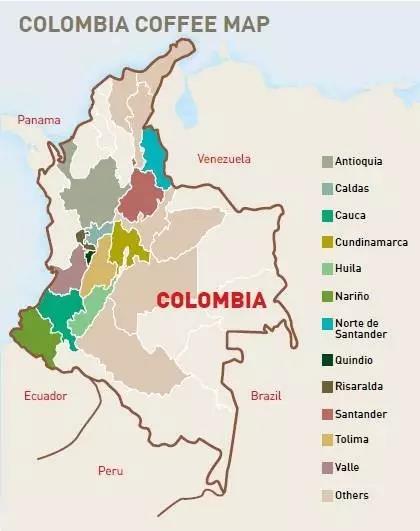
The smallholder farming model of the central region is its distinctive feature—95% of the coffee comes from family farms, with an average planted area of less than 5 hectares and an average annual output of about 25 bags (70 kg per bag). Planting elevations are concentrated between 1,000 and 2,500 meters, annual rainfall is 1,000-2,500 mm, and the average annual temperature is 15.8-20.5°C; such an environment provides ideal growing conditions for coffee. Mainstream varieties include Caturra, Bourbon, Typica and Pacamara, while Colombia has also bred three major domestic disease-resistant varieties: Castillo, Tabi and the variety of the same name 'Colombia', with rare varieties such as Geisha and Mocha also planted in small quantities.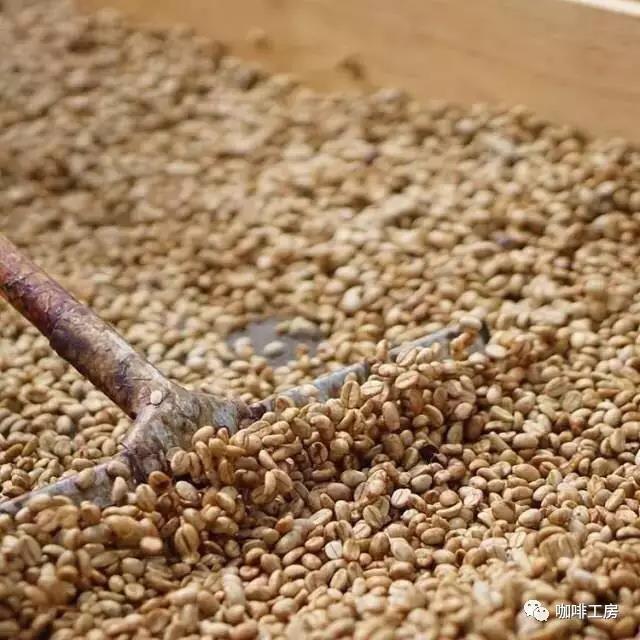
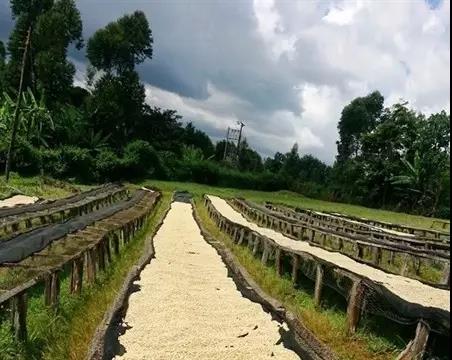
The choice of shade trees has strong local character—lemon and orange trees are common in the producing region; the local lemon resembles an orange in shape but is extremely acidic, and locals often drink it with spirits, making for a unique flavor experience. Washed processing is the mainstream method; the traditional process uses dry fermentation in an open environment, and in recent years anaerobic/controlled-oxygen fermentation techniques borrowed from winemaking have also been introduced. Drying is flexible and varied: in good weather, small raised beds (similar in scale to a balcony sunroom) or concrete drying yards are used; on rainy days, dryers are relied upon (inlet air temperature about 50°C).
The core supporting this industry is the Colombian Coffee Growers Federation (FNC) and its technical institution, the National Coffee Research Center (CENICAFE), founded in 1938. FNC not only handles international promotion of the 'Juan Valdez' brand image but also supports smallholders in transitioning to disease-resistant varieties through loan programs. For example, the Castillo variety support program launched in 2012 offered 7-year loans (no repayment in the first two years, 11% annual interest from the third year, with only 60% of principal ultimately needing to be repaid), while the CENICAFE 1 variety newly released in 2016 combines higher yield with dual disease resistance.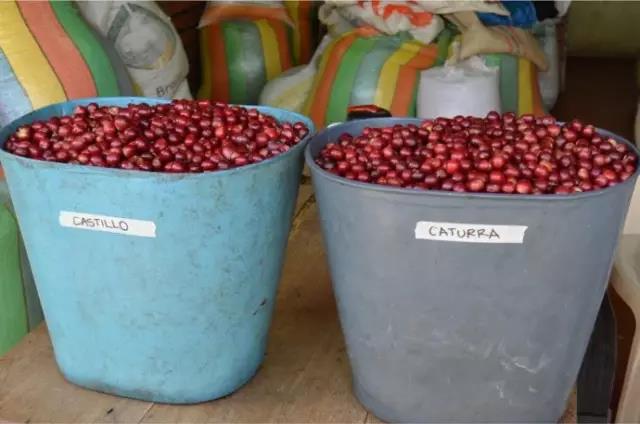
The specific operation of washed processing reflects smallholder wisdom: after harvest, the coffee cherries pass through a special processing machine (Ecomill or Eco-Pulper) that removes the skin, pulp and most of the mucilage in one pass, requiring only a small amount of water; the parchment beans with a little residual mucilage are then placed in concrete tanks or stainless steel drums to ferment overnight, and rinsed with clean water the next day to complete the process. For drying, depending on the weather, natural sun drying (raised beds preferred), spreading on concrete floors, or starting dryers to regulate temperature are chosen.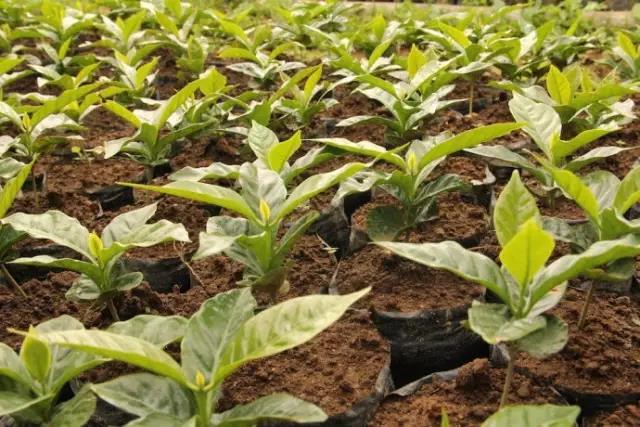
For brewing, the Hario V60 dripper is recommended (water temperature 90°C, grind size about 3.5 on a Fuji Royal), using a three-pour method with a 1:15 water-to-coffee ratio: first pour 25 g of water and bloom for 25 seconds, then pour to 120 g and stop; when the water level in the coffee bed has dropped by half, continue pouring to a total of 225 g, with the whole extraction taking about 2 minutes. This method clearly presents the front, middle and back flavor layers of the coffee; the V60's multi-rib design helps extend extraction time for the nutty and chocolate notes in the finish, ultimately delivering a clean and refreshing taste experience.