Guide to Buying Indonesian Mandheling Coffee Beans and Pour-Over Parameters
Introduction: Sumatra Mandheling, Indonesia's most representative specialty coffee, is renowned worldwide for its full body and unique processing. This article provides an in-depth analysis of Mandheling's historical origins, the characteristics of four classic producing regions, professional-level roasting and brewing plans, and sensory guidance akin to a flavor wheel, helping you accurately select your preferred beans and master the golden extraction parameters.
In Indonesia's coffee landscape, Sumatra Mandheling has always held an irreplaceable position. This coffee legend, whose name is misread as an ethnic group, carries a transnational misunderstanding from World War II and the gifts of the tropical rainforest. When you gain a deeper understanding of its complete production chain, from growing altitude to three-stage drying, you will find that every dark-roasted bean embodies a wondrous collision of nature and human culture.
Tracing back to the 17th century, Dutch colonists introduced Arabica seedlings to the Indonesian archipelago, but in 1877 they suffered a devastating attack of leaf rust. This disaster forced growers to switch to the more disease-resistant Robusta, and today the only remaining high-quality Arabica regions in Sumatra—volcanic slopes at altitudes of 750-1500 meters—are the cradle of Mandheling's unique flavor. The coffee beans produced here are plump and hard, but because they are prone to defects, they require strict manual selection, ultimately forming the signature chocolate notes and syrupy sweetness.

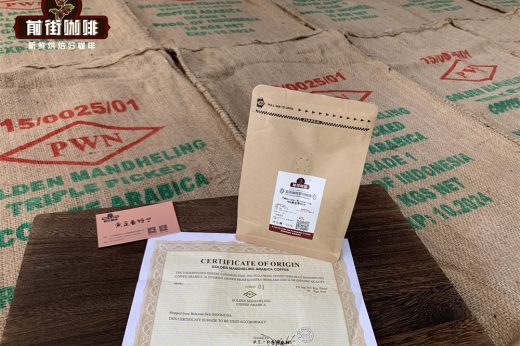
The anecdote about the name "Mandheling" is quite dramatic: Japanese soldiers stationed in Indonesia mistakenly took the ethnicity name of a coffee shop owner, "Mandailing," as the name of the beverage and brought it back to Japan. After being promoted by the Pwani Coffee Company, it unexpectedly became a classic. This beautiful misunderstanding made the high-quality Arabica beans from the Lintong and Mandailing regions famous worldwide under an ethnic name.

Mandheling's processing method is a model of Southeast Asian characteristics. The traditional wet-hulling method combined with three-stage drying technology: farmers use simple equipment to remove the pulp, then gradually dehydrate through nighttime fermentation and thin-layer drying. It is worth noting that some producing regions use a mucilage-retention process similar to Brazil's semi-washed method, and this difference directly affects the cleanliness and body of the final flavor. Experience shows that beans that have undergone three rounds of drying in Medan Port have low acidity and a heavy body that better highlight the special floral and fruity aromas nurtured by Sumatra's soil.
In terms of grading, DP Grade 1 Mandheling is known for its long finish, and its earthy aroma reminiscent of primeval forests and faint musty note form a unique identity; while the collector's edition products require three years of cellar storage, after which the acidity transforms and develops complex flavors of spices and walnut. This change brought about by the tempering of time distinguishes aged Mandheling from ordinary stored beans—slow oxidation under professional storage conditions can eliminate undesirable off-flavors that may develop during the green bean stage.

A field visit to Sumatra's core producing regions reveals that the volcanic clay plateau of the Lintong area nurtures large Typica variants, whose irregular appearance is precisely proof of high-density inner quality. The adjacent Gayo Mountains are dominated by Catimor hybrids, and the 1100-1600 meter altitude gives Golden Mandheling a bright citrus note. Professional roasters suggest that these high-moisture green beans require staged dehydration: an initial closed steaming phase of 30 seconds to lock in the aroma, then gradually increasing airflow after the bean surface turns white.

For home brewing scenarios, the conical rib design of the KONO dripper can effectively extend the extraction time. Test data shows that using a medium-fine grind (BG#6W) with 86°C water temperature and a 1:15 coffee-to-water ratio, pouring 225ml of water in stages can balance body and clarity within a 2-minute extraction cycle. In practice, first bloom with 30 grams of water to activate, then pour in a circular motion up to the 125-gram water line to trigger the first extraction, and when the coffee bed is slightly exposed, continue pouring to the target volume.

Flavor wheel analysis shows that high-quality Mandheling should present a distinct nutty base and caramel sweetness, with a finish of slight bitter astringency from dark chocolate. Professional tasters remind that every 1°C increase in brewing water temperature will enhance the extraction of bitter substances, so it is recommended to adjust parameters according to the bean type—for example, aged Mandheling can be lowered to 84°C to highlight its full body. For consumers seeking layers of flavor, when paired with milk, its low acidity effectively avoids cloying sweetness, making it especially suitable for iced drip or cold brew coffee.

From the naming origin of a WWII misunderstanding to the craft heritage of three-stage drying, the charm of Sumatra Mandheling lies in its irreproducible terroir imprint. Whether you are a beginner choosing a DP Grade 1 entry-level option or a seasoned enthusiast collecting cellar-aged beans, understanding the stories and scientific parameters behind these coffees will deepen your tasting experience.