Pour-Over Water Technique: Avoid Common Mistakes and Master Flow Control
Introduction: The flavor expression of pour-over coffee is 70% determined by water pouring technique. This article deeply breaks down the core elements of pour-over water pouring, from grind size and water temperature to flow control, analyzes common operational mistakes one by one, and provides quantifiable parameter suggestions. Whether you are a beginner or an advanced enthusiast, you can use these practical techniques to improve extraction stability and brew a coffee with distinct layers.
The quality of pour-over coffee is affected by multiple factors, among which the water pouring stage is particularly critical. Many coffee enthusiasts often cause flavor imbalance due to improper operation, such as a thin mouthfeel from under-extraction, or bitter and miscellaneous flavors from over-extraction. Mastering scientific water pouring techniques can effectively improve the cleanliness and flavor complexity of coffee.
Grind size and freshness are the foundation of the foundation. The ideal pour-over grind size should resemble granulated sugar particles. Too coarse will cause water to penetrate quickly and aromatic substances to be insufficiently extracted; too fine will easily cause the dripper to clog, prolong extraction time, and produce bitter flavors. It is recommended to use a conical burr grinder to ensure uniform particle size, and also pay attention to grinding fresh and brewing immediately—the aroma of coffee grounds begins to dissipate 40 seconds after contact with air, and grinding in advance will greatly reduce flavor expression.
The distribution stage is often overlooked, but it directly affects the bloom effect. After pouring the coffee grounds into the dripper, simply tap the wall of the cup lightly to let the coffee bed settle naturally, then slightly adjust the flatness by drawing a "の" shape. Excessive shaking will cause uneven density of the coffee bed, resulting in local over-extraction or under-extraction.
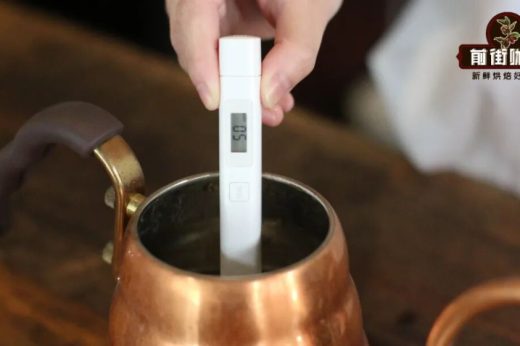
The choice of water quality and water temperature is equally important. It is recommended to use filtered water with a TDS value of 100-250ppm, avoiding purified water (lack of minerals leads to a thin flavor) or chlorinated tap water. Dark roast beans are suitable for 80-85°C water temperature to highlight body, while medium-light roast beans require a high temperature of around 90°C to stimulate floral and fruity acidity. Note that the water temperature will naturally decrease during the pouring process; it is recommended that the initial water temperature be 2-3°C higher than the target value.
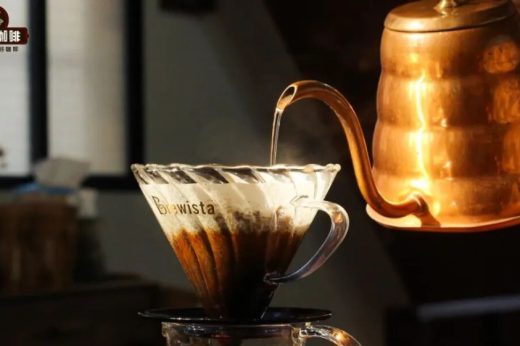
The pouring technique directly affects extraction uniformity. The diameter of the water column is recommended to be controlled at 0.8-1cm, drawing a spiral trajectory with the center of the dripper as the circle center, keeping the water flow vertically downward to avoid scattering the coffee bed. Common mistakes include: the water column being too high, causing the coffee bed to be punctured and bubbles to form, the water flow alternating between large and small, causing uneven extraction, and the pouring path directly impacting the edge of the filter paper, causing channeling.
The bloom stage is the key starting point for flavor release. The amount of water poured is 2 times the amount of coffee grounds (e.g., 60ml of water for 30g of grounds), and the time is controlled at 20-30 seconds, at which point the coffee grounds will expand and release carbon dioxide. A high-quality bloom can make subsequent extraction more sufficient; coffee with insufficient bloom often has a stuffy, damp sensation.
For the formal pouring, it is recommended to use staged extraction: first pour water at the center to 1/3 of the water amount to activate the flavor, pause the water flow and wait for the water level to drop (about 10-15 seconds), then continue pouring water to the target volume. This technique can balance the rhythm of acidic and bitter substance dissolution; pausing the water flow 1-2 times is sufficient to adjust concentration. The entire pouring time is recommended to be controlled at 1 minute 30 seconds to 2 minutes 30 seconds. Too fast a flow rate will lead to under-extraction, while too slow will easily cause over-extraction.
The water amount ratio directly affects the concentration presentation. The golden ratio of coffee grounds to water is 1:15 (e.g., 225ml of water for 15g of grounds), which can be fine-tuned to 1:13-1:16 according to taste. When pursuing a rich mouthfeel, the pouring time can be shortened, but care must be taken to avoid weak extraction in the later stage. In actual operation, it is recommended to use an electronic scale for precise measurement to ensure stable parameters.
Advanced techniques also include the use of water flow impact force: for coarse grinding, increase water pressure to help fine particles move, while for fine grinding, slow down the flow rate to prevent over-extraction. Keep your wrist stable and achieve uniform pouring through small rotations, which improves extraction consistency more than large circular motions.