Yunnan Catimor's Low-Price Predicament: Can Honey Processing Drive the Shift to Specialty?

Introduction: Yunnan, as China's largest coffee-producing region, has long seen the Catimor variety face persistently declining farmgate prices. Although innovative processes such as honey processing and wine-style natural fermentation continue to improve flavor expression, variety characteristics and cultivation management remain constraining factors. This article analyzes the current state of Yunnan's coffee industry and explores the feasibility of breaking through the price bottleneck via modern agricultural technology and refined processing.
In the coffee-growing areas of Pu'er, Yunnan, honey-processed Catimor beans are gradually gaining attention from international buyers, but the average price of green beans still hovers around 12–18 yuan per kilogram, far below the market benchmark of 30 yuan or more for specialty coffee. This contradiction reflects the deep challenges of upgrading Yunnan's coffee industry.

Tracing back to the introduction history of 1955, the rust-resistant Catimor P4/PE series cultivated by the Yunnan State Farms system still accounts for more than 90% of the region's planted area. Although these hybrid varieties offer high yield and disease resistance, their woody notes and low acidity are naturally different from the bright fruit acidity that specialty coffee seeks. Cup test data from the Specialty Coffee Association of America show that untreated Catimor beans have averaged 75–79 points year after year (the specialty threshold requires ≥80 points).
The key breakthrough point for the current industry transformation lies in post-harvest processing innovation. Some estates in the Pu'er area have successfully elevated Catimor's flavor complexity to present complex aromas such as red wine, caramel, and tropical fruit by adjusting the mucilage retention ratio in honey processing (usually controlled at 30%–50%) and optimizing anaerobic fermentation parameters of around 120 hours. However, such processes require precise control of temperature and humidity, which is difficult for smallholder farmers to operate independently.
Variety improvement and changes in cultivation models are equally important. The establishment of a modern agricultural estate system is seen as the core solution—by introducing traditional specialty varieties such as Typica and Bourbon, combined with shade-tree planting and precision drip irrigation, yields can be controlled within the high-quality range of 800–1,200 kilograms per mu. Trial data from the Yunnan Academy of Agricultural Sciences show that after more than three years of soil improvement, the sugar content of new varieties can reach above 22°Brix (ordinary commercial beans are about 16–18°Brix).
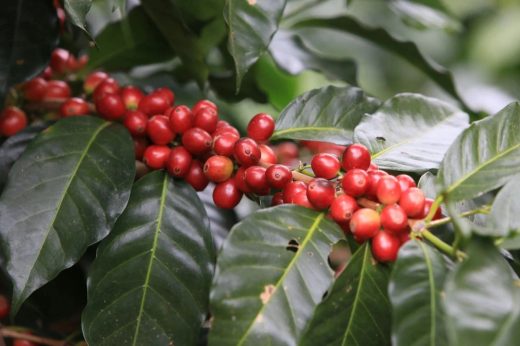
The lack of industry coordination mechanisms also cannot be ignored. In the existing coffee supply chain, everything from picking to primary processing often passes through multiple intermediary links, causing quality fluctuations. Establishing regional centers that integrate picking training, standardized processing, and quality-control traceability can help coffee farmers standardize harvest maturity (picking is recommended when the red cherry rate is ≥90%) and standardize fermentation duration (conventional washed 18–24 hours / honey processed 36–48 hours), which is crucial for stabilizing flavor expression.
For consumers, identifying high-quality Yunnan Catimor beans can be done by observing three characteristics: green beans show a blue-green luster, grinding releases a fresh citrus aroma, and when brewed (recommended water temperature 92–94°C, 1:15 coffee-to-water ratio) one can clearly perceive mid-palate nuttiness and sweetness in the finish. These details often reflect actual quality better than a single origin label.