Yunnan Catimor Coffee: Flavor Analysis and Growing Guide
Introduction: Yunnan is an important coffee-producing region in China, and its main variety, Catimor, has attracted considerable attention in recent years. This article provides an in-depth analysis of this hybrid variety's flavor characteristics, growing background, and market positioning, compares it with traditional Arabica and Robusta, and offers professional-grade brewing parameter recommendations to help coffee enthusiasts gain a comprehensive understanding of the true character of Yunnan small-bean coffee.
 Whenever Yunnan coffee is mentioned, consumer reactions tend to be polarized—some keep their distance because of stereotypes, while others are full of curiosity about the flavor potential of this highland region. In many discussions, the frequently used term "small-bean coffee" often raises questions: what variety does it actually represent? In fact, from a botanical classification perspective, there is no strict category called "small-bean coffee"; this colloquial term specifically refers to Arabica types with smaller fruit, in sharp contrast to the medium-bean Robusta produced in Hainan.
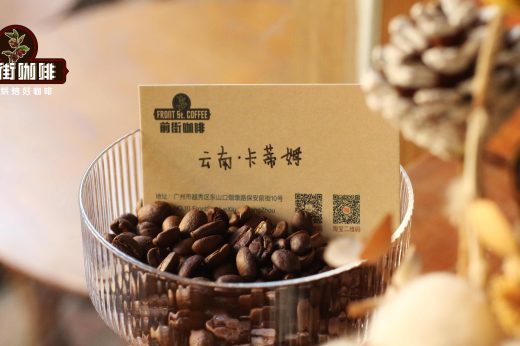
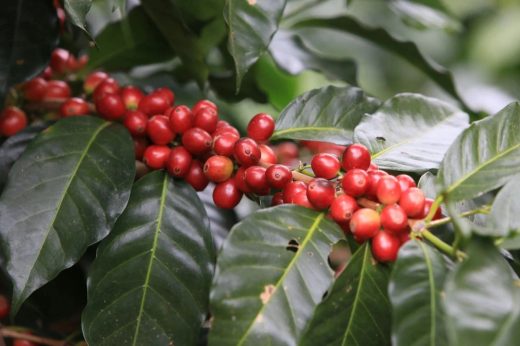
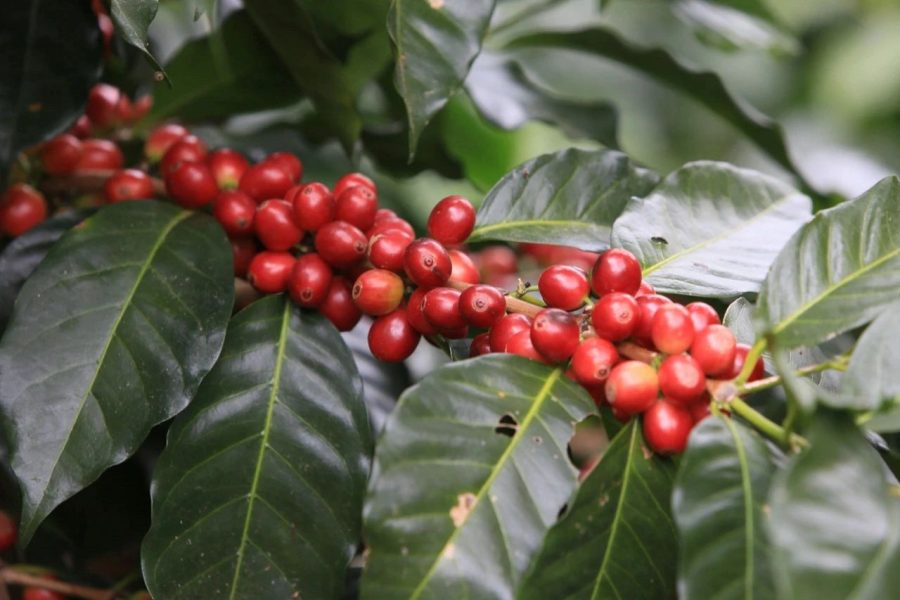
 More than 90% of the coffee currently grown in Yunnan belongs to the Catimor variety. Looking back at history, the region long cultivated Typica and Bourbon, two classic Arabica lines that local farmers habitually called "old varieties." However, because these traditional varieties had weak disease resistance and low yields, they were difficult to maintain economically, and were eventually gradually replaced by Catimor, which combines high yield with resistance to leaf rust. The "Yunnan small-bean coffee" circulating in the market today is essentially this improved Catimor variety.
 There is a common misunderstanding about the varietal identity of Catimor. This hybrid, numbered CIFC7963, was developed by the Portuguese Coffee Rust Research Center. Its plants show typical characteristics such as compact tree shape and dense branching, and its greatest advantages are its extremely strong resistance to leaf rust and its remarkable yield per unit area. In terms of genetic composition, it is a hybrid descendant of 75% Arabica and 25% Robusta; although classified as Arabica, it inherits some Robusta chromosomes.
 Comparing the characteristics of the three mainstream varieties is quite revealing: Robusta contains 2.7%–4% caffeine (about twice that of Arabica), and this natural insecticide gives it stronger environmental adaptability, but it also leads to a heavier, more bitter flavor, often with pronounced woody notes, and it is mainly used in instant coffee production. Arabica is extremely demanding about its growing environment and requires the day-night temperature difference formed at high altitudes to accumulate flavor compounds, which is why it can develop complex aroma layers such as citrus and floral notes. Catimor cleverly combines traits from both parents—it maintains relatively high disease resistance and yield, and after roasting it shows the basic flavors of nuts and brown sugar, though its Robusta lineage limits the expression of higher-level aromas.
 Professional cupping shows that the flavor profile of Yunnan Catimor has distinctly neutral characteristics. The washed processing method can effectively improve its quality stability: first the skin and pulp are removed from the fresh fruit, the pectin layer is broken down in fermentation tanks, the residue is thoroughly washed with running water, and finally the beans are sun-dried for 1–2 weeks. This process can significantly reduce the proportion of defective beans and create a cleaner taste base. In actual tasting, medium-roasted Catimor often shows a nutty base with herbal freshness, supplemented by moderate brown-sugar sweetness and plum-like acidity, with good overall balance.
 Brewing plans for Yunnan coffee need to take its varietal characteristics into special consideration. A Hario V60 dripper is recommended, based on 15 g of grounds, with a grind size at which 75% passes through a No. 20 sieve. The key parameters are: water temperature 90°C, coffee-to-water ratio 1:15, and a three-pour method to control the extraction rhythm—first use 30 ml of hot water for a 30-second bloom to form a dome, then pour in a small stream in circles up to the 125 ml mark, and when the liquid level drops to the middle of the dripper, continue pouring to 225 ml to complete extraction, with the total time controlled at about 2 minutes. This plan can fully highlight its nutty-chocolate base while avoiding the tannic astringency caused by over-extraction.
 It is worth noting that there are also quality gradients within the Yunnan producing region. Growing areas above 1,200 meters in altitude can usually produce brighter acidity and more layers, while products from lower-altitude areas have a more pronounced full-bodied mouthfeel. When purchasing, consumers should pay attention to distinguishing processing methods: high-quality washed beans should show clear fruity notes, and overly intense flavored products should be avoided. For daily drinking, it is recommended to store the beans in sealed bags with one-way exhaust valves and keep them in a cool, dark place to maintain freshness.
 From an industry development perspective, Yunnan coffee is facing a key stage of varietal upgrading. Although Catimor is still the main variety at present, some estates have begun reintroducing traditional high-quality varieties such as Typica, Bourbon, and even Geisha. Through refined field management (including shade-tree configuration and precise water and fertilizer control), these new planting projects are gradually increasing flavor complexity and are expected to change the market's fixed perception of Yunnan coffee in the future. For coffee enthusiasts, trying Yunnan beans processed in different ways is both an interesting process of exploring the potential of local coffee and a way to develop more professional tasting skills.
 In summary, Yunnan Catimor coffee represents a pragmatic choice for China's coffee industry—continuously optimizing quality while ensuring yield. Through scientific cultivation management and appropriate processing techniques, this hybrid variety is fully capable of presenting pleasant basic flavors. Whether as an everyday staple bean or as a single-origin experience, understanding its characteristics and mastering matching brewing parameters can help you better appreciate the unique charm of China's local coffee.