Honey Process Coffee Explained: Red, Yellow and Black Honey Differences and Pour-Over Flavor Guide
Introduction: Honey processing is a specialty coffee method that falls between washed and natural processing, shaping distinct flavors by retaining different amounts of the mucilage layer. This article takes an in-depth look at the differences among the four main techniques—white honey, yellow honey, red honey and black honey—reveals key technical parameters such as drying time and moisture content control, and provides a flavor comparison and buying advice to help you find honey-process beans suited to pour-over.
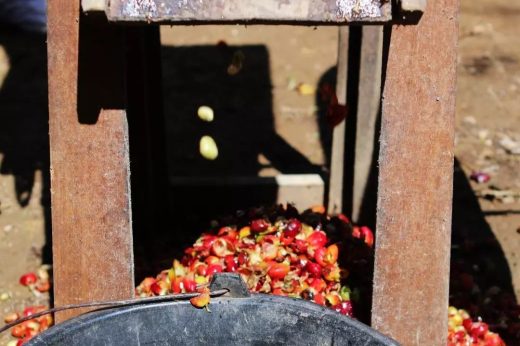
Coffee is processed in many different ways, and honey processing has drawn particular attention for its distinctive flavor expression. But many people misunderstand the name—it refers neither to added honey nor to a simple flavor description. The name comes from the honey-like appearance of the coffee mucilage during processing, and it is a semi-washed method that Costa Rican coffee farmers innovated and refined in the late 20th century.
The origins of honey processing can be traced to demand from Japanese coffee importers. At the time, the blend recipes of well-known Italian roasters Illy and Guataro made heavy use of Brazilian semi-washed beans, and to meet this market Costa Rica began experimenting with processing methods that retained part of the mucilage. In practice, this method was found to reduce the sharp acidity of the beans while enhancing sweetness and body, eventually forming a distinctive processing system.
Honey processing today is mainly divided into four grades: white honey, yellow honey, red honey and black honey. These classifications do not refer to anything actually added; they are distinguished by the amount of mucilage retained (usually 0%–100%) and by drying conditions. White honey retains only a small amount of mucilage, close to traditional washed processing; black honey removes no mucilage at all and is the most difficult to dry.
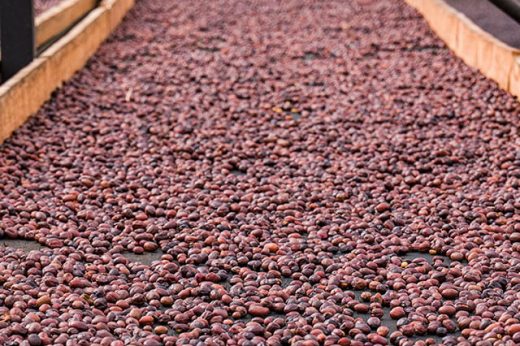
The core differences among the honey grades appear in three areas. First is the degree of mucilage removal: white honey removes about 80%–90% of the mucilage, yellow honey retains around 50%, red honey retains 75%, and black honey retains 100% of the original mucilage layer. Second is drying duration and sunlight intensity: yellow honey usually needs 8–10 days of full sun exposure to reach a moisture content of 11%–12%; red honey, because part of its drying period is shaded, is extended to 12–14 days; and black honey must be dried slowly under shade netting for 18–25 days to prevent mold. Finally there is flavor expression: higher mucilage content generally means greater sweetness, and black honey often carries intense berry notes.
In practice, honey processing requires strict monitoring of environmental parameters. For example, during the drying stage yellow honey must be turned 3–4 times a day to ensure even heating, and ambient humidity must stay below 60%; red honey is suited to gentle exposure on cloudy days or in the morning and evening; and black honey must be dried in a black shade structure with the temperature kept in the 30°C–35°C range, with regular checks of bean surface temperature to avoid exceeding 40°C, which would cause over-fermentation.
Flavor differences are the key basis for choosing a honey grade. White honey has the clean mouthfeel of washed beans, with bright acidity but weaker sweetness; yellow honey is the best balanced, with citrus fruit notes and moderate body; red honey shows caramel and red berry flavors with a fuller mouthfeel; and black honey is known for its complex layers, commonly with dark chocolate, tropical fruit and vinous aromas, though its price is usually 30%–50% higher than that of ordinary processing methods.
Consumers should note two things when buying. First, the appearance and color of honey-process beans cannot be used as the sole criterion, since sunlight intensity differs by origin and can cause color differences in beans processed the same way. Second, storage conditions affect the final flavor; it is recommended to use the beans within two weeks of receipt and to keep them in a dry, dark place. If you have the chance to try honey-process beans of different grades, you can compare brewing parameters (such as a coffee-to-water ratio of 1:15–1:16 and a water temperature of 90°C–93°C) to experience how the amount of retained mucilage affects extraction efficiency.