Honey Processing Explained: Yellow, Red and Black Honey Differences
Introduction: Honey processing is one of the key techniques that shape coffee flavor, and yellow honey, red honey and black honey create distinct layers of taste through differences in drying method and duration. This article takes an in-depth look at the processing differences, drying times and light conditions of these three honey methods, and reveals their influence on the final flavor of the coffee, helping coffee lovers better understand and choose the beans they love.
In the specialty coffee world, honey processing is highly regarded for its distinctive sweetness and complexity. Among these, yellow honey, red honey and black honey are the three most common methods, and their differences lie mainly in how much mucilage is retained during drying, the length of sun exposure and the final drying cycle.
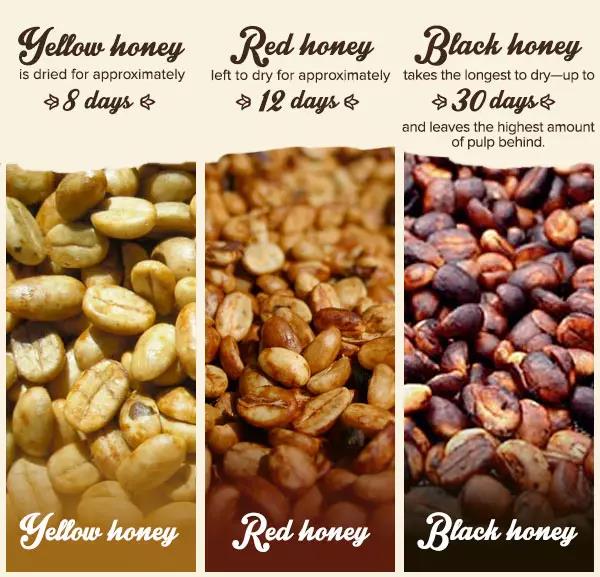
Yellow honey processing is the most "bright" of the three, characterized by the shortest drying time, usually only about a week. This is because yellow honey coffee beans receive the most direct sunlight during drying, and the higher temperature speeds up evaporation. As shown in the image , this method is often carried out in sunny, well-ventilated conditions; the amount of mucilage retained on the bean surface is relatively small, but still greater than in traditional washed processing. Yellow honey coffee usually shows brighter acidity and a lighter body.
Red honey processing falls between yellow and black honey, with the drying period extended to 2-3 weeks. This method usually uses partial shade to reduce direct sunlight and thus slow the drying rate. As shown in the image, red honey coffee beans retain more of the mucilage layer, and because the drying time is longer the fermentation is more complete, so the final flavor is fuller and the sweetness stands out, with clear caramel or berry notes.
Black honey processing is the most complex and costly of the three. Drying takes at least two weeks, and it must be done in shade with almost no direct sunlight. This method retains most of the mucilage and stickiness on the coffee fruit, and the slow drying process develops extremely deep sweetness and a rich, heavy body. Because the whole process requires strict temperature and humidity control and frequent turning of the beans to ensure even drying, labor costs rise significantly, so black honey coffee is usually also the most expensive. Its flavor often shows complex layers of dark fruit, chocolate and even spice.
Which honey-processed coffee to choose depends largely on personal taste preference. Those who like a crisp, bright acidity can choose yellow honey; for balanced sweetness and a rich mouthfeel, red honey is a good choice; and if you prefer a dense, full-bodied and complex expression, black honey coffee better meets the need. Understanding the differences among these processing methods can help you make a wiser decision when buying coffee beans.