Yirgacheffe Pour-Over Guide: Ratio and Flavor Extraction
Introduction: Explore the brewing secrets behind Yirgacheffe coffee's unique floral and fruity flavors. This article explains in detail the ideal coffee-to-water ratio (1:15) for medium-light roasted Yirgacheffe, water temperature control, and the three-pour technique, offering professional advice from equipment selection to grind adjustment to help beginners master this classic African bean's balance of bright acidity and tea-like body, and unlock richer layers of flavor.

Yirgacheffe pour-over coffee is known for its signature light floral and fruity character, in sharp contrast to the heavy mouthfeel of a standard espresso. This specialty coffee from Ethiopia can present a triple symphony of citric acidity, jasmine aroma, and a black tea finish through precise pour-over technique. To fully express these qualities, systematic optimization is needed, from choosing the roast level to setting the brewing parameters.

Yirgacheffe's flavor code stems from its special geographical environment and processing methods. This producing region is located on the southern highlands of Ethiopia, and growing conditions at 1,700–2,100 meters above sea level give the coffee its bright citrus acidity. The traditional washed process preserves pure fruit acidity, while the natural (sun-dried) version develops richer berry flavors. It is worth noting that the region's three well-known sub-regions—Yirgacheffe, Sidama, and Harar—have all been registered as independent geographical indications, with Yirgacheffe specifically referring to specialty coffee with high-acidity floral and fruity characteristics.

For high-altitude specialty beans like Yirgacheffe, medium-light roast (Agtron 65–70) is the industry-standard choice. This roast level preserves the green bean's lively acidity while avoiding the risk of scorched bitterness caused by dark roasting. Looking at the beans, you can see remnants of light amber chaff, and after grinding they give off fresh citrus and dried blueberry aromas. Professional roasters recommend keeping the roast within the lighter end of the "city roast" range; at this point the oils on the bean surface have not yet been heavily released, making it best suited to expressing terroir.

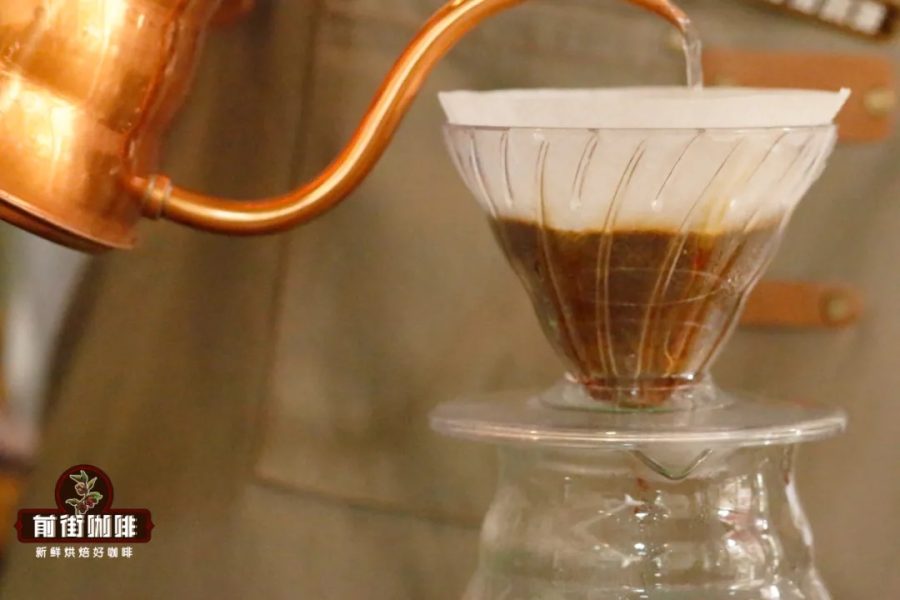
Preparing your equipment before pouring directly affects extraction. A basic set should include: a V60 dripper (02 or 185 model), a scale accurate to 0.1 g, a temperature-controlled pour-over kettle (90±2°C recommended), fan-shaped filter paper, and freshly roasted Yirgacheffe coffee beans (ideally roasted within 14 days). In particular, the filter paper should be pre-rinsed with hot water to remove papery taste, and all equipment should be preheated to around 90°C to reduce the effect of temperature fluctuations on extraction.

Grind size is the core parameter in Yirgacheffe brewing. Testing shows that a No. 20 standard sieve with 80% passing rate (roughly China standard 20 mesh) balances extraction efficiency and flavor clarity. In practice, you can verify it this way: take 10 g of ground coffee and, after sieving, more than 2 g of coarse particles remaining meets the requirement. If using a conical burr grinder, set the dial to 10–12 (EK43s reference); flat burr models need to be adjusted half a step finer. Over-grinding leads to an overly extracted sharp acidity, while coarse grinding tends to produce a flat, papery taste.

Water temperature directly affects the release of flavor compounds. For medium-light roasted Yirgacheffe, a recommended water temperature range of 91–93°C (±1°C) can effectively extract aromatic compounds such as citric acid and jasmine aldehyde, while avoiding temperatures above 96°C that cause excessive tannic acid dissolution. If using naturally processed Yirgacheffe, you can lower it appropriately to 90°C to soften an overly strong fermented note. In practice, use a digital thermometer for calibration, and let the water sit for 30 seconds after boiling before starting to pour.

The structural characteristics of the V60 dripper are crucial to brewing Yirgacheffe. Its unique spiral ribs and large central opening, together with the heat retention of the resin material, create a stable turbulent environment. Experimental data show that this design allows the coffee bed to withstand a uniform pressure of 0.8–1.2 bar, promoting balanced release of flavor compounds. Compared with the bloom effect of the KONO dripper, the V60 is better suited to highlighting Yirgacheffe's high-toned acidity and citrus character.

For freshly roasted Yirgacheffe (ideally used 5–14 days after roasting), the three-stage pulse pouring method is recommended. Taking 15 g of coffee as an example, with a 1:15 coffee-to-water ratio (225 ml total water), distribute as follows: first stage 30 ml (30-second bloom) → second stage 95 ml (completed at 55 seconds) → third stage 100 ml (dripping completed at 2 minutes). The key technique is to maintain a vertical stream and the 95 g reference amount during the second pour, avoiding disruption of the coffee bed structure already formed. If using a narrow-spout pour-over kettle, raise the spout to about 15 cm to increase penetration.

The bloom stage is the key step in activating flavor. Pour 30 ml of hot water in a spiral from the center of the coffee bed outward, ensuring all grounds absorb water evenly. The bed should expand to about 1.5 times its original thickness, releasing a large amount of carbon dioxide and aromatic gases. Common problems include insufficient pouring leading to an inadequate bloom (manifesting as prominent bitterness later), or too much water causing channeling (resulting in localized over-extraction).

The second pour requires steady control of the stream. Use a flow rate of 8–10 g/s to continuously pour 95 ml, keeping a 2–3 mm layer of water covering the surface of the bed at all times. Technical points include: keeping the wrist rotation speed constant (about 2 turns per second), avoiding the stream hitting the dripper wall directly, and keeping the water level fluctuating in the middle of the bed. If a noticeable depression appears at this stage, you may add 5–10 ml of water to balance the bed structure.

The final 100 ml pour determines the quality of the finish. Switch to finer stream control (5–7 g/s), pouring slowly along the edge of the bed, with the focus on maintaining a drip rate between 1 drop/second and 1 drop/1.5 seconds. When the total extraction time approaches 2 minutes, remove the dripper and gently swirl the server to mix the coffee evenly. An ideal Yirgacheffe should show a clear amber color with fine coffee oils floating on the surface.

Advanced brewers can try adjusting parameter combinations: ① for stronger acidity, use a 1:16 ratio + 93°C water temperature; ② for a fuller body, adjust to 1:14 + 91°C; ③ use a grind size like coarse sugar granules (75% passing rate) and extend the extraction time to 2 minutes 30 seconds. Remember to change no more than one variable at a time, and keep a record of each brew to build your own flavor profile.


