Ethiopian Heirloom Coffee Beans: Guide and Flavor Profile
Introduction: Have you heard of the 'heirloom' Heirloom variety in coffee? It often appears in specialty coffee descriptions, especially Ethiopian coffee. But what exactly does Heirloom represent? How does it differ from the three main native species: Arabica, Robusta and Liberica? This article will comprehensively explain the true meaning of Heirloom from the perspectives of botanical classification, growing regions, flavor characteristics and the evolution of industry terminology, taking you deep into those specialty coffee beans that are broadly labeled 'heirloom,' and the secrets of the unique flavors behind them.
Let us turn back the clock to before 1945. In that era, coffee hybrid varieties had not yet been widely promoted; only after 1951 did hybrids gradually become mainstream. Today, when we talk about 'native species,' we are actually referring to a concept in plant resource science, representing those plant species that exist naturally in a specific region and were not introduced by humans. In the coffee field, 'native species' also has a clear definition and classification.
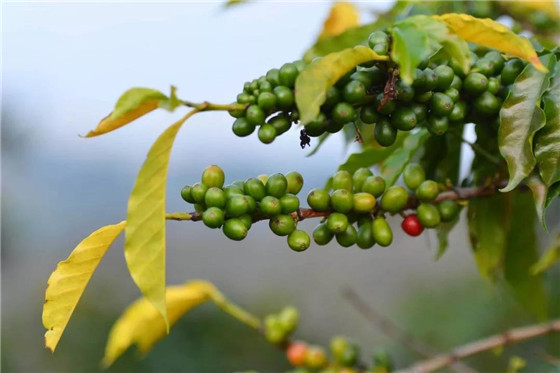
From a botanical perspective, the coffee tree is an evergreen shrub or small tree of the Coffea subgenus in the Rubiaceae family. The areas worldwide suitable for natural coffee growth are concentrated in a ring-shaped zone about 25 degrees between the Tropic of Cancer and the Tropic of Capricorn. This region is what we know as the 'Coffee Belt,' called Coffee Belt or Coffee Zone in English. The climate, altitude and soil here together create the most ideal growing environment for coffee trees.
In the coffee industry, it is generally believed that there are three main native species: Arabica, Robusta and Liberica. Among them, Arabica is the most common and widely planted type of coffee bean, occupying most of the global coffee consumer market. Because it is generally considered to have higher quality, its market price is also relatively higher, and it is the preferred bean type for many specialty coffee shops.
Arabica coffee beans have strong adaptability and can be grown in different regions of the coffee belt, but Latin America is the main producing area. It is worth mentioning that the growing location of the coffee tree significantly affects the final flavor expression. Arabica coffee trees are relatively delicate and have demanding requirements for the growing environment, such as stable temperatures, moderate rainfall and high-altitude conditions. Compared with Robusta, it has higher acidity and richer flavor layers, often presenting sweetness and complex fruity notes.
Robusta is the second most common type of coffee bean. Although it is often used in instant coffee or some low-end blends, it is also an important component of some espresso. Unlike the traditional coffee bean appearance in people's minds, Robusta beans are usually larger and rounder. Its caffeine content is about twice that of Arabica, which also makes it more resistant to pests and diseases and able to survive in a wider range of altitudes and climates. Roasted Robusta beans have a more intense flavor, often with obvious bitterness and smoky notes, and are favored by consumers who like strong flavors. This variety is mainly grown in Africa and Indonesia.
As for Liberica, its growing range is relatively limited, mainly concentrated in Malaysia and the Philippines. The processing method of this coffee bean greatly affects its flavor: sun-dried Liberica often shows tropical fruit aromas similar to jackfruit, while washed processing presents more traditional coffee flavors such as citrus, floral notes and even chocolate. In addition, Liberica coffee usually has a longer finish and sustained sweetness, making it a unique coffee experience.
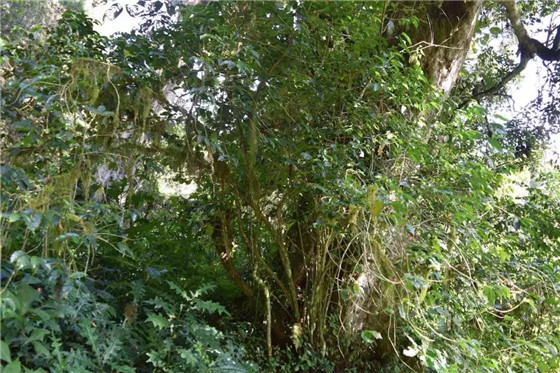
So, what is Heirloom? In the world of coffee, this word is often used to describe ancient varieties with a growing history of more than a hundred years, especially coffee tree species in Latin America, Asia and Africa, particularly Ethiopia. Early in the third wave of specialty coffee, Heirloom almost became synonymous with Ethiopian coffee—because the country has many coffee varieties but lacks systematic classification and certification, many coffee farmers and roasters can only broadly use 'heirloom' to refer to these ancient varieties that have not been clearly named.
In fact, there is still no unified standard for the definition of 'heirloom.' Some say it must be an old variety of more than 100 years, others believe 50 years is enough, and some views classify coffee tree species before 1945 or 1951 as Heirloom—exactly the time node when hybrid varieties began to be promoted and popularized. Although this term is rich in historical feeling, it is too broad in practical application and difficult to accurately convey the uniqueness of each coffee.
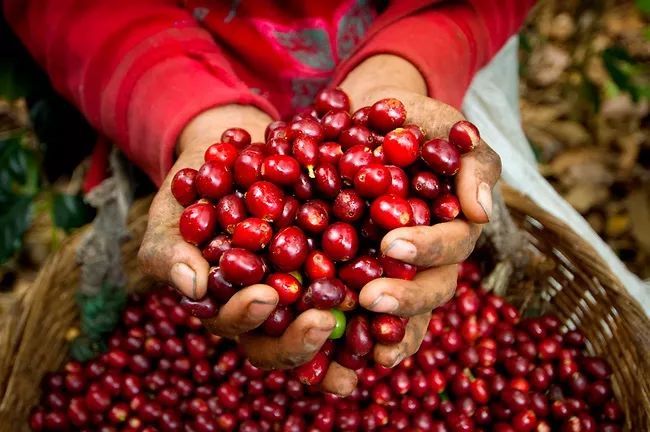
In Ethiopia, coffee producers often name coffee trees in local languages according to local customs, rather than using internationally common botanical names. This also leads to the same variety possibly having completely different local names in different regions. More interestingly, even if trees with similar appearances are found in different coffee-producing regions of Africa, their flavor expressions may be completely different. For example, some industry insiders point out that the same tree species planted in Harar and Yirgacheffe may have completely different cupping flavor descriptions. This shows that the influence of region, altitude and microclimate on the final flavor of coffee is far more important than the variety name itself.
For this reason, when evaluating Ethiopian coffee, professional coffee buyers often focus more on producing region, altitude and cupping score than on a single variety name. They know well that what truly determines the flavor of a cup of coffee is the combined effect of the natural environment and growing traditions, and the term 'heirloom' is more a respect and tribute to Ethiopia's rich coffee genetic resources.