Flat White vs Latte vs Cappuccino: Foam, Ratio & Flavor Guide

Introduction: Flat White, latte and cappuccino are the three most common milk coffees on cafe menus, yet many consumers are not clear about their specific differences. This article compares them across multiple dimensions, from cup size specifications and the ratio of milk to espresso to milk foam texture and flavor performance, to help you choose precisely according to your taste preferences. It also adds practical details from the perspective of professional baristas, including milk foam thickness measurement standards and common ordering misconceptions, to enhance your coffee tasting experience.

Among the milk coffee options in cafes, latte, cappuccino and Flat White have always occupied the core position. Many customers, when faced with these three similar options, often order based only on intuition about the names, while overlooking their essential differences in production technique and flavor presentation. By deeply analyzing the technical parameters and sensory characteristics of the three, you will master ordering techniques that precisely match your personal taste.

These three classic milk coffees all originated from the European coffee culture system. The name latte comes directly from the Italian word for "milk"; it is essentially a combination of espresso and a large amount of steamed milk, and its modern form entered the global coffee market through Italian immigrants in the mid-20th century. The naming of cappuccino is related to religious clothing, and its signature fluffy milk foam layer resembles the white hood of a Franciscan friar, a visual feature that remains an important basis for identifying the drink to this day.

The origin of Flat White is disputed by region, with the mainstream view holding that it was born in the cafe scene of New Zealand or Australia in the 1980s. As a derivative form of espresso, it uses more precise control of the milk-to-coffee ratio, optimizing the drinking experience while preserving the coffee's main flavor. It is worth noting that this category has multiple Chinese translated names worldwide, including Furuibai and Aoruibai variants.

In terms of basic parameter comparison, a standard latte usually uses a 300 ml wide-mouthed ceramic cup and consists of a double espresso (about 40 g total coffee powder) with 260 ml steamed milk and milk foam. Cappuccino uses a 180 ml narrow-mouthed cup, configured as a single espresso (about 20 g coffee powder) with 160 ml milk and a thick milk foam layer. Flat White uses a 210 ml glass vessel, composed of a double ristretto (about 30 g coffee powder, extracting the essence of the middle and front sections) with 180 ml steamed milk; the ristretto it uses has a more distinct aroma hierarchy than regular espresso.
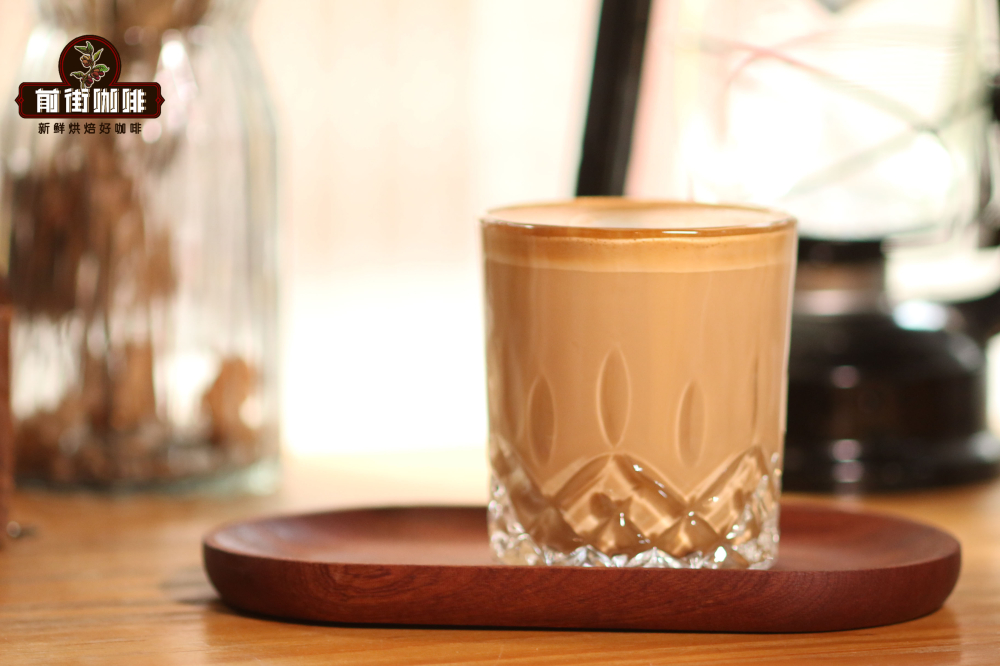
Precise control of milk foam thickness is the core indicator distinguishing the three types of drinks. Professional baristas verify with a thickness gauge: the standard milk foam layer of cappuccino is maintained in the 1-1.5 cm range, forming a pronounced raised top shape (the so-called "hamburger-like" outline), with the actual fill volume reaching 110% of the cup capacity. The milk foam layer of Flat White is strictly controlled at an extremely thin level of about 0.3 cm, ensuring that the liquid surface is basically level with the rim of the cup, which is also the origin of the Chinese translated name Pingbai coffee. Latte's intermediate value is set at 0.5 cm; this thickness can support basic latte art patterns without excessively interfering with the coffee's own flavor.

Differences in flavor performance stem from the systematic design of ingredient ratios. With its thickest milk foam layer and full liquid volume, cappuccino presents a three-layer mouthfeel structure: at the bottom is a rich coffee base, in the middle is warm milk, and on top is a dense milk foam covering, giving the fullest overall mouthfeel. Because latte has the highest proportion of milk (about 85% of total volume), its milky character is more prominent, making it suitable for consumers who prefer dairy flavors. By reducing the total amount of milk (about 80% of the total) and using ristretto, Flat White both maintains the coffee's distinct acidity and aroma and achieves an optimal balance of flavor transmission through the thin milk foam layer.

The key differences in production technique are reflected in multiple stages. For baristas pursuing professional results, the ristretto for Flat White requires precise control of extraction time at 20-25 seconds, focusing on capturing the essence of the middle and front sections of the coffee liquid (usually accounting for 30-40% of the entire flow). In milk steaming, all three drinks require the milk temperature to be stabilized in the 60-65°C range, but Flat White has stricter requirements for foam fineness: ideal microfoam should have a silky texture with a diameter of no more than 0.5 mm. Latte allows slightly larger foam bubbles (about 1 mm in diameter), which helps maintain the clarity of latte art patterns.

Common consumer misconceptions include: mistakenly assuming that all categories offer iced options (in fact, traditional cappuccino and Flat White are only served hot), confusing the technical parameters of ristretto and regular espresso, and ignoring the influence of cup type on flavor perception. Professional advice points out that when drinking Flat White, attention should be paid to the heat-retention performance of the cup material: glass vessels can more truly reflect the influence curve of temperature change on flavor.
For consumers with special needs, the Dirty coffee that has become popular in recent years offers another choice. This drinking method, which injects espresso directly into iced milk, strengthens the flavor impact through the hot-cold contrast effect and is especially suitable for summer drinking. But note its essential difference from Flat White in production logic: Dirty emphasizes instantaneous flavor contrast, while Flat White emphasizes the gradual integration of coffee and milk.


