Brazil Natural Catuaí Coffee: Growing, Flavor and Pour-Over Guide
Introduction: Catuaí, a high-yield coffee variety widely grown around the world, has drawn attention for its stable flavor performance and adaptability. This article takes an in-depth look at the variety's origins, its core growing characteristics, and the distinctive flavor layers that Brazilian natural processing brings out. From the history of the variety's development to practical home-brewing parameters, it helps you master the key points of growing and tasting Catuaí.
In coffee cultivation, Catuaí is not a new variety, yet it has always held an important place for its outstanding yield, quality stability and commercial growing potential. In recent years, as the specialty coffee market has sought out diverse flavors, this variety is enjoying a new wave of attention—at several international competitions in 2019, multiple Catuaí samples made the global list of quality coffees, and it won honors in Brazil's Cup of Excellence for two consecutive years.
Catuaí's "lineage" dates back to 1949, when it was developed by the Agronomic Institute of Campinas (ICA) in Brazil. Its parents are two classic varieties, Mundo Novo and Yellow Caturra, and it was originally bred for high yield and strong stress resistance. The series includes two types, yellow fruit (Catuaí Amarelo) and red fruit (Catuaí Vermelho). The plants grow vigorously overall but are relatively short (suited to high-density planting), and they need precise water and fertilizer management and pest and disease control to maintain stable output under high-density conditions. Its secondary branches form a narrow angle with the main stem, and the fruit is tightly attached to the branches, so it does not drop easily even in strong wind and rain—a trait that gives it a notable growing advantage in regions with variable climates. From the 1970s, Catuaí gradually spread to Central America: after being introduced to Guatemala in 1970, it now accounts for about 20% of that country's total coffee production; it reached Honduras in 1983 and is now the main variety in nearly half of the country's Arabica plantations; and after arriving in Costa Rica in 1985, it had a profound impact on the economic returns of that country's coffee industry.
Catuaí's main cultivated sub-varieties include: Catuaí Amarelo (yellow fruit), Catuaí Vermelho (red fruit), Catuaí 8, Catuaí 10 and Catucaí. Although varieties with different fruit colors do not differ significantly in flavor, the subtle differences are still worth noting—red-fruit Catuaí usually shows fuller body and aromatic complexity, while the yellow-fruit type tends toward a softer, more delicate mouthfeel.
From planting to harvest, Catuaí usually takes about 3 years to reach first production. The variety is sensitive to lime content in the soil and to fertilizer nutrients, and proper water and fertilizer management can directly raise the plants' production efficiency. In processing, there are clear differences between producing regions, and the Brazilian region generally uses the traditional natural method: the coffee fruit is dried naturally in the sun, a process that not only retains more pectin substances but also adds distinctive fermentation layers and complex flavors to the beans.
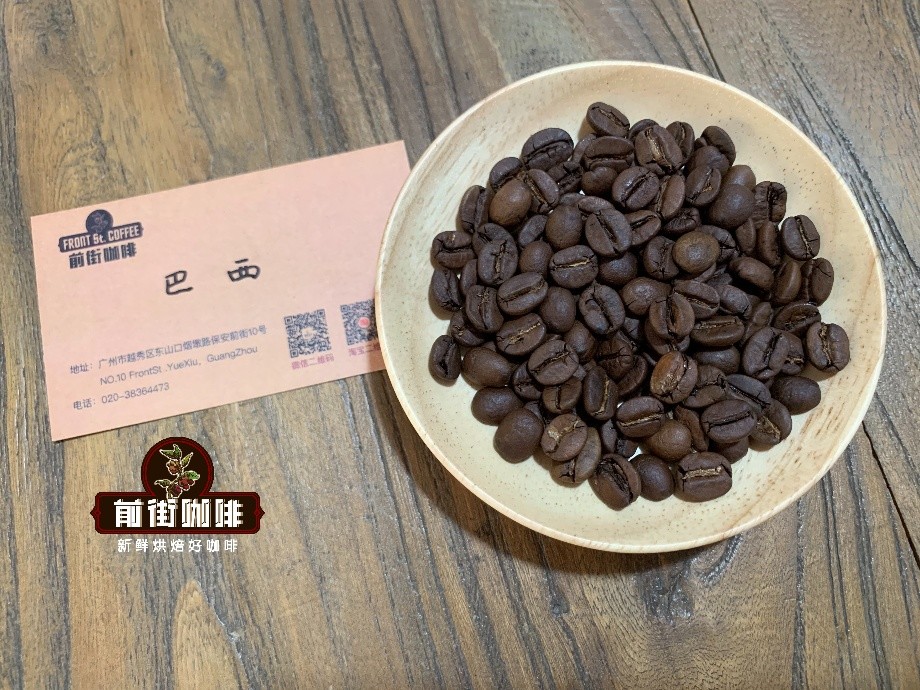
Taking some Catuaí samples from Brazil's Cerrado region as an example (such as the natural-process lots common in the specialty market), their flavor profile often shows nuts (such as cashew and hazelnut), caramel sweetness, soft honey-like sweetness, with moderate body and a warm honeyed tonality. From broader tasting experience, the traditional Catuaí flavor profile usually covers base elements such as chocolate, caramel, honey and almond, and some lots also carry spicy notes (such as cardamom and licorice-like flavors). It is worth noting that the stability of its sweetness is one of its core strengths, and the strength of this trait is closely related to fertilization management during growing—an adequate NPK ratio and organic matter supplementation (such as natural compost) can effectively strengthen the coffee's sweetness and optimize overall flavor balance.
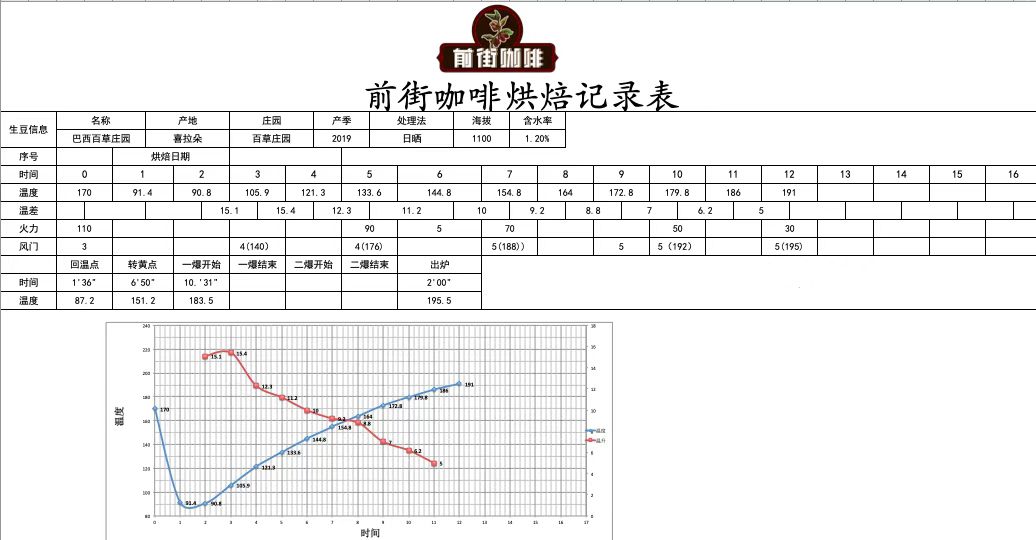
For roasting practice with Brazil natural Catuaí, typical curve parameters are as follows: preheat the roaster to 170°C and charge the green beans, set the initial heat to 110 (adjust according to equipment model), and open the damper to position 3; the turning point appears at 1 minute 36 seconds, and the current heat is maintained; when the bean temperature rises to 140°C, keep the heat unchanged and adjust the damper to position 4; at 6 minutes 50 seconds, enter the dehydration stage (at this point the grassy smell has basically dissipated); when the temperature reaches 176°C, lower the heat to 90 and keep the damper at position 4; at 188°C, further lower the heat to 70 and continue to maintain the damper setting; at 9 minutes 15 seconds, dehydration is complete (obvious wrinkles and dark blotches are visible on the bean surface, along with the transition from toasted bread aroma to coffee aroma), and at this point close attention must be paid to the first-crack signal; at about 10 minutes 31 seconds, first crack begins, open the damper fully to position 5 and keep the heat stable; the first-crack development stage lasts 2 minutes, and roasting is finally completed and the beans are dropped at 196.5°C.
For home brewing, pour-over is recommended to better reveal the flavor details: use a Kono dripper (or a similar cone dripper with a stable flow rate), with water temperature controlled in the 90–92°C range; a dose of 15 grams is suggested, with a coffee-to-water ratio of 1:15 (that is, 225 milliliters of total water); grind medium-fine (referring to a Chinese standard No. 20 sieve passing rate of 80%, close to fine granulated sugar in texture). The specific procedure is: first pour 30 grams of water for a bloom of about 30 seconds (to activate the coffee); then pour 125 grams of water in a small stream in circular motions (when the water level drops to just about to expose the bed), continue pouring to a total of 225 grams to complete extraction; throughout, watch the water level and remove the dripper promptly when the bed is about to be exposed, keeping the total extraction time at about 2 minutes.