Colombian vs. Brazilian Coffee: Flavor, Growing Conditions, Buying Guide

Introduction: Want to understand the core differences between Colombian coffee and Brazilian coffee? This article analyzes the differences between these two major coffee-producing countries in depth, from flavor characteristics and growing environments to regional features, and explains the unique advantages of Arabica coffee. It includes practical buying advice to help you find beans suited to pour-over or espresso.
In the specialty coffee world, Colombian coffee is widely loved for its silky, balanced taste. Its uniqueness lies in the perfect balance of body and softness—neither overly intense and stimulating nor thin and flavorless—making it suitable for daily drinking or professional brewing. Whether in appearance or flavor, Colombian Supremo beans can be considered specialty grade, and their appeal is like a delicate, elegant aroma that lingers in the memory.
Colombian coffee (Café de Colombia) is one of the few single-origin coffees named after a country and enjoys an extremely high reputation in the global coffee market. Compared with other coffee-producing countries, Colombia places more emphasis on research and production optimization for coffee products. Thanks to exceptional geographical and climatic conditions, the coffee here not only has outstanding quality but also has developed a distinctive flavor style. Roasted beans give off a mild, sweet aroma, with soft acidity and moderate bitterness and just the right intensity, so they are often used in premium coffee blends. Unlike the intense flavor of Brazilian coffee, Colombian coffee's aroma is more subtle—neither as sharply acidic as African coffee nor as strong as Brazilian coffee, but distinguished by understated sweetness and elegance.
Globally, coffee is mainly divided into two types: "hard" coffee, represented by Brazil, with a strong, full-bodied flavor; and "soft" coffee, represented by Colombia, with a mellow texture and delicate aroma. The core difference between the two comes from growing altitude and cultivation methods—Brazilian coffee is mostly grown on hilly red soil with relatively extensive management, while Colombian coffee is grown on mountain black soil using intensive cultivation, creating its unique flavor characteristics.
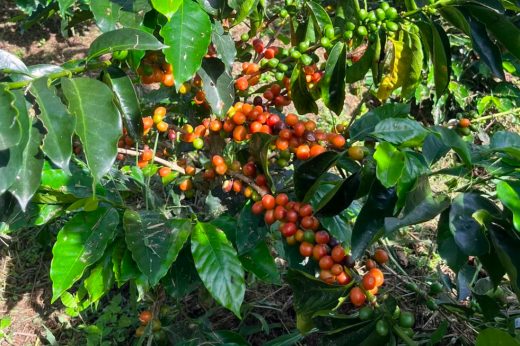
Colombian coffee is subdivided into more than 200 grades according to region and processing method, with highly distinct regional characteristics. The country's main coffee regions are in the Andes, where the climate is mild and humid, and three north-south Cordillera mountain ranges run through the area, providing diverse microclimates for coffee cultivation. Thanks to the terraced distribution of high-altitude mountains, coffee at different elevations ripens in different seasons, creating a harvest period that continues throughout the year. Compared with Brazil, Colombia is less affected by frost, which is more conducive to stable production of high-quality beans. At present, about 700 million coffee trees are grown nationwide in Colombia, of which 66% are managed in modern plantations and the rest are distributed among traditional small farms.
The pure flavor of Colombian coffee comes not only from superior natural conditions but also from the careful cultivation of local growers. The country's coffee planting area reaches 1.07 million hectares, with about 302,000 coffee farms, and roughly 30% to 40% of the rural population depends directly on the coffee industry for a living. Despite the large number of farms, their scale is generally small, averaging only about 2 hectares each, and more than 80% of coffee farms maintain a planting density of 3,000 to 5,000 coffee trees. This small-farm model allows growers to manage each tree carefully—for example, planting tall trees or banana trees around coffee trees to provide shade, and building shade frames during the seedling stage to maintain suitable temperature and humidity. The high humidity and small temperature differences within the coffee groves slow the ripening of beans, helping caffeine and aromatic compounds accumulate fully and thereby improving the final flavor quality.
Among Colombian coffees, Arabica (scientific name: Coffea arabica) is the most representative premium variety. This coffee tree is suited to areas at altitudes of 900 to 2,000 meters, has relatively strong cold tolerance, grows best at temperatures of 15 to 24°C, requires a humid environment with annual rainfall of no less than 1,500 mm, and demands more advanced cultivation techniques. This also explains why high-quality Colombian coffee farms are mostly concentrated in the high-altitude zones of the Andes.
Among the world's coffee beans, Arabica accounts for about 65% to 80%. Its beans are longer and flatter, greener in color, and have rich flavor potential. Unroasted Arabica beans give off a fresh aroma similar to grass; after moderate roasting, light-to-medium roasts can highlight fruity notes, while dark roasts reveal caramel sweetness. Its outstanding flavor and aroma make it one of the few beans that can be enjoyed directly as a single origin, and it is known as "green gold."
Below are flavor references for several typical Colombian coffees (actual experience may vary depending on brewing method):
• Huila region (Diamond Estate) medium-roast washed beans: hazelnut and pistachio notes, with caramel sweetness and creamy texture
• Santa Rita Estate medium-dark roast washed beans: prominent sugarcane sweetness, clean taste, moderate body
• Millennium Estate Excelso grade medium-dark roast washed beans: distinct nut and chocolate finish, refreshing and firm acidity
• Hope Estate Geisha light-roast natural beans: complex fruity aroma of berries, honey and vanilla, with bright juicy sweetness
• Hope Estate Mocha medium-roast honey-process beans: floral notes combined with apple-like acidity and walnut character, with a sugarcane-sweet finish