Mandheling vs. Golden Mandheling: Flavor Differences and Buying Tips
Introduction: Mandheling coffee is the classic representative of Sumatra, while Golden Mandheling is often regarded as its premium version. What exactly are the differences between the two? How do their flavors perform? Is Golden Mandheling more worth buying? This article will comprehensively analyze the differences between Mandheling and Golden Mandheling from dimensions such as origin background, processing method, flavor characteristics, and grading standards, and provide practical buying advice to help you find the one that suits you.
In the early 18th century, Europe's coffee trade was long dominated by the Arabian region, and the Dutch East India Company was determined to break this pattern. Driven by Amsterdam mayor Nicolaas Witsen, Dutch colonists vigorously promoted coffee cultivation in the then Dutch East Indies, which is today's Indonesia. Thanks to fertile volcanic soil and suitable climate conditions, Java was the first to successfully grow coffee, and subsequently islands such as Sumatra also joined in. By the end of the 18th century, the Dutch East Indies had become the world's largest coffee-producing region, with output even surpassing traditional coffee origins such as Ethiopia and the Arabian Peninsula.
Sumatra's coffee industry once flourished, but later suffered severe coffee leaf rust infestations, causing large numbers of Arabica coffee trees to die. To maintain production, many growers turned to the more disease-resistant Robusta species, which means that today only about 25% of Indonesia's exported coffee is Arabica. Even so, Sumatra still produces quite a lot of high-quality Arabica coffee, the most representative of which is Mandheling.
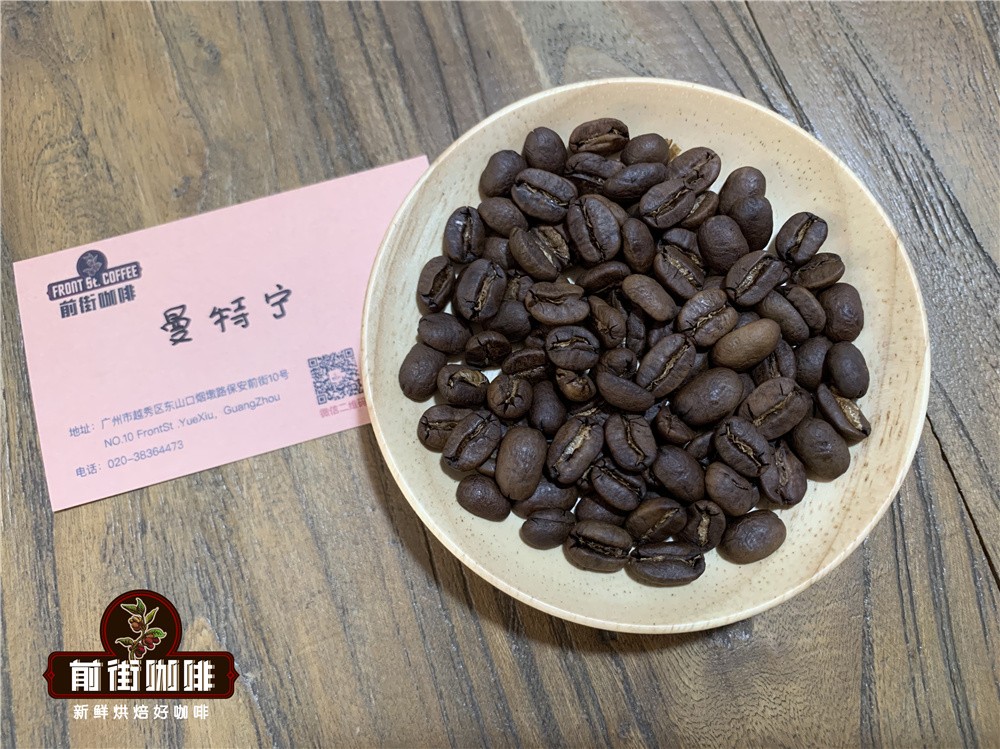
Mandheling coffee produced in Sumatra, Indonesia, is famous for its unique flavor. This is mainly thanks to the local special "wet-hulling" (Giling Basah) processing technique. Unlike traditional washed or natural methods, wet-hulling removes most of the parchment shell after the coffee fruit has been pulped, while the beans still have a high moisture content (about 30%-50%), and then the beans are spread out to dry. Because the beans are still relatively soft at this time, removing the shell easily bruises the bean body and forms a flat shape, but this also accelerates the drying process and gives the coffee its unique mouthfeel characteristics.
Mandheling coffee processed by the wet-hulling method usually shows low acidity and high body, with flavors dominated by intense chocolate, herbal plants, and earthy notes, complemented by complex aromas such as cedar, sweet tobacco, and spices. The overall taste is balanced and layered, and this style has become the signature characteristic of Indonesian coffee, especially Sumatran coffee.
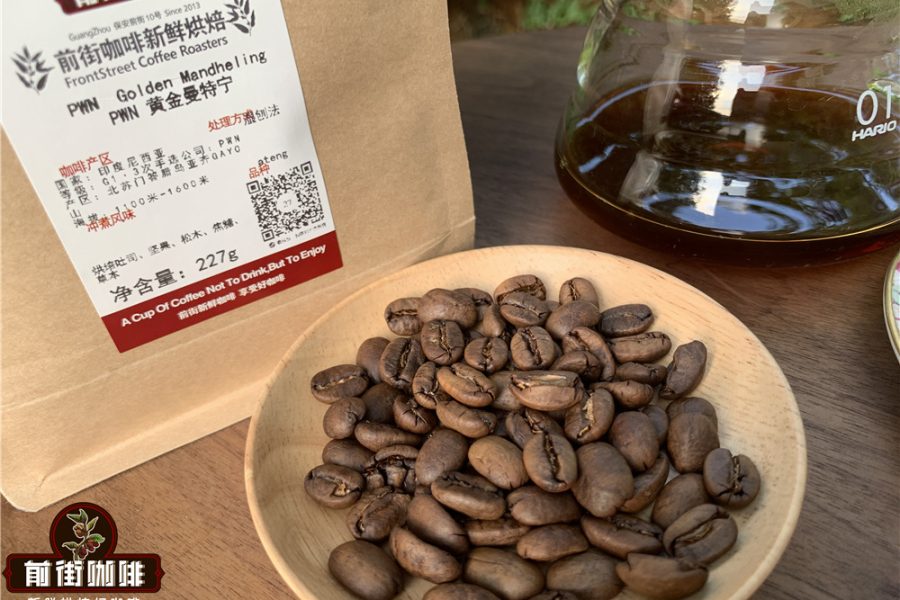
When mentioning Mandheling, one must mention "Golden Mandheling." But it should be noted that "Golden Mandheling" does not refer to the color of the coffee beans or that they contain gold, but to high-quality Mandheling coffee beans that have undergone strict screening. Traditionally, it is produced by Indonesia's PWN company (formerly PT. Pandu Wiguna), through at least three rounds of manual hand-sorting to remove defective beans, ultimately selecting top-grade beans that are plump and uniform in appearance.
In contrast, many coffee beans labeled "Golden Mandheling" on the market are not from PWN. Although these beans may also belong to high-quality Mandheling, their screening standards are not necessarily the same, and a more accurate name should be "specialty-grade Mandheling." True Golden Mandheling not only undergoes multiple manual selections but may also include one machine-sorting process to ensure the purity and consistency of the final product.
In terms of grading, Indonesian coffee commonly uses classifications such as G1 to G3, with G1 being the highest grade. Although ordinary Mandheling G1 is already a relatively high-quality grade, it may still contain about 8% defective beans, and its flavor performance is relatively balanced but not outstanding enough. Golden Mandheling generally outperforms G1 in sweetness, body, and cleanliness, with a lower defect rate and a purer, smoother taste, so its price is also relatively higher.
If you are a beginner new to Mandheling, you can start with ordinary Mandheling G1 to experience its signature rich mouthfeel and spicy aroma. For coffee lovers who pursue higher quality and hope to experience a purer flavor, Golden Mandheling is undoubtedly a choice worth exploring in greater depth. Whether using pour-over or devices such as a French press or siphon, Golden Mandheling can display its distinctly layered characteristics.
In summary, the core differences between Mandheling and Golden Mandheling lie in screening standards and flavor performance: the former represents the classic flavor of Sumatra and has strong regional characteristics; the latter is more stringent in quality control, bringing a cleaner, fuller, and sweeter drinking experience. Understanding the differences between the two can not only help you better choose coffee beans but also allow you to more deeply experience the unique charm of Indonesian coffee.


