What Are Liberica Coffee Beans and Why Are They Rarely Used for Specialty Coffee?
Introduction: Liberica coffee beans are one of the world's three original coffee species, yet they rarely appear on specialty coffee menus. What makes them special? This article explains Liberica coffee's growing background, flavor characteristics, and market position, analyzes why it struggles to join the mainstream specialty coffee ranks, and reveals the cultivation challenges and flavor realities behind this large-bean coffee.
Liberica coffee, scientifically named Coffea liberica, is one of the few coffee varieties that can be classified as "commercially cultivated," but its share of the overall coffee market is tiny, accounting for only 1% to 2%. Although it is listed alongside the common Arabica and Robusta as one of the world's three original coffee species, Liberica coffee lags far behind in both cultivation scale and market acceptance. This coffee is commonly found in some tropical countries, but due to flavor limitations, it is rarely used to make high-end specialty coffee.
From a flavor perspective, Liberica coffee has a high sugar content, which is uncommon in coffee plants. The high-sugar characteristic makes it more prone to over-fermentation, which in turn affects the final flavor expression. In addition, high sugar content also attracts large numbers of insects, increasing the difficulty and cost of management during cultivation. Together, these factors cause Liberica coffee to face considerable challenges in flavor stability and cultivation adaptability.
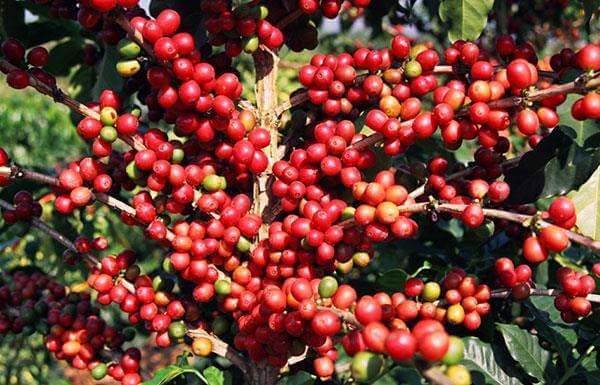
Liberica coffee trees are among the largest coffee tree species, with trees capable of approaching or even exceeding 20 meters in height, considerably taller than the common Arabica or Robusta. Its leaves are also larger and tougher, and the fruits and coffee beans it produces are likewise larger in size. The parchment of this coffee tree adheres tightly to the bean, and the beans take on a vermilion red color when ripe. However, despite their unique appearance, the flavor is considered rather intense and unbalanced, with a medium-high caffeine content and a strong pungency on the palate.
Because of these characteristics, Liberica coffee appears more often in cost-sensitive markets, such as some economically underdeveloped regions or low-price coffee consumption scenarios. In particular, in industrially produced coffee products such as instant coffee, Liberica beans are sometimes used as one of the raw materials to lower overall production costs. But these uses often further diminish its image as a high-quality coffee bean.
In terms of growing environment, Liberica coffee is better adapted to tropical climate conditions and grows more easily, especially in countries with lower cultivation costs near the equator. These regions are usually far from the production areas where specialty coffee culture prevails, so local roasters rarely attempt to use special roasting techniques to draw out its potential flavor complexity. As a result, most consumers' impression of Liberica coffee, when they encounter it, is often "unusual in taste but not balanced enough."
In coffee variety classification, Liberica coffee is also called the "large-bean species," and it originates from Liberia in Africa and a few regions such as Malaysia. Compared with Arabica and Robusta, Liberica coffee has a relatively short cultivation history. It is better suited to low-altitude areas, with thick, upright trunks that generally grow to about 18 meters, and large, tough leaves. Both the fruits and the coffee beans are noticeably larger than those of other common coffee types, making it highly recognizable.
Although Liberica coffee accounts for less than 5% of total global coffee production, it still has a certain cultivation area and market. However, due to its rather distinctive flavor characteristics and limited consumer demand, its cultivation range has always remained small. For specialty coffee enthusiasts who seek rich layering and balanced acidity and sweetness, Liberica coffee may not be the first choice. But for practitioners studying coffee plant diversity or focusing on coffee cultivation history, understanding Liberica coffee still has important reference value.