Yirgacheffe Kochere Coffee Bean Roasting Guide and Flavor Analysis
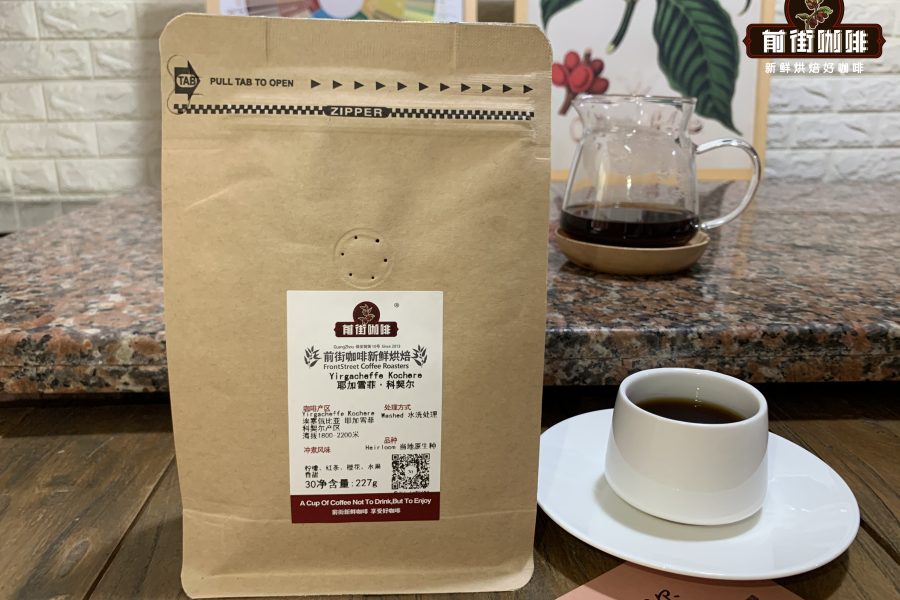
Introduction: Ethiopia's Yirgacheffe region is known for its distinctive fruit acidity and floral aromas, and Kochere, a high-quality sub-region within it, produces coffee beans that combine citrus notes with a silky, full-bodied mouthfeel. This article explains the origin background of Kochere coffee beans, the design logic of light-roast profiles, and how precise parameters highlight bright acidity and complex layers, offering practical reference for home roasting enthusiasts and specialty coffee professionals.
Ethiopia is regarded as the birthplace of the coffee tree, and all Arabica varieties worldwide trace back to its wild gene pool here. The Yirgacheffe region in the southern Gedeo area, with its high altitude and volcanic soil, nurtures many coffee-growing areas with distinctive flavors. Among them, the small town of Kochere (adjacent to the Fishagenet and Hirna villages) has become a representative area for producing high-quality heirloom coffee because it is close to the Gedeb region and its soil is rich in iron.
Kochere coffee's typical flavor characteristics are high-toned lemon-type acidity, jasmine/white floral notes, and a lingering sweetness in the finish. These qualities need to be fully preserved through light roasting—light roasting suppresses excessive caramelization, allowing the fresh sweet-sourness of tropical fruit and vegetative aromas to be fully expressed. Proper heat control can give the acidity a crisp texture similar to green apple while transforming trace bitterness into an aromatic aftertaste, reinforcing overall fullness.

For roasting Kochere coffee beans, a small-to-medium semi-direct-fire roaster (around 600 g capacity) is recommended. In the initial stage, preheat the drum to 200°C and charge the green beans, with the damper open to position 3; after about 1 minute, reduce the heat to 160°C to maintain hot-air circulation, and continue in this range until 4 minutes 50 seconds, when the bean surface turns an even pale yellow and the grassy smell has completely dissipated, marking the completion of the dehydration phase.
Then adjust the heat to 130°C and open the damper wider to position 4 to promote even evaporation of moisture from the bean core. Entering the key development stage, at about 8 minutes the bean surface gradually shows wrinkled texture and dark spots, accompanied by the transformation of a toast aroma into coffee aroma; at this point, listen closely to the cracking sounds inside the drum—when a clear first crack signal appears at around 8 minutes 20 seconds, immediately reduce the heat to 70°C and fully open the damper (be careful to avoid too low a heat causing the crack to stall), and finally drop the beans when the drum temperature reaches 192°C.
It is worth noting that Kochere coffee's heirloom-variety characteristics make it extremely sensitive to roasting rhythm. Over-extending the development time after first crack easily leads to loss of citrus acidity, while heating too quickly may mask the delicate floral layers. Professional roasters usually record the density differences of each batch of beans and fine-tune the charge temperature and dehydration duration accordingly to ensure the final flavor balance.
High-quality Kochere coffee performs especially well in pour-over: bright citrus acidity (similar to blood orange or grapefruit) first strikes the palate, jasmine and honeysuckle compound aromas emerge in the middle, and the finish returns a honey-like sweet smoothness. Its body is medium-to-full, gliding over the tongue like silk, accompanied by faint spice notes (such as ginger flower or cardamom), forming a richly layered drinking experience. These qualities make it a highlight choice in coffee lovers' blend lists.


