Kenya's Ruiru 11 and Batian: Flavor, Disease Resistance and Growing Tips
Introduction: Kenyan coffee is famous worldwide for its distinctive flavor, but beyond the classic SL28 and SL34, which other varieties deserve attention? This article takes a close look at two representative varieties—the Ruiru 11 F1 hybrid and Batian—covering disease resistance, flavor characteristics and key growing practices to help coffee professionals and enthusiasts make more informed choices and better evaluations. By comparing their breeding backgrounds, visual differences and real-world performance, we guide you through the diversity of Kenyan coffee varieties.
In Kenya's coffee landscape, SL28 and SL34 have long dominated, setting the industry benchmark with their bright acidity and complex flavors. Less well known is that local coffee research institutions, responding to disease challenges, have bred more adaptable new varieties—among which Ruiru 11 and Batian are especially important.
The large-scale outbreak of coffee berry disease in the 1960s pushed the Kenya Coffee Research Foundation (CRF) to accelerate variety improvement. Released in 1985, Ruiru 11 was the first F1 hybrid variety, using multi-parent crossing to combine the quality flavor genes of SL28/SL34, the disease resistance of Sudan Rume and the leaf rust defenses of Catimor. Its dwarf stature (about 30% shorter than traditional varieties) not only makes harvesting easier but also raises yields by roughly 25%, while maintaining consistent disease resistance. In the photo, its leaves are deep green with tightly spaced leaf tips—a typical feature that distinguishes it from the wide, loose leaf arrangement of the SL series.
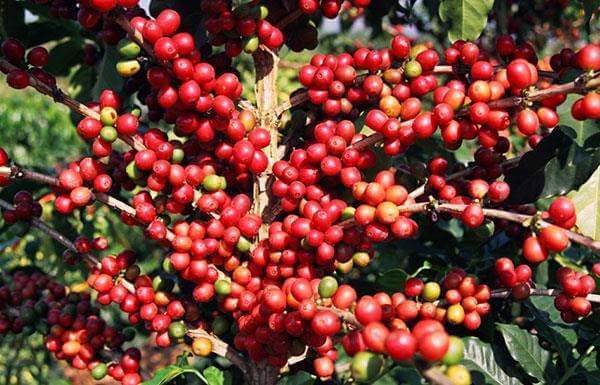
The other important variety, Batian, is named after Kenya's highest peak. A later improved F1 hybrid, it inherits the flavor framework of SL28/SL34 while achieving more flexible growing adaptability. Compared with Ruiru 11, Batian has similar disease resistance ratings but a taller tree (adult trees can exceed 2.5 meters), making it better suited to the day-night temperature swings of high-altitude areas. Notably, this variety shows a clear biennial bearing cycle—after fruiting in the first year, it usually enters dormancy the second year and returns to full production in the third.
In practice, Ruiru 11, with its dual advantage of resistance to coffee berry disease (CBD) and coffee leaf rust (CLR), has become the first choice in central Kenya's main growing areas; its grafted seedlings (commonly SL28 rootstock with Ruiru 11 scion) balance flavor and survival rates. Batian, though not yet widely adopted, is seen as a next-generation mainstay thanks to its early maturity (a small crop in the second year after planting) and greater yield potential per tree (theoretically 40% higher than the SL series).
The two can be identified by the following details: Ruiru 11 leaves are dark ink-green with clearly serrated edges, and the fruit clusters are densely set; Batian retains the elegant branch form of the SL28 series, and its unripe fruit has a distinctive gray-green sheen. For roasters, Ruiru 11 is best roasted light to medium-light to highlight its citrus notes, while Batian, which accumulates sugars faster, suits medium roasting to bring out caramel sweetness.


