Pour-Over Coffee Guide: From Bean Selection to Extraction
Introduction: The appeal of pour-over coffee lies in revealing the unique flavors of coffee beans through precise control of water temperature, water flow and grind size. This article systematically explains the types of coffee beans suited to pour-over, the key points for choosing basic equipment, and the practical steps and parameter logic of three-pour extraction. From common beginner questions to flavor-adjustment techniques, it helps you begin a focused and enjoyable daily ritual with a cup of coffee.

Brewing a cup of coffee by hand in the morning not only awakens the senses but is also the starting point for exploring the world of flavor. Pour-over coffee is much like gongfu tea—beans from different origins are like different tea types, each requiring a matching water temperature, pouring technique and grind size. Compared with machine extraction, manual control can more delicately present a coffee's regional character, from bright citrus notes to a mellow chocolate finish, all depending on the brewer's skill.

The core of mastering pour-over lies in understanding three key elements: steady water-flow control, a precise coffee-to-water ratio (1:15 to 1:16 recommended), and adjusting parameters according to roast level. Light roasts suit a high temperature of 90-93°C to bring out floral and fruity acidity, while medium-dark roasts need a lower 88-90°C to avoid over-extracting bitterness. Water-flow speed directly affects how the coffee bed swells; a fine stream suits center pouring, while a coarse stream helps quickly penetrate the coffee bed.

Beginners often ask, "Which beans are suitable for practicing pour-over?" The answer depends on flavor preference: for fresh fruit acidity, choose Ethiopian natural Yirgacheffe, whose jasmine and blueberry notes stand out especially at 88°C; for a balanced cup, try beans from Colombia's Huila region, where nut and caramel flavors are well layered at a 1:16 ratio; if you favor a full body, the herbal and dark-chocolate finish of Indonesian Sumatra Mandheling requires a coarser grind (medium-fine, about 70% passing a No. 20 sieve) to slow over-extraction.

Basic equipment selection follows the "good enough" principle: for a grinder, prioritize burr consistency (flat burrs suit pour-over better, preserving more aromatic compounds); if the budget is limited, a conical-burr model is an option; a digital scale should be accurate to at least 0.1 g, preferably with a timer; a pour-over kettle with a slender spout is recommended (3-5 mm outlet diameter) for controlling flow rate in the 8-10 g/s range. As for drippers, the V60 conical structure aids venting and suits those seeking a clean cup; a flat-bottom dripper (such as the Kalita Wave) stabilizes flow and suits beginners.

Filter-paper choice directly affects flavor purity: white virgin wood-pulp filters should be rinsed with hot water beforehand (to remove papery taste and preheat the equipment); those who prefer to keep the coffee oils can try a flannel cloth filter (which must be soaked and rinsed first). Pay special attention to the height difference between the dripper and the server—a drop of 15-20 cm is recommended to keep the pouring force from disturbing the coffee bed.

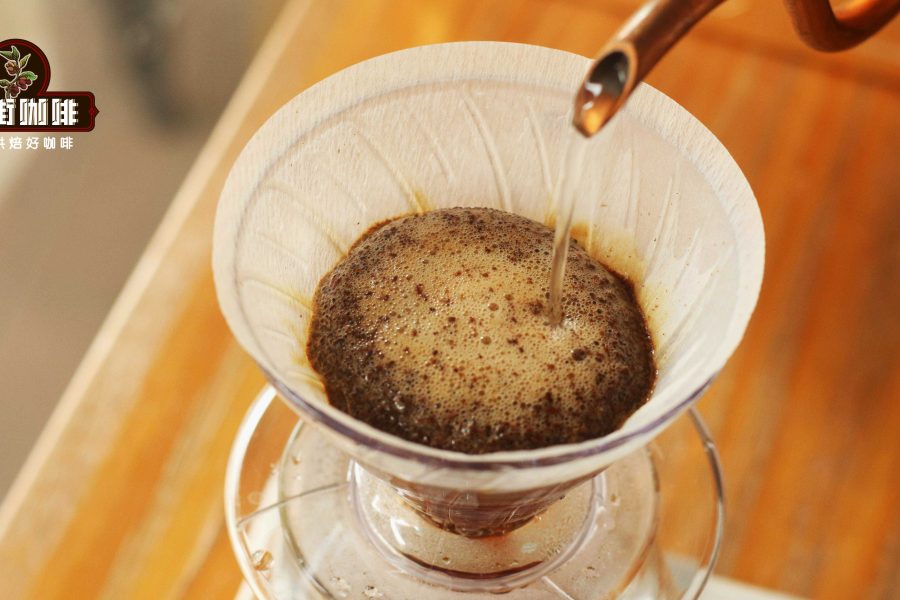
The standard brewing process has five steps: pre-wet the filter (rinse the dripper with 90°C water and discard the water), grind the coffee (the texture of fine sugar, about 80% passing a No. 20 sieve), first pour (slowly pour 30 g of water at the center and let it bloom for 30 seconds, with the stream diameter no more than 1/2 the diameter of the coffee bed), second pour (raise the flow to 60 g per 10 seconds, to a total of 120 g, maintaining the height of the coffee bed), third pour (narrow the stream and add the remaining water, to a total of 240-260 g, with the total time controlled at 2 minutes 10 seconds to 2 minutes 30 seconds).

Common mistakes include: uneven pouring during the bloom causing over-extraction at the center, too strong a stream scattering the coffee bed and causing channeling, and too fine a grind causing the flow to stall (which can be judged by pressing lightly on the coffee bed with a finger to test resistance). For advanced technique, it is advisable to record the triangle of water temperature, grind size and time for each brew; for example, when encountering sharp acidity, try raising the water temperature by 1-2°C or grinding coarser, and adjust in the opposite direction for bitterness.

Flavor development is significantly linked to parameters: extending the bloom to 45 seconds can enhance sweetness (with a corresponding increase in total water), and switching the later pours to a spiral path can improve body. In winter, when ambient temperatures are lower, it is advisable to preheat the cup with warm water in advance and grind 0.5 step finer to compensate for heat loss. Remember, the essence of pour-over is capturing each bean's best window of expression through controllable variables.