Flavor Guide and Growing Distribution of Africa's Three Major Specialty Coffee Regions
Introduction: As the birthplace of coffee, Africa is home to many specialty coffee regions with distinctive flavors. This article focuses on the three core regions of Ethiopia, Kenya, and Tanzania, analyzing the influence of their geographical environments on coffee cultivation, detailing the growing characteristics of each region at elevations from 1,100 to 2,300 meters, and providing in-depth interpretation of the signature flavor characteristics created by processing methods such as natural and washed, helping you build a systematic understanding of African coffee.
With its exceptional climate conditions, the African continent has always been an important origin of specialty coffee worldwide. Among them, the three major regions of Ethiopia, Kenya, and Tanzania not only hold important positions in production but also stand out for their distinct regional flavor profiles, making them essential study for coffee enthusiasts. It is particularly worth noting that coffee cultivation in these regions is highly concentrated in high-altitude areas of 1,100–2,300 meters, and this unique growing environment provides ideal conditions for coffee beans.
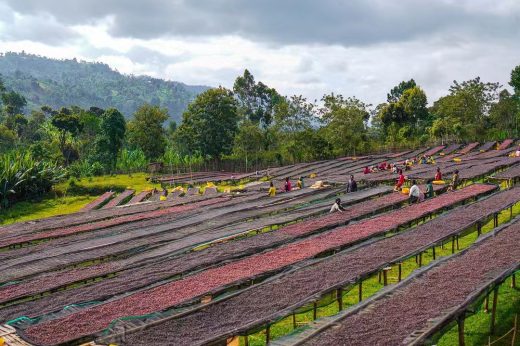
Ethiopia, a treasure trove of coffee genetics, has about a quarter of its population engaged in coffee-related industries. Traditional cultivation methods are still widely used there, with growing elevations generally ranging from 1,100 to 2,300 meters, and the high-altitude areas above 1,800 meters producing particularly high quality. Farmers mostly use organic fertilizers, making the country an important producer of organic coffee worldwide. In terms of processing, more than 70% of coffee beans are processed using the natural method—ripe cherries are sun-dried and then the skin and mucilage are removed with specialized equipment. The country's Sidamo region is known for its complex floral and fruity notes, while subregions such as Jima, Gambi, Harar, and Limu each have their own characteristics; among them, the distinctive blueberry aroma and spicy finish of Harar coffee have become an industry benchmark flavor.
Kenya, located on the East African Plateau, has its coffee-growing belt mainly concentrated on the volcanic slopes around Mount Kenya, with an ideal growing elevation of 1,500–2,100 meters. The diurnal temperature difference brought by high altitude extends the ripening period of the coffee cherries, promoting the full accumulation of flavor compounds. The most notable characteristic of coffee from this region is its bright citric acidity and distinct berry notes, along with a moderate body. Compared with Ethiopian coffee, Kenyan beans have sharper, more prominent acidity, often with a deep fruit acidity reminiscent of blackcurrant; this trait is closely tied to its distinctive SL28/SL34 varieties and double-fermentation washed processing.
Tanzania, as a landlocked country in East Africa, has coffee production mainly based on smallholder farming, with the washed method as the mainstream processing method. The typical characteristics of the country's coffee beans are a full bean texture and soft acidity. It is particularly worth noting its signature red wine aroma—this trait is especially evident in naturally processed beans at high ripeness. Coffee beans from the Kilimanjaro region are representative, with a flavor profile that includes a fresh citrus top note, a nutty middle note, and a creamy, lingering finish. It should be specially noted that in northern Tanzania near Lake Victoria, because the soil is rich in minerals, the coffee produced often has a more pronounced caramel sweetness.
From a flavor map perspective, Ethiopian coffee mostly presents a complex profile of floral, citrus, and black tea notes, suiting consumers who prefer bright acidity; the intense fruit acidity and grapefruit flavors of Kenyan beans better satisfy drinkers seeking a stimulating mouthfeel; while the balanced body and red wine aroma of Tanzanian coffee make it a high-quality choice for milk-based coffee. Understanding the geographical characteristics and processing differences of these regions will help you make more precise judgments when selecting coffee beans.