Bensa, Ethiopia: Processing Methods and Flavor Guide
Introduction: Explore Bensa, the core micro-region of Ethiopia's Sidama zone, and learn how its unique geography nurtures coffees with distinctive flavors. This article details Bensa's altitude advantages, mainstream processing methods (washed/natural/red honey), classic flavor profiles, and professional brewing parameters to help you precisely capture the essence of this African specialty coffee.
Ethiopia's Sidama region is a classic origin that coffee lovers worldwide cannot ignore. Located in the highlands of the East African Rift, with annual rainfall of 1,550–2,220 mm, its fertile soil and altitudes above 1,800 meters together create its signature floral and fruity notes. Coffees from this region are known for their bright acidity, full body, and complex layers of spice, floral, and fruit flavors, making it a taste awakening for many seasoned coffee drinkers.

Confusion often surrounds the Chinese translation of this region's name: the self-designation of the indigenous Sidama people evolved into the internationally used "Sidamo," but after Ethiopia's federal reform in the 1990s, the area was officially renamed Sidama State. However, due to historical trademark registration and market inertia, "Sidamo" remains the mainstream Chinese-market name. Notably, in the 2020–2021 Cup of Excellence competitions, four neighboring micro-regions including Bensa and Arbegona stood out, with Bensa town producing champion farms two years in a row.

In terms of varieties, Sidama grows two core types of coffee trees: traditional landraces (such as Dega and Wolisho) and numbered varieties developed by the Jimma Agricultural Research Center (JARC). At the COE competitions, JARC's 74158 (2020 Bura town champion) and 74165 (2021 Bensa town champion) demonstrated outstanding varietal characteristics. These selectively bred varieties generally offer stronger disease resistance and unique flavor potential.

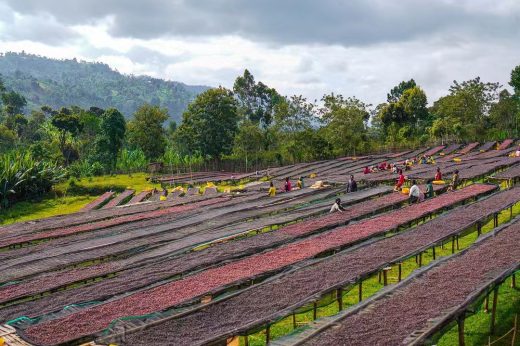
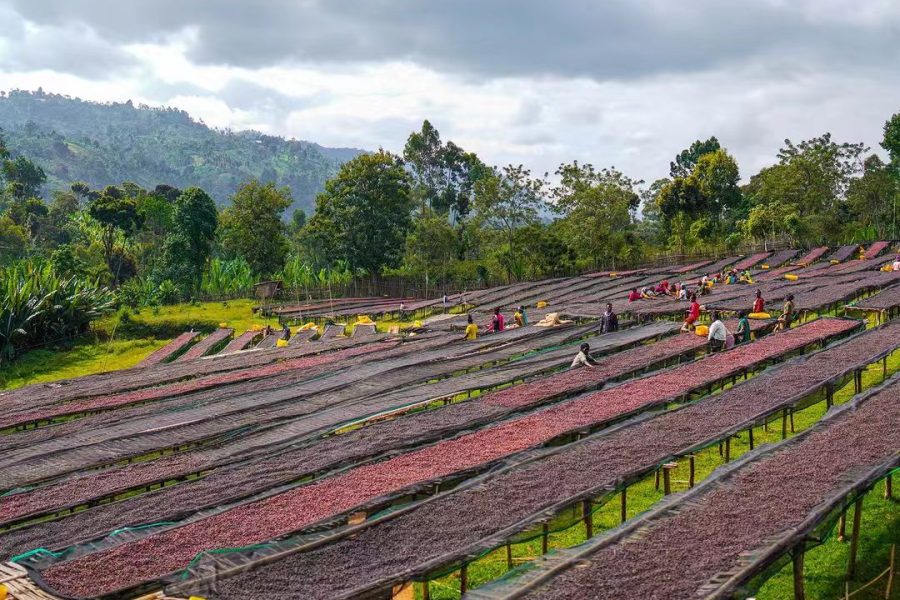
Focusing on the Bensa micro-region, its altitude range of 1,800–2,300 meters gives the coffee a distinct regional character—a full fruity base often accompanied by berry notes such as strawberry. Processing methods are flexible and varied: washed processing highlights crisp acidity and citrus aromas, with a standard flow of manual sorting → depulping → 24–36 hours of temperature-controlled fermentation (20–25°C) → rinsing with clean water → drying on raised beds (turned every 2–3 hours for the first 3 days to prevent mold, with a total cycle of 12–15 days to 11.5% moisture content). Natural processing suits those seeking intense sweetness and requires strict control of uniform fruit ripeness.

The local red honey process sits between washed and natural: by retaining part of the mucilage during fermentation, it creates a special flavor balancing sweetness and acidity. Whichever method is used, Bensa coffees generally carry clear tropical fruit characteristics, and top lots can show a black tea finish and delicate florals.

For home brewing of Bensa natural coffee, a V60 dripper with the following parameters is recommended: water temperature 92–93°C, coffee-to-water ratio 1:15, grind size equivalent to 78% passing a No. 20 sieve (fine sugar texture). The process uses three pours: first pour twice the coffee weight in water (e.g., 30 ml for 15 g) and bloom for 30 seconds; then pour in circles in stages up to 125 g; finally pour slowly to a total of 225 g, completing extraction in about 2 minutes. This method effectively highlights floral and fruity aromas and bright acidity while avoiding the bitterness caused by over-extraction.

Professional cupping shows that high-quality Bensa natural beans have a dry aroma of magnolia, pineapple, and yellow peach, with fermented sweetness emerging in the wet aroma. The initial sip is dominated by tropical fruit sweetness and acidity such as passion fruit and perfumed lemon, transitioning to stone fruit flavors (such as yellow peach and dried apricot) in the middle, with a soft black-tea-like finish. Be careful to keep brewing water below 94°C to prevent fruit acids from evaporating, and light roasts are recommended to preserve more flavor detail.

For producers, Bensa coffee's success depends on strict quality control: starting with selective hand-picking of fully ripe cherries, through multiple sorting steps at the processing station (including density flotation and color sorting), every stage affects final quality. During natural processing, thin-layer spreading (no more than 5 cm thick) and frequent turning each day are key to preventing mold, and the drying environment must be ventilated and shielded from direct midday sun.

Regarding geographical indication protection, although the Ethiopian government protects origin rights through the Sidamo® trademark registration, differences in international understanding of "Sidamo" and "Sidama" persist. When buying, consumers are advised to look for specific micro-region information (such as Bensa or Yirgacheffe), as these sub-origins often reflect true flavor characteristics better than broad regional names.