Flavor Guide to Latin America's Three Major Coffee Regions: Choosing Pour-Over Beans from Guatemala to Brazil
Introduction: Latin America is the core producing region for specialty coffee worldwide. Guatemala's volcanic soils, the foothills of the Colombian Andes and Brazil's vast high plateaus nurture distinctly different coffee personalities. This article takes you deep into three classic regions, analyzing Huehuetenango's high-altitude sweet-tart character, Huila's balanced citrus-caramel profile, and why Brazilian beans are the preferred choice as a blending base, helping you select beans precisely according to your flavor preferences.
As an important pillar of the global coffee map, Latin America's regional distribution and terroir shape a rich and varied spectrum of coffee flavors. Among them, the three main producing regions of Guatemala, Colombia and Brazil, thanks to their unique geographical environments and processing traditions, continue to provide coffee lovers worldwide with distinctive specialty coffee experiences.
Guatemala is home to eight distinctive coffee regions. The high-altitude Huehuetenango region is known for its pronounced day-night temperature swings, which, combined with the potassium-rich soils from frequent volcanic activity, produce coffees that often carry bright red-berry acidity and a dark chocolate finish. The Cobán rainforest region, shrouded in cloud and mist year-round, extends the ripening period of the coffee fruit, leading to more complex accumulation of sugars; its floral and spice notes are especially prominent in light roasts. The country's coffees generally present a classic combination of fruity and chocolate flavors, suited to pour-over enthusiasts who prefer a full-bodied cup.
As the world's second-largest coffee exporter, Colombia's Huila region lies on the southern slopes of the Central Cordillera at 1,500–1,800 meters. Its washed processing is especially meticulous: coffee cherries undergo 24-hour flotation to remove defective beans, then controlled-temperature fermentation in traditional tanks for 18–24 hours, followed by slow washing in mountain streams. This process creates a balanced sweet-tart structure: the first sip captures a refreshing citrus acidity, the mid-palate reveals caramel sweetness, and the finish closes with the mellow depth of almond and dark chocolate. Notably, coffees from the country's southern regions usually have higher body and are suited to espresso.
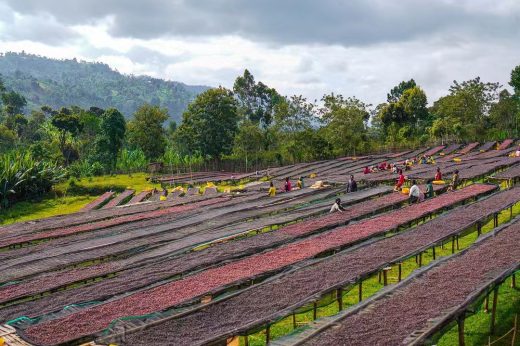
Brazil ranks first with one-third of global coffee production. The Cerrado plateau region in Minas Gerais state uses a distinctive pulped natural process: after machines remove part of the mucilage, the coffee fruit is spread directly on African drying beds for 7–10 days of sun drying. This process gives the beans low acidity and rich nutty notes; typical Brazilian beans often show a flavor combination of roasted almond, caramel pudding and slight smokiness. For blended coffees, the high body and smooth mouthfeel of Brazilian beans effectively offset the bright acidity of African beans or the heavy body of Southeast Asian beans, making them an ideal base for home blends.
Buying advice: Guatemalan beans suit filter-brewing for those seeking floral and fruity notes (a recommended coffee-to-water ratio of 1:15–1:16); sun-dried beans from Colombia's Huila region can be brewed at 92°C with a medium-light roast to highlight fruity layers; and Brazilian beans brewed in a French press at 93°C better release their nutty chocolate flavors. Pay attention to the roast date: beans more than 14 days past roasting will show a noticeable decline in flavor.