Ethiopia Guji G1 Natural: Flavor Profile and Region Guide

Introduction: This article provides an in-depth analysis of the unique flavor characteristics of G1 grade naturally processed specialty coffee beans from Ethiopia's Guji region, comparing them with well-known regions such as Yirgacheffe. From the three major coffee export systems to the development of the single farm model, it guides you through the geographical location, ethnic cultural background, and cultivation advantages of the Guji region. Through descriptions of travel routes and historical context, you will grasp pour-over recommendations and flavor layers for this natural bean, offering coffee enthusiasts a professional reference for bean selection and tasting.
In the development of Ethiopia's specialty coffee industry, its coffee export system is mainly divided into three types. According to local regulations, the first and largest is the private processing plant system that exports through ECX (Ethiopia Commodity Exchange) bidding; the second is the cooperative system; and the third is the single farm system. Among these, cooperatives and single farms can export directly without going through ECX bidding and have relatively complete traceability, which is what we commonly call product traceability. However, looking deeper, although cooperatives directly purchase coffee cherries picked by smallholders for centralized processing, they still find it difficult to achieve 100% traceability in practice.
In contrast, the Single Farm Project (SFP) is regarded as a key direction for the future development of specialty coffee. Although Ethiopia has long been dominated by smallholder farming, this model makes it difficult to achieve single-variety cultivation, special processing experiments, and highly customized coffee production—elements that are indispensable to specialty coffee. The single farm system is the key to solving these bottlenecks. In recent years, as the third wave of specialty coffee has swept the globe, Ethiopia has not only seen a group of local emerging growers influenced by Western concepts, but has also attracted many coffee talents who studied in Europe and the US and returned to contribute to the construction of their home origins, driving the gradual rise of the single farm model.
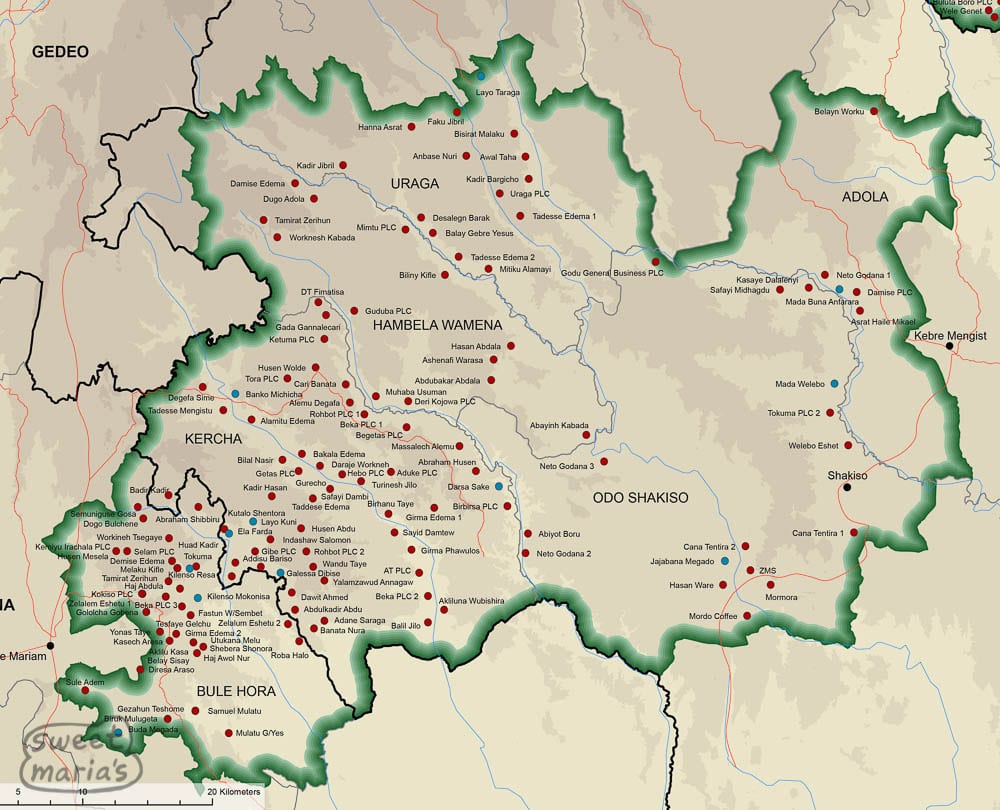
The Guji region is located to the east of the Yirgacheffe region, and the area bordering it is the Hambela region. If you plan to visit the well-known Guji area (Shakiso), the usual route does not go through Yirgacheffe. Instead, you drive south from the capital Addis Ababa for about six hours to reach the town of Yirga Aleam, then instead of turning right toward the Yirgacheffe region, you turn left onto Highway 82 and continue southeast for about four hours to reach the core area of the Guji region.
Historically, the Guji region was known for gold mining, especially the Kibre Mengist area northeast of Shakiso town, which is the main local gold mining area. Many mountain roads intertwine with mining areas, and along the way you can even see relics of past stream gold panning. As people move between gold veins and coffee plantations, it feels as if they can sense the historical intersection of "black gold" coffee and "real gold" minerals, which has a unique charm. Compared with the widely followed Yirgacheffe, the Guji region shows clear differences in geographical location, climate and terroir, ethnic composition, and language and culture, which also give the coffee beans of this area their distinctive flavor characteristics.
The main inhabitants of the Guji region are the Oromo, one of Ethiopia's largest ethnic groups, who use Oromifa as their main language of communication. In contrast, Yirgacheffe is mainly inhabited by the Gedio people; the area was developed earlier and its coffee industry is highly mature. The Guji region started later, but because of this it has large tracts of high-altitude land that have not been overdeveloped, much of it covered by primary forest with fertile soil, providing an ideal environment for coffee cultivation. In addition, because Yirgacheffe has long been a contested area for global coffee buyers, in recent years newly built processing plants and high-quality coffee estates have been more concentrated in Guji, making this region gradually become a new engine for innovation and development in Ethiopian specialty coffee.
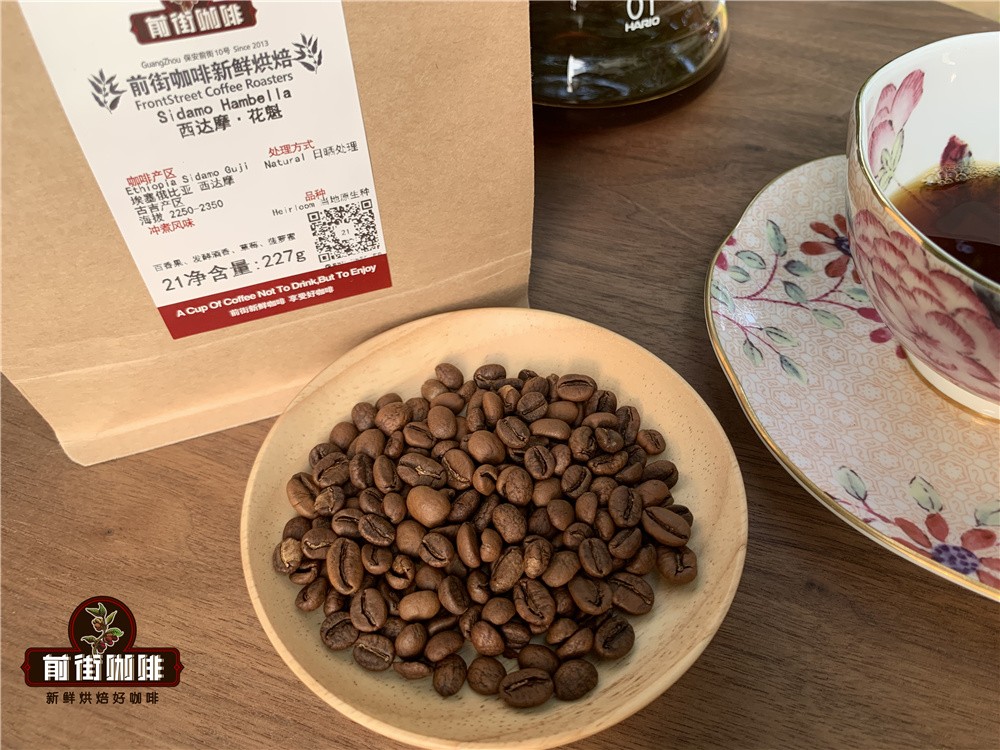
In terms of coffee varieties and processing methods, G1 grade coffee beans from the Guji region are usually processed naturally (Natural/Dry Process), a method that fully preserves the sweetness and complex aromas brought by fruit fermentation. Typical flavor expressions include blueberry, tropical fruit, wine-like acidity, accompanied by caramel sweetness and a full body, with a long finish and a subtle balance of nuts and floral notes. For pour-over enthusiasts, it is recommended to use a medium-fine grind (close to granulated sugar), control the water temperature at 90-93°C, use a V60 or Kalita Wave dripper, and conduct staged extraction with a 2:1 coffee-to-water ratio to better present its bright acidity and rich layers.
Overall, the G1 natural coffee beans from the Guji region not only possess the floral and fruity notes characteristic of Ethiopian coffee, but also, thanks to their unique terroir and increasingly mature cultivation techniques, show a personality and potential different from Yirgacheffe. Whether you are a coffee professional or an enthusiast, understanding the geography, culture, and processing characteristics of this region will help you more precisely select the coffee beans you desire and fully release their flavor charm during brewing.


